

Requisites
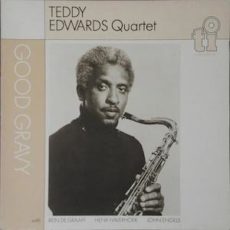
Good Gravy ~ Teddy Edwards Quartet | By Eddie Carter
I’ve been a fan of Teddy Edwards for many years, and he’s become one of my favorite tenor saxophonists. This morning’s choice from the library is a recent acquisition taking us to The Bimhuis Concert Hall in Amsterdam for a live performance to enjoy some Good Gravy (Timeless SJP 139) by The Teddy Edwards Quartet. Teddy was born in Jackson, Mississippi, and began playing the alto sax and clarinet at an early age, before taking up the tenor sax. He first played with trombonist Ernie Fields, and his first recording was a 1947 date with Dexter Gordon. Teddy also played and recorded with some of the greatest musicians in jazz, resulting in an extensive discography as a leader and sideman. The supporting cast is a marvelous Dutch trio, Rein De Graaff on piano, Henk Haverhoek on bass, and John Engels on drums. My copy used in this report is the 1984 Netherlands Stereo album.
Lady Be Good aka Oh, Lady Be Good by George and Ira Gershwin is from the Broadway musical of the same name. The trio opens Side One with a pleasant introduction, segueing into a collective bluesy theme that swings soulfully. Teddy takes the first spot at an easy speed then turns the tempo up for some down-home country cooking. Rein heightens the excitement on the second reading with cat-like precision. Teddy makes a few final comments before the group’s closing theme and enthusiastic ovation from the crowd. Oleo by Sonny Rollins begins with a brief dialogue between the tenor sax and piano, then accelerates quickly into the ensemble’s melody. Edwards takes flight first with an aggressive lead solo. De Graaff dispenses an elevated level of energy next, and Engels shares a vigorous exchange with Edwards before having a moment in the spotlight.
Georgia aka Georgia on My Mind is a classic standard by Hoagy Carmichael and Stuart Gorrell. It became the official state song after Ray Charles’ indelible rendition. A brief trio introduction opens the way for Teddy’s delicately gentle melody. He then delivers a beautiful opening solo that’s warm, full-toned, and sensuous. Rein speaks softly and reflectively on the next statement, then Teddy restates the melody with a touch of romantic lyricism into the smartly executed ending. Good Gravy, a mid tempo blues by Edwards was first heard on his 1961 album, and the ensemble starts the opening chorus leisurely. Edwards kicks off the first interpretation cheerfully. De Graaff steps into the second statement with a relaxing reading. Haverhoek makes a profound impression on his first solo ahead of the reprise, introductions of the group, and a few humorous announcements by Edwards.
Good Gravy was produced by Timeless Records founder, Wim Wigt, and recorded by Henk Elzinga. I was extremely impressed with the sound quality of this live recording. It has an exquisite soundstage that’s clear as fine crystal, and this record is silent until the music starts. You’re not just listening to the musicians playing, you’re in the Bimhuis audience watching the quartet’s performance, and they swing on all the cuts. If you’re a fan of Teddy Edwards, I invite you to check out Good Gravy on your next hunt for vinyl treasure. It’s an enjoyable live session that knocks it out of the park and deserves to be better known!
~ Good Gravy (Contemporary Records M 3592/S 7592); The Foremost! (Onyx #201) – Source: Discogs.com >~ Oh, Lady Be Good, Oleo, Georgia on My Mind – Source: JazzStandards.com © 2021 by Edward Thomas Carter

More Posts: choice,classic,collectible,collector,history,instrumental,jazz,music,saxophone
Daily Dose Of Jazz…
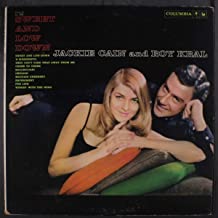
Roy Kral was born on October 10, 1921 in Cicero, Illinois. His sister was the renowned vocalist Irene Kral. Urged by his mother, he took classical piano lessons as a young boy but by the 1930s abandoned them to teach himself to play jazz piano by mimicking what he heard while listening to the radio under his blanket after bedtime.
During World War II, Kral served in the Army as an arranger for the Army band. After service he moved to Chicago, Illinois and joined the George Davis Quartet. As a pianist and singer for Charlie Ventura’s band, Bop for the People, in 1948 ç Kral agreed to write a new arrangement of the 1919 pop song I’m Forever Blowing Bubbles. He added a bebop sensibility and scat singing to a rather insipid pop standard, transforming it into a cool, jazzy tune and their first hit.
Meeting Jackie Cain at eighteen and just out of high school and his initial impression was not her singing until he heard her. Their voices were an octave apart and their partnership was cemented when they married in 1949 and became the duo Jackie and Roy, recording nearly 40 albums in 56 years. Coming to prominence during the bebop era they combined bebop singing with cabaret creating a very polished sound of pop, jazz and Latin music, all inflected with a jazz sensibility. The duo produced hits like Spring Can Really Hang You Up the Most, You Inspire Me, and It’s A Lovely Day Today.
Pianist and vocalist Roy Kral, one half of one of the most important vocal groups in jazz, passed away at 80 of congestive heart failure on August 2, 2002 in Montclair, New Jersey.

More Posts: bandleader,history,instrumental,jazz,music,piano,vocal
Daily Dose Of Jazz…
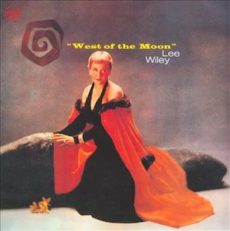
Lee Wiley was born in Fort Gibson, Oklahoma on October 9, 1908. At fifteen, she left home to pursue a singing career, moving to New York City to perform on radio stations. However, her career was interrupted by a horseback riding fall that temporarily sidelined her due to blindness but recovered. At 19 she became a member of the Leo Reisman Orchestra, with whom in 1931 she recorded three songs: Take It From Me, Time On My Hands, and her composition Got The South In My Soul.
Lee began her radio career at KVOO in Tulsa, Oklahoma on the Mrs. Eleanor Roosevelt program on NBC in 1932, and was featured on Victor Young’s radio show in 1933. Throughout the summer of 1936, she had her own show, Lee Wiley, on CBS.
In 1939 she recorded eight Gershwin songs on 78s with a small group for Liberty Music Shop Records. The set sold well and was followed the next year by the music of Cole Porter, Richard Rodgers & Lorenz Hart, Harold Arlen, and the music of Vincent Youmans and Irving Berlin.She sang with Paul Whiteman, and the Casa Loma Orchestra. A collaboration with composer Victor Young resulted in several songs for which Wiley wrote the lyrics, including Got The South In My Soul and Anytime, Anyday, Anywhere. In 1963, Bob Hope Theater on NBC-TV presented “Something About Lee Wiley, where Piper Laurie portrayed her in the episode, which was produced by Revue Studios.
Vocalist Lee Wiley, active from the 1930 through the 1950s, passed away on December 11, 1975.
More Posts: history,instrumental,jazz,music,vocal
Daily Dose Of Jazz…
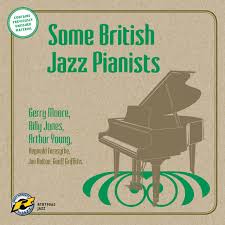
Gerald Asher Moore was born in London, England on October 8, 1903. He spent the years between 1922-1939 working freelance in London, playing at movie palaces and nightclubs.
Among the clubs he worked in the Twenties and Thirties were Sherry’s, the Empress Rooms, Chez Rex Evans, Bag o’ Nails, 43 Club, and Mema’s. His first live appearance on BBC radio in 1936 was heralded in The Radio Times with a listing as Britain’s King of Swing.At the end of the decade he worked with Buddy Featherstonhaugh, and inthe Forties with Adelaide Hall and with Vic Lewis.
Working in Europe late in the 1940s, he played in Germany with Max Geldray, at the Paris Jazz Fair with Carlo Krahmer, and at the Palm Beach Hotel in Cannes, France. Moore played with Harry Gold and Laurie Gold in 1954-57 and worked as a pianist on the Queen Mary and Caronia into the 1960s.
From the mid-1960s pianist Gerry Moore played in London clubs until he passed away on January 29, 1993 in Twickenham, southwest London.
More Posts: bandleader,history,instrumental,jazz,music,piano
The Quarantined Jazz Voyager
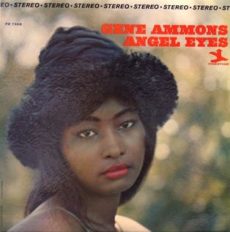
As I go about my city travels I notice how lax people are with masking and social distancing, having their self-centered need to rush to the lives they knew before the pandemic hit. This week I am selecting an album that has been a classic and one of my favorites since the day I first put on the turntable. It’s the 1965 studio recording Angel Eyes by saxophonist Gene Ammons released on the Prestige label.
The album was recorded at Van Gelder Studio in Englewood Cliffs, New Jersey. Two separate sessions compiled the album, tracks 1, 2, 4 & 5 were recorded on June 17, 1960 and tracks 3 & 6 on September 5, 1962. The September session was one of Ammons’ final ones before serving a long drug-related prison sentence.
Track List | 36:25
- Gettin’ Around (Gene Ammons) ~ 6:46
- Blue Room (Lorenz Hart, Richard Rodgers) ~ 5:34
- You Go to My Head (J. Fred Coots, Haven Gillespie) ~ 5:55
- Angel Eyes (Earl Brent, Matt Dennis) ~ 8:45
- Water Jug (Frank Wess) ~ 5:10
- It’s the Talk of the Town (Jerry Livingston, Al J. Neiburg, Marty Symes) ~ 4:15
- Gene Ammons ~ tenor saxophone
- Frank Wess ~ flute (tracks 1, 2 and 4), tenor saxophone (track 5)
- Johnny “Hammond” Smith ~ organ (tracks 1, 2, 4 & 5)
- Mal Waldron (tracks 3 & 6) ~ piano
- Doug Watkins (tracks 1, 2, 4 & 5), Wendell Marshall (tracks 3 & 6) ~ bass
- Art Taylor (tracks 1, 2, 4 & 5), Ed Thigpen (tracks 3 & 6) ~ drums

More Posts: adventure,album,club,genius,jazz,museum,music,preserving,restaurant,saxophone,travel