


Requisites
Yuko Mabuchi Plays Miles Davis, Volume 1 ~ Yuko Mabuchi | By Eddie Carter
Yuko Mabuchi has been making a positive statement on the jazz scene since her 2018 releases, Yuko Mabuchi Trio, Volumes 1 and 2. She steps into the spotlight this morning to give her second live performance at Cammilleri Hall before an enthusiastic crowd. Yuko Mabuchi Plays Miles Davis, Volume 1 (Yarlung Records YAR45588-171V) is a single 45-rpm audiophile album offering two jewels from Kind of Blue and two original tunes by the leader. She’s working again with trio members Del Atkins on bass and Bobby Breton on drums, plus JJ Kirkpatrick on trumpet. JJ is a member of Sophisticated Lady Jazz Quartet and my copy used in this report is the 2020 US Stereo album.
Yuko sets the groove for Side One with Miles’ All Blues, her enthusiastic notes on the introduction flowing as naturally as spoken words. JJ makes his entrance on the melody and first solo next with a gorgeous tone that fits the rhythm section like a comfortable glove. Yuko proceeds into the second statement at an easy pace that builds to a feisty finale before the quintet’s closing chorus. Blue In Green is a haunting and very beautiful song by Miles and Bill Evans. The pianist opens with a gentle introduction segueing into Kirkpatrick’s delicate opening chorus. Yuko leads off with a serenely beautiful solo, followed by an incredibly tender statement by JJ. Del offers a few intimate thoughts on the closer preceding an elegantly graceful ending.
Missing Miles, the first of two from Yuko’s pen, gets Side Two underway with an infectious introduction that moves to an easygoing bounce by her and JJ on the melody. Yuko struts comfortably into the first reading making every note count to the relaxing momentum of Del and Bobby’s accompaniment. The drummer gets a brief moment of solo space next, then JJ keeps the ingredients stirring on the closing statement culminating with Yuko’s descent into a soft climax. Sky With No Tears is a very pretty tune expressing Yuko’s feelings about the environment and caring for the planet’s health. She delivers the melody with a charming simplicity and offers a delicate and subtle opening statement. Del comes in next for a brief reading of refined taste preceding Yuko’s tenderly passionate ending.
The album was produced by Bob Attiyeh, engineered by Bob and Arian Jansen, and the mastering is by Bernie Grundman. The album sounds fantastic with a stunning soundstage that brings the listener to Cammilleri Hall as the musicians are performing. The record is silent until the music begins, making it a perfect demonstration record for any good mid-fi or high-end audio system. I was also impressed with JJ Kirkpatrick; he plays some tasty jazz here and complements the trio very well. Although there are only two tunes of Miles’ music heard here, Yuko Mabuchi breathes fresh air into both selections and she shows a maturity beyond her years as a composer. If you’re a fan of piano jazz, I invite you to audition Yuko Mabuchi Plays Miles Davis, Volume 1. It’s a live album worth investigating, and I hope will bring attention to a talented pianist who continues to exceed expectations and deserves to be heard!
~ Kind of Blue (Columbia CL 1355/CS 8163), Sophisticated Lady Jazz Quartet, Volume 1 (Yarlung Records YAR09272-004V1), Yuko Mabuchi Trio, Volume 1 (Yarlung Records YAR88157-161V), Yuko Mabuchi Trio, Volume 2 (Yarlung Records YAR71621-161V) – Source: Discogs.com ~ All Blues, Blue In Green – Source: Wikipedia.org © 2021 by Edward Thomas Carter

More Posts: choice,classic,collectible,collector,history,instrumental,jazz,music,piano

Daily Dose Of Jazz…
Herman “Trigger” Alpert was born on September 3, 1916 in Indianapolis, Indiana. Attending Indiana University, he studied the bass and soon after was playing with guitarist Alvino Rey in New York City. In the early 1940s he toured with the Glenn Miller band and his enthusiastic playing style can be witnessed during a 1941 performance of In The Mood in Sun Valley Serenade.
During the rest of the decade, he worked with Louis Armstrong, Roy Eldridge, Ella Fitzgerald, Bud Freeman, Woody Herman, Jerry Jerome, Bernie Leighton, Ray McKinley, Frank Sinatra, and Muggsy Spanier. In the 1950s and early 1960s, he recorded as a sideman with Don Elliott, Coleman Hawkins, Gene Krupa, Mundell Lowe, Buddy Rich, Artie Shaw, and the Sauter-Finegan Orchestra.
Until the late 1960s, Trigger was a member of the CBS Orchestra and the CBS band for the television series the Garry Moore Show with Carol Burnett and the Barbra Streisand television specials My Name Is Barbra and Color Me Barbra.
Alpert wrote two instructional books: Walking the Bass in 1958 and the Electric Bass in 1968. He recorded a single album as a leader titled Trigger Happy on the Riverside label in 1956.
Retiring from music in 1970, he made his longtime interest in portrait photography a full-time profession. Bassist Trigger Alpert passed away on December 21, 2013 at an assisted living facility in Jacksonville Beach, Florida.

More Posts: bandleader,bass,history,instrumental,jazz,music,photographer
The Quarantined Jazz Voyager
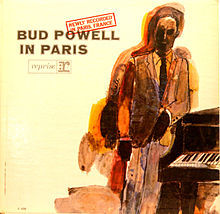
As the Delta variant continues to ravage the country in another wave of rising illness and once again full hospitals, for those of us remaining vigilant I offer you listeners a classic album Bud Powell in Paris. This studio album was produced by Duke Ellington and released in 1964 for Reprise Records.
On this album recorded in Paris, France in February 1963, Leonard Feather wrote the liner notes, the cover painting was done by Donald Leake and digital mastering was performed by Lee Herschberg.
Track List | 49:21- How High the Moon (Morgan Lewis, Nancy Hamilton) ~ 3:54
- Dear Old Stockholm (Traditional) ~ 3:53
- Body and Soul (Johnny Green, Edward Heyman, Robert Sour, Frank Eyton) ~ 6:05
- Jor-Du” (Duke Jordan) ~ 4:18
- Reets and I (Benny Harris) ~ 3:43
- Satin Doll (Duke Ellington, Billy Strayhorn, Johnny Mercer) ~ 4:45
- Parisian Thoroughfare (Bud Powell) ~ 1:56
- I Can’t Get Started (Vernon Duke, Ira Gershwin) ~ 5:40
- Little Benny (aka Bud’s Bubble) (Harris) ~ 3:31
Personnel
- Bud Powell ~ piano
- Gilbert Rovere ~ bass
- Kansas Fields ~ drums

More Posts: adventure,album,club,genius,jazz,museum,music,piano,preserving,restaurant,travel
Daily Dose Of Jazz…
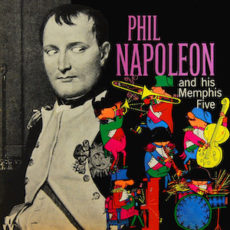
Phil Napoleon was born Filippo Napoli on September 2, 1901 in Boston, Massachusetts. He began with classical training and was performing publicly by age 5. In the 1910s, he was one of the first musicians in the northeastern United States to embrace the new jass style brought to that part of the country by musicians from New Orleans, Louisiana.
At 16 with pianist Frank Signorelli he formed the group The Original Memphis Five in 1917. He became one of the most sought after trumpeters of the 1920s and the group became one of the most prolific in New York City at the time. In 1922-1923 they made over a hundred recordings. Napoleon’s 1927 version of Clarinet Marmalade was a particular success. The group split up in 1928.
During the 1930s, Phil mainly worked as a session trumpeter, working in the RCA Radio Orchestra in the early 1930s, and in 1937 unsuccessfully tried to form his own orchestra. He recorded with the Cotton Pickers and the Charleston Chasers and also worked with blues singers Leona Williams and Alberta Hunter.
Napoleon joined Jimmy Dorsey’s then Los Angeles, California based group in the mid 1940s, and he appeared with the band in the film Four Jills in a Jeep. Parting with Dorsey in 1947, he moved back to New York City and worked as a studio musician at NBC until 1949-1950 when he reformed The Original Memphis Five. During the early 1950s the group became noted for their performances at Nick’s in New York City. He worked frequently with his nephew Marty Napoleon, a jazz pianist. In 1959, Napoleon and The Five performed at the Newport Jazz Festival, later released as an album.
In 1966 Phil opened up his own club named Napoleon’s Retreat in Miami, Florida and continued to perform Dixieland jazz in the club up until the 1980s. Trumpeter and bandleader Phil Napoleon passed away on October 1, 1990 in Miami.
More Posts: bandleader,history,instrumental,jazz,music,trumpet

Daily Dose Of Jazz…
Bob Bates was born on September 1, 1923 in Pocatello, Idaho. His mother was an organist and his brothers Norman and Jim were also bassists. As a youth he played tuba, trumpet, and trombone. From 1944 to 1948 he studied classical bass and played with Sonny Dunham around 1946–47 and with Jack Fina in the late Forties.
The 1950s saw Bob playing in the Two Beaux & a Peep Trio before becoming the bassist in the Dave Brubeck Quartet between 1953 and 1955. In addition, he recorded with Paul Desmond in 1954, and Dave Pell in 1956. It was during this time that he stopped playing and performing. Bassist Bob Bates passed away on September 13, 1981 in San Francisco, California at the age of 58.
More Posts: bass,history,instrumental,jazz,music