

Daily Dose Of Jazz…
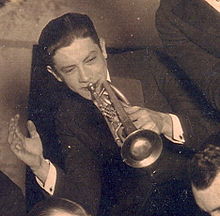
Emmett Louis Hardy was born in Gretna, Louisiana on June 12, 1903 and lived much of his life in the Algiers neighborhood on the west bank of New Orleans, Louisiana. A child prodigy, he was playing marvelously in his early teens. A musical highlight was a 1919 cutting contest where, after long and intense struggle, he succeeded in outplaying Louis Armstrong.
In his early teens he was a member of the Papa Jack Laine band, then worked in the Carlisle Evans Band and Norman Brownlee’s Orchestra of New Orleans. He belonged to a small band that worked with singer Bee Palmer. After moving to Chicago, Illinois he became a member of the New Orleans Rhythm Kings. After returning to New Orleans he led his own band and played in the band of Norman Brownlee.
Hardy did not appear on any of the Rhythm Kings recording sessions, and never made any commercial recordings before his early death. He did metal work, made his own mouthpieces for his horn, and modified his cornet to add an additional spit-valve. When advancing tuberculosis started to make his breathing difficult, Hardy taught himself banjo so he could continue playing music.
Hardy and some of his musician friends made some home recordings on wax phonograph cylinders for their own amusement. As Hardy’s tuberculosis worsened and his death seemed inevitable, the friends decided to preserve the cylinders as a memento of Hardy’s playing. At least one cylinder survived to the start of the 1950s, however when Tulane University’s Jazz Archive was established in the late 1950s, however, a diligent search failed to turn up any of these recordings, which are, alas, presumed lost forever.
After returning to New Orleans he led his own band and played in the band of Norman Brownlee. Though he never recorded with Brownlee, he was a big influence on his replacement, Sharkey Bonano. Cornetist Emmett Hardy passed away from tuberculosis in New Orleans, just four days after his 22nd birthday on June 16, 1925. He was buried in Gretna.
More Posts: bandleader,cornet,history,instrumental,jazz,music
Daily Dose Of Jazz…
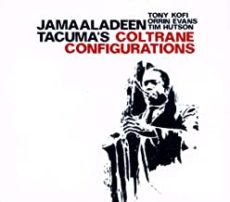
Jamaaladeen Tacuma was born Rudy McDaniel on June 11, 1956 in Hempstead, New York. Raised in Philadelphia, Pennsylvania he showed interest in music at a young age, taking up the electric bass and performing with the organist Charles Earland in his teens.
Through Earland, he came to know the record producer Reggie Lucas, who introduced Jamaaladeen to Ornette Coleman in 1975 at age 19. As the electric bassist for Coleman’s funky harmolodic Prime Time group, he rose to prominence quickly. During the 1980s he was playing a Steinberger bass that helped him create his readily identifiable sound.
His work with Prime Time got him an appearance with the band on Saturday Night Live in 1979. He went on to work with James “Blood” Ulmer, Walt Dickerson, Chuck Hammer, David Murray, and collaborated with The Golden Palominos in 1983. Tacuma recorded his first solo album as a leader, Show Stopper, that same year.
During the 1980s Jamaaladeen started to perform in a relatively straightforward funk/R&B setting with his group Cosmetic. He received the highest number of votes ever for an electric bassist in the “talent deserving wider recognition” category of the Down Beat magazine critics poll.
Though maintaining a low profile since the early 1990s, he has remained active but has maintained a lower profile. He has made numerous solo and collaborative recordings, returning to the jazz spotlight with an appearance on the World Saxophone Quartet’s Political Blues.
In 2007, he joined with Grant Calvin Weston and guitarist Vernon Reidto form the power trio Free Form Funky Freqs. He recorded two albums with Basso Nouveau. He has received numerous awards and fellowships and since 2015 he has presented the annual Outsiders Improvised & Creative Music Festival in Philadelphia. Bassist Jamaaladeen Tacuma continues to tour, produce and record worldwide.
More Posts: bandleader,bass,history,instrumental,jazz,music
The Quarantined Jazz Voyager
I REMEMBER MILES 6.10.21
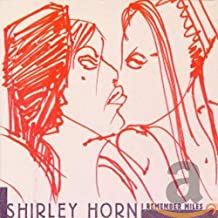
As I continue to be vigilant in my social distancing, masking, and avoiding the unasked that no one is checking I take down off the shelf a favorite vocalist who I used to see perform at the Bohemian Caverns in Washington, DC. This week the album I have selected is the 1998 studio album I Remember Miles by Shirley Horn. It was recorded in tribute to Miles Davis and covers songs that showed the sensitive side of the musicians..
The album’s cover art is a drawing Davis had once done of them both. The album design and artwork was by Chika Azuma, and Ira Gitler wrote the liner notes. Horn’s performance on this album won her the Grammy Award for Best Jazz Vocal Performance at the 41st Grammy Awards.
The production team was composed of producer Richard Seidel, assistant producer Sheila Mathis, production coordination by Camille Tominaro, Dave Baker engineered and mixed the album, and mastering was performed by Duncan Stanbury.
Track List | 52:54
- My Funny Valentine (Lorenz Hart, Richard Rodgers) ~ 5:33
- I Fall in Love Too Easily (Sammy Cahn, Jule Styne) ~ 5:39
- Summertime (George Gershwin, Ira Gershwin, DuBose Heyward) – 4:59
- Baby Won’t You Please Come Home (Charles Warfield, Clarence Williams) ~ 7:21
- This Hotel (Johnny Keating, Richard Quine) ~ 3:37
- I Got Plenty o’ Nuttin’ (Gershwin, Gershwin, Heyward) – 3:39
- Basin Street Blues (Williams) ~ 5:28
- My Man’s Gone Now (Gershwin, Gershwin, Heyward) ~ 10:39
- Blue in Green (Miles Davis, Bill Evans, Al Jarreau) ~ 5:59
- Shirley Horn ~ piano, vocals, producer
- Ron Carter ~ bass guitar
- Roy Hargrove ~ flugelhorn, trumpet
- Toots Thielemans ~ harmonica
- Buck Hill ~ tenor saxophone
- Charles Ables ~ double bass
- Steve Williams ~ drums, percussion
- Al Foster ~ drums

More Posts: adventure,album,club,genius,jazz,museum,music,preserving,restaurant,travel,vocal

Daily Dose Of Jazz…
Sanford Gold was born on June 9, 1911 in Cleveland, Ohio and played locally in Cleveland and led regional bands. Moving to New York City in the 1930s he collaborated with Babe Russin and Raymond Scott in 1935, and formed a trio with Dave Barbour in 1941.
In 1942 he worked as a studio musician for CBS before serving in World War II until 1946. After being discharged Sanford worked with Don Byas, Mary Osborne and others before he went to work for CBS rival NBC, from 1949-1954. An album was recorded under his name on the Prestige label in 1955 titled Piano d’Or.
A sideman, Gold worked with Johnny Smith, Al Cohn, Vic Dickenson, Coleman Hawkins and Sally Blair. He was one of the premier jazz piano teachers of his time. He self-published a book, A Modern Approach to Keyboard Harmony and Piano Techniques. Pianist Sanford Gold passed away on May 29, 1984.
More Posts: bandleader,history,instrumental,jazz,music,piano
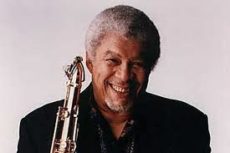
Three Wishes
Frank Foster replied to the question the Baroness posed of his three wishes by telling her:
1. “Enlightenment! You know what I mean when I say that?”
2. “The absolute love of one person.”
3. “To see the whole world.”
*Excerpt from Three Wishes: An Intimate Look at Jazz Greats ~ Compiled and Photographed by Pannonica de Koenigswarter

More Posts: baroness,history,instrumental,jazz,music,pannonica,saxophone,three,wishes