

Daily Dose Of Jazz…
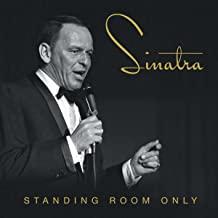
Francis Albert Sinatra was born December 12, 1915 in Hoboken, New Jersey and at an early age was greatly influenced by the intimate easy listening vocal style of Bing Crosby. While Sinatra never learned how to read music, he worked very hard from a young age to improve his abilities in all aspects of music. A perfectionist, renowned for his dress sense and performing presence, he always insisted on recording live with his band. He began his musical career in the swing era with bandleaders Harry James and Tommy Dorsey. Finding success as a solo artist after signing with Columbia Records in 1943, he became the bobbysoxers idol.
Releasing his debut album, The Voice of Frank Sinatra, in 1946, by the early 1950s, his professional career had stalled. Turning to Las Vegas, Nevada he became one of its best-known residency performers as part of the Rat Pack. Venturing into Hollywood, his career was reborn in 1953 with the success of From Here to Eternity, and his subsequent wins of an Academy Award and Golden Globe Award for Best Supporting Actor.
Through the Sixties Sinatra released several critically lauded albums, including In the Wee Small Hours, Songs for Swingin’ Lovers!, Come Fly with Me, Only the Lonely, and Nice ‘n’ Easy. Leaving Capitol in 1960 to start his own record label, Reprise Records and released a string of successful albums. In 1965, he recorded the retrospective album, September of My Years and starred in the Emmy-winning television special Frank Sinatra: A Man and His Music.
After releasing Sinatra at the Sands, recorded at the Sands Hotel and Casino in Vegas with frequent collaborator Count Basie in early 1966, the following year he recorded one of his most famous collaborations with Tom Jobim, the album Francis Albert Sinatra & Antonio Carlos Jobim. It was followed by 1968’s Francis A. & Edward K. with Duke Ellington.
Retiring for the first time in 1971 he came out of retirement two years later. He recorded several albums and resumed performing at Caesars Palace, and released New York, New York in 1980. Using his Las Vegas shows as a home base, he toured both within the United States and internationally until shortly before his death in 1998.
Forging a highly successful career as an actor during the Sixties he starred in The Man with the Golden Arm, The Manchurian Candidate, On the Town, Guys and Dolls, High Society, Pal Joey, Ocean’s Eleven, and Tony Rome, as well as television appearances.
He was honored at the Kennedy Center Honors in 1983, was awarded the Presidential Medal of Freedom by Ronald Reagan in 1985, and the Congressional Gold Medal in 1997. Sinatra was also the recipient of eleven Grammy Awards, including the Grammy Trustees Award, Grammy Legend Award, the Grammy Lifetime Achievement Award, and included in Time magazine’s compilation of the 20th century’s 100 most influential people.
Vocalist, actor, and producer Frank Sinatra, who was one of the most popular and influential musical artists of the 20th century and sold more than 150 million records worldwide, passed away on May 14, 1998.
More Posts: bandleader,history,instrumental,jazz,music,vocal

Daily Dose Of Jazz…
Rafael Antonio Cortijo was born on December 11, 1928 in Santurce, Puerto Rico and as a child became interested in Caribbean music and enjoyed the works of some of the era’s most successful Bomba y Plena music musicians. Throughout his life, he had a chance to meet and work with some of them and learned how to make his own congas and pleneras, the handheld drums used in bomba y plena music.
He met salsa composer and singer Ismael Rivera when both were youngsters growing up in the Villa Palmeras neighborhood. They became lifelong friends and Rivera impressed with his friend’s conga-playing skills, asked him to join his orchestra, which played at Fiestas patronales all over Puerto Rico.
Becoming well known across Latin America, Rafael attributed his success to the sound of his percussion, as Afro-Caribbean music was known worldwide. As a member of the Conjunto Monterrey, based in Monterrey, Mexico, he later toured with Daniel Santos’ orchestra and worked on radio.
By 1954, as a member of El Combo, Cortijo’s big break came when El Combo’s leader and pianist Mario Román left the band to him. Ismael Rivera, then the lead singer of Lito Peña’s Orquesta Panamericana, joined Cortijo’s orchestra known as Cortijo y su Combo in 1955. From then until 1960, his orchestra played live on Puerto Rican television shows, and sometime during the 60s, they became the house band at La Taberna India.
The orchestra virtually disbanded in 1962 when Ismael Rivera was arrested for drug possession in Panama. Rafael and the other bandmates went on to found Puerto Rico’s salsa group, El Gran Combo. He went on to create another orchestra, El Bonche, where he was joined by his adopted niece, Fe Cortijo, who would become a well-known singer on her own. He and Rivera went on to live in New York City but he soon returned impoverished to Puerto Rico, where he forged a friendship with composer Tite Curet Alonsothe who helped produce a comeback album. In 1974, Coco Records reunited all the former members of “Cortijo y su Combo” orchestra for a one-time-only concert and a subsequent studio recording issued a few months afterward.
Their friendship was so important to Rivera, that when orchestra leader, musician, and composer Rafael Cortijo passed away of pancreatic cancer on October 3, 1982 at his sister Rosa Cortijo’s apartment in the Luis Llorens Torres public housing project in Santurce, Rivera said he would no longer sing.
More Posts: bandleader,conga,history,instrumental,jazz,music
Conversations About Jazz & Other Distractions
Conversations About Jazz
Spotlights The Producers on December 10
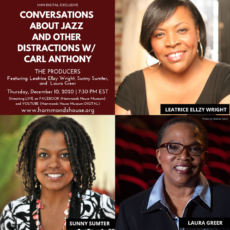
Hammonds House Digital invites you to join us for Conversations about Jazz & Other Distractions hosted by former jazz radio host and founder of Notorious Jazz, Carl Anthony. On Thursday, December 10 at 7:30 pm (EST), Carl’s special guests will be some of the industry’s top Producers: Leatrice Ellzy Wright, Executive Director of Hammonds House Museum; Sunny Sumter, Executive Producer of the DC Jazz Festival; and Laura Greer, Senior Producer for The Apollo Theater. This is the last Conversations About Jazz for the year. The program is free and will stream live on Hammonds House Museum’s Facebook and YouTube.
Leatrice Ellzy Wright is a curator, producer, thinker, and fan of disruption. She is the Executive Director of Hammonds House Museum where she curates and produces art exhibitions, as well as cultural and music programming. Her unique skill set has been developed over 29 years of migrating through non-profit management and development, broadcast, media relations, arts presenting and technology. Her arts management and administration experience developed through work at Woodruff Arts Center and the National Black Arts Festival (NBAF). She produced for NBAF from 2002-2005. In 2005 she was hired to manage the organization’s artistic programming and later became the organization’s 5th Artistic Director. More info HERE.
Sunny Sumter is the Executive Director of the DC Jazz Festival, a nonprofit service organization established in 2004 to present jazz-related cultural and educational programs in the nation’s capital. Its signature programs are the annual DC JazzFest held each June, the year-round DC Jazz Festival Education Program; and the Charles Fishman Embassy Series. Prior to her tenure at the DC Jazz Festival, Sumter held management/director positions with the Aspen Institute, National Foundation for Teaching Entrepreneurship, the Smithsonian Institution, and the Rhythm and Blues Foundation. Sumter earned her bachelor’s degree in music business from Howard University where she minored in jazz voice. More info HERE.
Laura Greer is the Senior Producer for The Apollo Theater where she has served for more than a decade overseeing the performing arts, education, and community programs of the historic theater. Prior to her current position, Greer was the Associate Producer at the National Black Arts Festival in Atlanta, Georgia (1999-2005) where she was responsible for the artistic and production oversight of the annual festival. She has also served as the Director of Programming at 651 Arts at the Brooklyn Academy of Music Majestic Theater, specializing in works grounded in the African Diaspora and held various leadership positions at Aaron Davis Hall at City College of New York (1985-1998).
Hammonds House Museum is generously supported by the Fulton County Board of Commissioners, Fulton County Arts and Culture, the City of Atlanta Mayor’s Office of Cultural Affairs, The Community Foundation for Greater Atlanta, The National Performance Network, AT&T and WarnerMedia.
Hammonds House Museum’s mission is to celebrate and share the cultural diversity and important legacy of artists of African descent. The museum is the former residence of the late Dr. Otis Thrash Hammonds, a prominent Atlanta physician and a passionate arts patron. A 501(c)3 organization which opened in 1988, Hammonds House Museum boasts a permanent collection of more than 450 works including art by Romare Bearden, Robert S. Duncanson, Benny Andrews, Elizabeth Catlett, Jacob Lawrence, Hale Woodruff, Amalia Amaki, Radcliffe Bailey and Kojo Griffin. In addition to featuring art from their collection, the museum offers new exhibitions, artist talks, workshops, concerts, poetry readings, arts education programs, and other cultural events throughout the year.
Located in a beautiful Victorian home in Atlanta’s historic West End, Hammonds House Museum is a cultural treasure and a unique venue. During the COVID-19 pandemic, they continue to observe CDC guidelines, but look forward to welcoming in-person visitors soon! For more information about upcoming virtual events, and to see how you can support their mission and programming, visit their website: hammondshouse.org.
MEDIA: Contact Karen Hatchett at Hatchett PR, karen@hatchettpr.com
More Posts: conversations,drums,history,instrumental,jazz,producers
The Quarantined Jazz Voyager
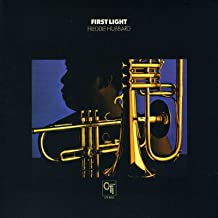
With a surge in Covid cases after Thanksgiving travel, I am doubling down on maintaining my social distancing and wearing my mask when I have to go out, otherwise, I remain in quarantine. From the shelves of my jazz collection, I am placing on the turntable the 1971 recording of First Light by trumpeter Freddie Hubbard, his third release on Creed Taylor’s CTI label.
The string arrangements are by conductor Don Sebesky and features performances by Herbie Hancock, Eric Gale, George Benson, Ron Carter, Jack DeJohnette, Airto Moreira, and Richard Wyands. The album is part of a trilogy including his two previous records at the time, Red Clay and Straight Life. First Light won the 1972 Grammy Award for Best Jazz Performance by a Group.
TRACKS | 42:55- First Light (Hubbard) ~ 11:05
- Uncle Albert/Admiral Halsey (McCartney, McCartney) ~ 8:17
- Moment to Moment (Mancini, Mercer) ~ 5:43
- Yesterday’s Dreams (Martin, Sebesky) ~ 3:55
- Lonely Town [from On the Town] (Bernstein, Comden, Green) ~ 7:00
- Fantasy in D” (Walton) ~ 6:55
- Freddie Hubbard – trumpet, flugelhorn
- Jack DeJohnette – drums
- Ron Carter – bass
- Richard Wyands – piano
- George Benson – guitar
- Airto Moreira – percussion
- Herbie Hancock – Fender Rhodes piano
- Phil Kraus – vibraphone
- Hubert Laws – flute
- Wally Kane – flute, bassoon
- George Marge – flute, clarinet
- Romeo Penque – flute, English horn, oboe, clarinet
- Jane Taylor – bassoon
- Ray Alonge – French horn
- James Buffington – French horn
- Margaret Ross – harp
- David Nadien – violin
- Paul Gershman – violin
- Emanuel Green – violin
- Harold Kohon – violin
- Joe Malin – violin
- Gene Orloff – violin
- Matthew Raimondi – violin
- Tosha Samaroff – violin
- Irving Spice – violin
- Alfred Brown – viola
- Emanuel Vardi – viola
- Charles McCracken – cello
- George Ricci – cello
You all know I will be back flying around the globe just as soon as the world becomes safe again from this pandemic. In the meantime, stay safe and healthy.
More Posts: choice,classic,collectible,collector,history,instrumental,jazz,music,trumpet
Daily Dose Of Jazz…
Michael Lang was born on December 10, 1941 in Los Angeles, California. He obtained a bachelor of music at the University of Michigan in 1963, and studied under Leonard Stein, George Tremblay, Pearl Kaufman and Lalo Schifrin.
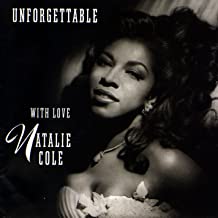
Well versed in various music forms, including jazz, classical, pop and R&B, he has collaborated and recorded more than two-dozen albums with Sarah Vaughan, Peggy Lee, Natalie Cole, Robbie Williams, Dusty Springfield, Solomon Burke, Tom Waits,, José Feliciano, Vince Gill, Bette Midler, Kenny Rogers, Aretha Franklin, Willie Nelson, Amy Grant, Paul Anka, Melissa Manchester, Neil Diamond, Michael Bolton, Barry Manilow, Carole Bayer Sager, and Barbra Streisand.
Pianist and composer Michael Lang, who has composed more than 2000 film scores, continues to play and compose.