

Three Wishes
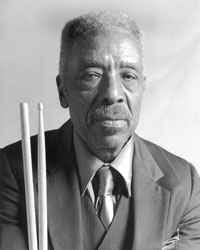
The Baroness inquired of the three wishes that Edgar Bateman would desire and he responded with:
- “To create all the time, master drums, and to make a contribution to drums and music.”
- “To have a loving and truthful wife whom I love.”
- “For everyone to be at peace and be happy.”
*Excerpt from Three Wishes: An Intimate Look at Jazz Greats ~ Compiled and Photographed by Pannonica de Koenigswarter

More Posts: baroness,drums,history,instrumental,jazz,music,pannonica,three,wishes
Daily Dose Of Jazz…
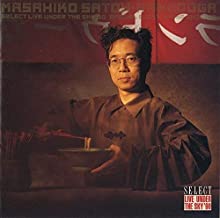
Masahiko Satoh was born on October 6, 1941 in Tokyo, Japan and the family home contained a piano. He started playing at the age of five, and twelve years later he began playing professionally accompanying singers, magicians, and strippers at a cabaret in the Ginza district.
By 1959 Satoh began playing in Georgie Kawaguchi’s band, together with alto saxophonist Sadao Watanabe and tenor saxophonist Akira Miyazawa. After graduating from Keio University, at the age of 26 he moved to the United States to study at the Berklee College of Music. During those two years of study, he read about composing and arranging, earned money working in a food shop, and played the piano in a hotel.
1968 had Masahiko writing and conducting the music for a series of pieces that were combined with dance and performed around New York City. After returning to Japan, he recorded Palladium, his first album as a leader, and appeared on a Helen Merrill album.
In the late 1960s and early 1970s, his career led him to perform in a free, percussive style. Masahiko played at the 1971 Berlin Jazz Festival as part of a trio, using at the time an unusual ring modulator to alter the sound. During that period he recorded with Attila Zoller, Karl Berger, and Albert Mangelsdorff. He wrote the psychedelic music for the 1973 anime film Belladonna of Sadness.
He went on to write arrangements for recordings led by, among others, Helen Merrill, Kimiko Itoh, and Nancy Wilson. He arranged for strings and quartet on Art Farmer’s 1983 album Maiden Voyage, formed a large group, named Rantooga, that combined various forms of folk music from around the world, and composed for film, television, and advertisements. By the early 1990s pianist, composer, and arranger Masahiko Satoh composed music for a choir of 1,000 Buddhist monks and now spends 70% of his time arranging and composing, the rest on playing and recording.

More Posts: arranger,bandleader,composer,history,instrumental,jazz,music,piano
Daily Dose Of Jazz…
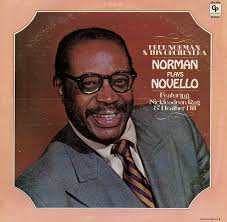
Fred Norman was born on October 5, 1910 in Leesburg, Florida and started out playing trombone when he was 14. After working with local bands in Florida, until moving to Washington, D.C. in 1930. There he worked with Duke Eglin’s Bell Hops, Booker Coleman, and Elmer Calloway (Cab’s younger brother). When he joined Claude Hopkins’ Orchestra in 1932, he doubled as a singer and contributed many arrangements.
Norman was with the Hopkins Big Band during its key years (1932-37), and when he departed, gave up the trombone and stuck exclusively to writing. Norman wrote arrangements for many big bands including those of Benny Goodman (1938), Bunny Berigan, Gene Krupa, Lionel Hampton, Jack Teagarden, Glenn Miller, Harry James, Artie Shaw, and Tommy Dorsey.
Landing the position of staff arranger for Krupa from 1940 to 1943, he spent periods writing exclusively for Dorsey and Charlie Spivak. In the 1950s, Fred started working closely with MGM and Carlton record labels, among others, and often as a musical director for singers such as Dinah Washington, Sarah Vaughan, and Brook Benton.
Although his orchestra backed numerous singers, he led his own orchestra record date, producing Norman Plays Novello. Trombonist, vocalist, and arranger Fred Norman, who spent most of the swing era as a busy arranger, passed away on February 19, 1993 in New York City, New York.
More Posts: arranger,bandleader,history,instrumental,jazz,music,trombone,vocal
Requisites
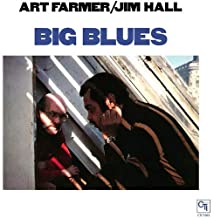
Big Blues ~ Art Farmer & Jim Hall | By Eddie Carter
This next choice from the library I acquired after hearing a selection on SiriusXM’s Real Jazz channel. The album is titled Big Blues (CTI Records CTI 7083), released in 1979 and the two men co-leading this enjoyable date are Art Farmer on flugelhorn and Jim Hall on guitar. Rounding out the ensemble are Mike Mainieri on vibes, Mike Moore on bass, and Steve Gadd on drums. My copy used in this report is the 2017 ORG Music Stereo Audiophile reissue (ORGM-2019).
The song that initially sparked my interest leads off the first side, Benny Golson’s 1956 contemporary jazz classic, Whisper Not! It’s one of his most recorded compositions and also became a beloved vocal after Leonard Feather added lyrics in 1962. The quintet jointly creates a mellow melody with a blues beat to begin the song. Jim makes his guitar sing first with a relaxed casualness and steady rhythm. Art gets into an infectious laid-back groove next moving upward with bright chops and impeccable prowess. Mike takes over for the finale with an astonishing drive and intensity preceding the reprise and gentle coda.
The 1969 jazz standard, A Child Is Born by Thad Jones closes the first side starting gently with a brief introduction and tender theme by the rhythm section. Farmer starts the soloing with a ravishingly beautiful, muted performance, followed by Hall who delivers passionately elegant lines on the next interpretation. Mainieri gives a delicately gentle and evocative presentation recalling the spirit and imagination of the song’s composer into the serenely beautiful climax. Big Blues by Jim Hall starts the second side with a spirited midtempo opening chorus by the ensemble and the solo order is the same as on Whisper Not. Jim takes the lead here, showing us his versatility with charming articulation. Art follows, using the mute to deliver skillful assertion on the next reading. Mike’s closing statement is captivating from the moment it starts, expressing joy into the reprise and fadeout. Pavane For A Dead Princess by Maurice Ravel ends the album and was written as a solo piano piece in 1899. The song’s original title is Pavane pour une infante défunte (Pavane for a Dead Infanta) and the ensemble begins the introduction and melody at a slow tempo fitting the original composition. Farmer steps up first, back on the open horn, beginning as he did on the theme, then raises the temperature to midtempo before returning to a softer mood for the close. Mainieri pulls out all the stops on the next reading with a sparkling presentation. Hall takes the final bow with a gorgeous performance preceding the reprise and graceful fadeout.
Big Blues was originally produced by Creed Taylor and engineered by David Palmer who worked at Electric Lady Studios, and Joel Cohn who’s worked on many CTI albums. This reissue was mastered from the original analog tapes by Bernie Grundman and pressed on 180-gram Audiophile vinyl at Pallas Group in Germany. As was the case of many of the classic CTI Records, the sound quality is first-rate with an excellent soundstage across the highs, midrange, and low end that won’t disappoint the listener in their favorite spot to listen to music. Art Farmer and Jim Hall recorded together four other times, Interaction (1963), Live at The Half Note, To Sweden With Love (1964), and Panorama-Live at The Village Vanguard (1997). Each is highly recommended, and I feel the same can be said for Big Blues. I invite you to make time for this one on your next vinyl hunt, it’s an enjoyable album of Contemporary Jazz with extraordinary chemistry, and exceptional performances you won’t soon forget!
~ Interaction (Atlantic 1412/SD 1412); Live at The Half Note (Atlantic 1421/SD1421); Panorama-Live at The Village Vanguard (Telarc Jazz CD-83408); To Sweden With Love (Atlantic 1430/SD 1430) – Source: Discogs.com
~ Whisper Not, A Child Is Born ~ Source: JazzStandards.com
~ Pavane For A Dead Princess ~ Source: Wikipedia.org
© 2020 by Edward Thomas Carter
More Posts: choice,classic,collectible,collector,guitar,history,instrumental,jazz,music,trumpet
Daily Dose Of Jazz…
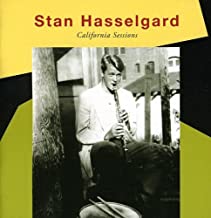
Sten Åke Henry “Stan” Hasselgård was born on October 4, 1922 in Sundsvall, Sweden. His father, John Levin Johansson changed his name to John Hasselgård. Growing up in Bollnäs, Sweden, he began playing clarinet at age 16, attended the University of Uppsala, and played in the Royal Swingers there.
In 1945 he played in a quintet led by Arthur Österwall, and founded a new Royal Swingers group that same year. In 1946-47 he played with Simon Brehm’s sextet alongside pianist Gösta Eriksson, trumpeter Bror Hansson, guitarist Kurt Wärngren, and drummer Bertil Frylmark.
Having achieved international renown, he moved to New York City in 1947, and played on 52nd Street with Jack Teagarden and Max Roach. Under the stage name Stan Hasselgard he made his acclaimed recording of Swedish Pastry. and in 1948 he joined Benny Goodman’s septet, alongside Wardell Gray, Mary Lou Williams and others.
His last recording session took place on November 18th, because five days later he was killed in a car crash. Clarinetist Stan Hasselgard passed away on November 23, 1948 in Decatur, Illinois. He was 26.
More Posts: bandleader,clarinet,history,instrumental,jazz,music