


JACQUI NAYLOR
Vocalist and composer Jacqui Naylor returns to Snug Harbor following sold-out performances across Europe, Canada, Asia, and the United States.
With twelve albums and a dedicated global following, she is celebrated for her richly soulful voice, impressive vocal range, and distinctive arrangements of standards, covers, and original compositions. Naylor and her trio will perform selections from her 2024 release, Treasures of the Heart, along with fan favorites from throughout her acclaimed career.
She’s also known for her inventive arrangements that blend jazz standards with classic rock grooves and vice versa. She has headlined many of the world’s premier jazz clubs and festivals in the United States, Japan and Italy.
The Band:
Jacqui Naylor – vocals
Art Khu – piano
Jasen Weaver – bass
Jason Marsalis – drums
Shows: 7:30pm & 9:30pm
Tickets: $41.30
More Posts: adventure,bandleader,club,composer,genius,instrumental,jazz,music,preserving,travel,vocal
Daily Dose Of Jazz…
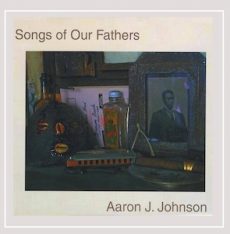
Aaron J. Johnson was born in Washington, D.C. on June 10, 1958. He studied piano and drums before taking up the trombone at age 12. While in high school he frequently performed with area funk bands but also conducted and arranged for student ensembles under the direction of noted trumpeter Peter D. Ford. It was Ford who gave him his first professional gigs and introduced him to Ellington alumni, bandleader and alto saxophonist Rick Henderson.
Although pursuing degrees in electrical engineering, Johnson remained active as a trombonist and bass trombonist throughout his college years. He had the good fortune to play with the University of Pittsburgh Jazz Ensemble under the direction of Kenny Clarke and Nathan Davis. Following college Aaron continued gigging around D.C. and the New York area, studying privately with reed multi-instrumentalist Makanda Ken McIntyre.
By the early 1990s Johnson established himself as an experienced and valuable sideman, composer and arranger. He has since recorded and performed with a multitude of major artists and ensembles to include Reggie Workman, Jimmy Heath, Charles Tolliver, Oliver Lake, Muhal Richard Abrams, Bill Lee, Frank Lacy, The Mingus Big Band, the Count Basie Orchestra, Steve Turre’s Sanctified Shells, the Lincoln Center Jazz Orchestra and the Smithsonian Jazz Masterworks Orchestra.
He has received the New Jersey State Council Fellowship in Music Composition (2000) Aaron Johnson has composed and arranged works performed or recorded by Frank Foster, Steve Turre, Frank Lacy, the Nancie Banks Orchestra, and Paradigm Shift. He has been featured in film scores, television commercials and public radio broadcasts.
Trombonist Aaron Johnson is currently in Columbia University’s Musicology doctorate program and has released his debut album Songs Of Our Fathers and continues to perform.

More Posts: bandleader,history,instrumental,jazz,music,trombone
Daily Dose Of Jazz…
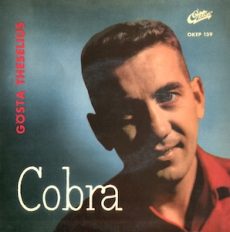
Gösta Theselius (was born June 9, 1922 in Stockholm, Sweden and was the younger brother of musician Hans Theselius.
He worked in the 1940s with a number of European big bands, including those of Thore Jederby, Hakan von Eichwald, Sam Samson, Lulle Elboj, and Thore Ehrling.
He played jazz into the 1950s, both as a saxophonist and a pianist. The latter instrument with Benny Bailey, Arne Domnerus, James Moody, and Charlie Parker, and composed copiously for film in the 1950s and 1960s.
Arranger, composer, film scorer, pianist and saxophonist Gösta Theselius died in Stockholm on January 24, 1976.
More Posts: arranger,bandleader,composer,film scorer,history,instrumental,jazz,music,piano,saxophone
Requisites
Explorations ~ Bill Evans Trio | By Eddie Carter
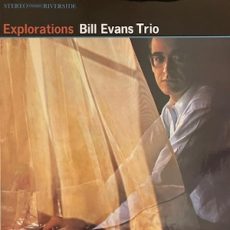
My admiration for Bill Evans runs very deep, and I have cherished the pianist’s music since childhood. This morning’s selection from my library holds a special place in my heart. It was one of my mom’s favorites during our Sunday family dinners. Explorations (Riverside RLP 351/RLP 9351) by the Bill Evans Trio is a 1961 release and one of four outstanding albums featuring Scott LaFaro on bass and Paul Motian on drums. Its timeless charm makes it an essential addition for any jazz piano lover. I could stop here, but I won’t leave you with just a small taste; instead, I’ll share the entire eight-course meal with you. My copy is no. 843 of the 2024 U.S. Craft Recordings stereo audiophile reissue (Riverside CR 00825).
Israel by John Carisi opens the album, setting the tone for the trio’s introduction and medium melody. Bill solos first with a cheerfully carefree groove. Scott adds his voice to a lighthearted reading that flows like a lovely stream. Bill returns to exchange notes with Paul before a marvelous conclusion. Haunted Heart is a gorgeous tune by Howard Dietz and Arthur Schwartz that begins with Evans’s brief, poignant introduction blossoming to the ensemble’s deeply touching theme. Bill takes center stage as the soloist, delivering each verse with grace and sensitivity, matched by Scott and Paul’s subtle support into a gentle climax.
Beautiful Love, by Haven Gillespie, Wayne King, Egbert Van Alstyne, and Victor Young, presents the trio with a delightful opportunity to pay homage to the 1930s classic at a toe-tapping beat during the melody. Bill’s respect for the original composition is evident in a joyful opening solo, followed by Scott’s inspired walk in the subsequent reading, leading to the closing chorus and exit. The trio treats Earl Zindars’s Elsa with endearing care, crafting an opening chorus that sparkles like a night on the town with that special someone. Bill guides each note of the first solo elegantly. Paul follows with a soothing and refined performance, preceding a tender reprise of the theme.
Side Two opens with an enchanting rendition of Nardis, one of Miles Davis’s prettiest compositions that Bill initially recorded with Cannonball Adderley. The trio’s pretty theme sets things in motion. Scott takes the lead with an elegant opening statement. Bill then shares his intimate, sincere thoughts in the second solo, leading to a gorgeous reprise and conclusion. The trio probes one of Irving Berlin’s loveliest questions next, How Deep Is The Ocean? They swing softly in a luscious melody. Again, the song’s only soloist, Bill’s interpretation is the epitome of grace and beauty, preceding a beautiful closing chorus that showcases their musical fluency and understanding of each other’s playing.
I Wish I Knew, by Mack Gordon and Harry Warren, is a beautiful ballad from the 1940s. The ensemble introduces it at a gentle, unhurried tempo, leading to the theme. Bill offers a serene and heartfelt interpretation that concludes in a tender finale by the trio. Sweet and Lovely by Gus Arnheim, Jules LeMare, and Harry Tobias is pure fun from start to finish. After the trio’s melody, Bill begins a solo that evolves from a quiet, spoken tone to a playful and spirited one. The pianist and drummer engage in a brief dialogue before Paul delivers a concise solo that ties everything together, leading back to the theme’s reprise and a delightful conclusion.
Orrin Keepnews was at the helm of Explorations, Bill Stoddard was the recording engineer, and Jack Matthews mastered the initial session. Bernie Grundman mastered the reissue from the original tapes. The record is pressed on 180-gram vinyl, using Neotech’s VR900 vinyl compound, and manufactured using a one-step lacquer process. The sound quality of this reissue is exceptional, offering an impressive soundstage that brings the musicians to your listening room with stunning fidelity. This limited-edition box set is 2,500 copies, each individually numbered and presented in a foil-stamped, linen-wrapped slipcase featuring an acrylic inset of the original artwork. The record is protected by an archival-quality, anti-static, non-scratching inner sleeve.
Explorations marked Bill Evans’s final studio collaboration with Scott LaFaro. He was a brilliant hard-bop bassist, admired and celebrated for his playing of uptempo tunes or ballads. His contributions brought an outstanding level of sophistication, maturity, and precision to the four albums he recorded with The Bill Evans Trio. Tragically, just ten days after the trio’s 1961 performance at the Village Vanguard, LaFaro’s life was cut short due to a car accident. This devastating loss deeply affected Evans, who withdrew from live performances and recording for several months. If you’re discovering his music or are already a Bill Evans fan, I urge you to listen to Explorations by the Bill Evans Trio at your earliest opportunity. It’s an outstanding showcase of jazz that I can’t recommend enough for your library!
~ Portrait In Jazz (Riverside RLP 12-315/RLP 1162), Portrait of Cannonball (Riverside RLP 12-269), Sunday at The Village Vanguard (Riverside RLP 376/RLP 9376), Waltz For Debby (RLP 399/RLP 9399) – Source: Discogs.com
~ How Deep Is The Ocean, Sweet and Lovely – Source: JazzStandards.com
~ Beautiful Love, Israel, Nardis – Source: Wikipedia.org
© 2025 by Edward Thomas Carter
More Posts: choice,classic,collectible,collector,history,instrumental,jazz,music,piano

Daily Dose Of Jazz…
Louis Aldebert was born on June 8, 1931 in Ismailia, Egypt. He studied both singing and piano after his family moved to Paris, France and became efficient enough on the latter instrument to gig with tenor saxophonist Don Byas in the mid-1950s. Several years later he played with violinist Stephane Grappelli of Hot Club fame.
Having a career as a singer, he worked with the Blue Stars in the mid-’50s. From 1959-1965 he was a member of the Double Six, a kind of experiment in overcrowding via scat singing. Needless to say, this attracted the attention of Jon Hendricks who made use of Aldebert on a 1965 session.
He married singer Monica Dozo, and after feeling a bias as Byas bandmates, she changed her name to Monique Aldebert-Guerrin. She was part of the rotating Double Six recording cast when some members needed to recover from nagging earaches.
Leaving the Double Six, Byas’ group and the French jazz scene in 1967, the couple moved to America. They initially settled in Las Vegas, Nevada before heading West to Los Angeles, California. They had their own group and did freelance studio vocal work in various capacities, one highlight being a feature on a 1979 side by the Crusaders.
Vocalist, pianist and composer Louis Aldebert, who with his wife collaborated as composers of original songs as well as vocal arrangements of various jazz standards, died on October 10, 2014 in Los Angeles.
More Posts: composer,history,instrumental,jazz,music,piano,vocal