

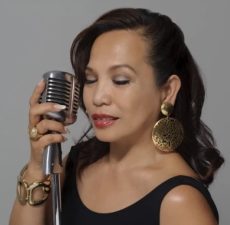
CHARITO IN PARIS
Distinctively a most prominent jazz vocalist in Japan with multi-awarded albums recorded and released internationally, Charito’s artistry continues to establish its global presence with her recent and forthcoming tours in Europe, Asia, North and Latin America.
Her highly personal and expressive vocal style incorporates the breadth of her musical interests, from straight-ahead soulful ballads to hard-swinging grooves and improvisational adventures. Her approach is fresh and invigorating, paying tribute to the jazz tradition while interacting and exploring, always seeking to express herself in the moment.
In Ms. Nancy Wilson’s words, ”The first time I heard Charito, I physically and emotionally embraced her and thought myself beautiful, that came from the heart and the soul. She has a warm way of presenting a song and she represents what a singer really is, a song stylist.” ~ for ‘This Girl’ 1990
Performance Venue: Sunside
Band: Charito – voice
Vinh Lê – piano
Michel Rosciglione – bass
Hidéhiko Kan – drums
Cover: 18.00€ ~ 28.00€
More Posts: adventure,bandleader,club,music,preserving,travel,vocal
Requisites
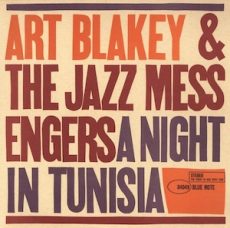
A Night In Tunisia ~ Art Blakey and The Jazz Messengers | By Eddie Carter
This morning’s record from the library is an exceptional jazz album where the musicians complement each other behind the iconic drummer Art Blakey. A Night In Tunisia (Blue Note BLP 4049/BST 84049) is a 1961 release that is not just one of the best LPs in The Jazz Messengers discography but a historical treasure that is better experienced than described. In the spotlight with Art on this date are Lee Morgan on trumpet, Wayne Shorter on tenor sax, Bobby Timmons on piano, and Jymie Merritt on bass. The 1978 King Record Company Japanese Stereo reissue is my copy (Blue Note BST 84049 – GXK 8041).
A Night In Tunisia by Dizzy Gillespie and Frank Paparelli starts swinging with Art’s lively introduction to the quintet’s brisk melody. Wayne launches into a hard-driving interpretation, showcasing his technical prowess and emotional depth. Lee continues cooking with energetic exuberance, his trumpet work adding a vibrant layer to the tune. Jymie demonstrates his skillful command of the bass, walking with authority in a short solo. Art fuels the finale with intense emotion ahead of the theme’s vigorous restatement.
The ensemble eases to a medium melody for Sincerely Diana by Wayne Shorter, stepping aside for the saxophonist’s bluesy opening statement. Morgan carries himself well in the following reading, his trumpet work adding a soulful touch. Then, Timmons delivers a delightfully relaxed performance, his piano playing adding a smooth, jazzy feel. Blakey provides a memorable exclamation point ahead of the closing chorus, his drumming adding a dynamic energy to the piece.
So Tired by Bobby Timmons starts Side Two at a medium tempo, with a boogaloo flavor for the ensemble’s theme. Wayne gives the opening solo an unmistakable melodic charm. Lee next illustrates a splendid study in soulful improvisation; then Bobby hits an ideal groove, leading to the theme’s restatement and graceful fadeout. Yama is the first of two originals by Lee Morgan, and the quintet’s melody is a model of uncomplicated beauty. Timmons is up first and shows his soloist capabilities to fine advantage here in a gentle performance. Morgan responds with a tender, tasteful presentation next. Shorter culminates the solos with an affectionately intimate reading over the trio’s lush foundation into the song’s soothing ending.
Art’s drums kick off the album closer, Kozo’s Waltz by Lee Morgan. The complete ensemble joins in for the medium-fast theme. Wayne gets things underway with a passionate opening statement. Lee responds with an exciting interpretation; Timmons follows with a few intriguing choruses. Art puts his stamp on the closing solo with a sizzling beat before the return to the theme. Alfred Lion produced the initial session, and Rudy Van Gelder was the recording engineer, both of whom were instrumental in capturing the quintet’s energy and chemistry. This King Record Company reissue has a spectacular soundstage that transports the musicians to the sweet spot in your listening room with stunning fidelity. If you’re a hard bop fan, I happily recommend A Night In Tunisia for a place in your jazz library. It’s a gem by Art Blakey and The Jazz Messengers that no jazz enthusiast should miss on their next shopping trip!
~ A Night In Tunisia – Source: JazzStandards.com
© 2024 By Edward Thomas Carter
More Posts: choice,classic,collectible,collector,drums,history,instrumental,jazz,music
CHARITO
Distinctively a most prominent jazz vocalist in Japan with multi-awarded albums recorded and released internationally, Charito’s artistry continues to establish its global presence with her recent and forthcoming tours in Europe, Asia, North and Latin America.
Her highly personal and expressive vocal style incorporates the breadth of her musical interests, from straight-ahead soulful ballads to hard-swinging grooves and improvisational adventures. Her approach is fresh and invigorating, paying tribute to the jazz tradition while interacting and exploring, always seeking to express herself in the moment.
In Ms. Nancy Wilson’s words, ”The first time I heard Charito, I physically and emotionally embraced her and thought myself beautiful, that came from the heart and the soul. She has a warm way of presenting a song and she represents what a singer really is, a song stylist.” ~ for ‘This Girl’ 1990
Band: Hidehiko Kan (ds), Michel Rosciglioni(b), Vinh Le (p)
More Posts: adventure,bandleader,club,genius,history,instrumental,jazz,music,preserving,travel,vocal
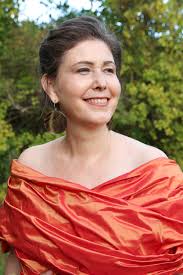
AUDREY SILVER TRIO
Audrey Silver’s voice is like pure sterling. Her phrasing is exquisite, her clarity and enunciation on par with the great Jo Stafford and her breath control is a talent so often, and so wrongfully overlooked rivals Sinatra’s. She honed her craft through private study with singers Shelia Jordan and Mark Murphy. She has worked with pianist Bruce Barth, trumpeter Marcus Printup, upright bassist Paul Beaudry, drummer Anthony Pinciotti, vibraphonist Tom Beckham and guitarist Gary Ciprut.
No Cover | No Minimum
More Posts: adventure,bandleader,club,history,instrumental,jazz,music,preserving,travel,vocal
AUDREY SILVER TRIO
Audrey Silver’s voice is like pure sterling. Her phrasing is exquisite, her clarity and enunciation on par with the great Jo Stafford and her breath control is a talent so often, and so wrongfully overlooked rivals Sinatra’s. She honed her craft through private study with singers Shelia Jordan and Mark Murphy. She has worked with pianist Bruce Barth, trumpeter Marcus Printup, upright bassist Paul Beaudry, drummer Anthony Pinciotti, vibraphonist Tom Beckham and guitarist Gary Ciprut.
No Cover | No Minimum
More Posts: adventure,bandleader,club,genius,instrumental,jazz,music,preserving,travel,vocal