

JOE ALTERMAN
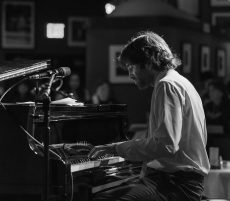
Atlanta native Joe Alterman expresses a certain upbeat naivete, with a broad smile and bright eyes that make you feel welcome. One would not guess that this is a man hailed by greats; Ramsey Lewis describes his piano playing as ‘a joy to behold’, Les McCann states ‘As a man and musician he is already a giant’. Journalist Nat Hentoff championed three of Alterman’s albums, as well as his writing (Joe wrote liner notes to three Wynton Marsalis/JALC albums, calling one of Joe’s columns “one of the very best pieces on the essence of jazz, the spirit of jazz, that I’ve ever read, and I’m not exaggerating.”
A fresh and joyful intent is captured on Joe Alterman’s new release The Upside Of Down. Taken from two live shows at Birdland in November 2019 and February 2020, the album reminds us of a not-too-distant time when we gathered and danced. Joined by Nathaniel Schroeder on bass and Marlon Patton on drums, Alterman cruises gently and delightedly through timeless selections from Les McCann, Oscar Peterson, Henry Mancini and more, with some of his compositions in the mix.
The Band: Joe Alterman – piano | Dennis Carroll – bass | George Fludas – drums
Cover: $27.75 ~ $37.75
More Posts: adventure,bandleader,club,genius,jazz,music,piano,preserving,travel
JOE ALTERMAN
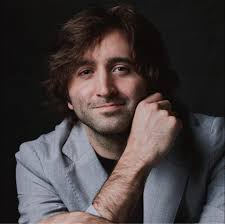
Joe Alterman began at NYU with a BA and Masters in Jazz Piano, followed by performances with Houston Person, Les McCann, Dick Gregory, and Ramsey Lewis. Downbeat describes his sound as ‘ rooted in the blues, and with a touch reminiscent of the great pianists of the 1950s—Red Garland, Ahmad Jamal, Bill Evans. It is clear Joe hits all of the necessary points for Jazz critics and fans alike.
But there is more to the story, of course. The twenty-first century has thus far seen yet another transition for this thing called Jazz. In one moment we see the push and pull between tradition and progression, and in another we see Pop and Hip-Hop musicians emulating and sampling. In Joe Alterman we find none of this struggle; the music just sounds good. Our conscious faculties are instantly disabled as we tap our feet, feeling the intent and joy of his playing. An old classic is new when you feel good in the moment.
The Band: Joe Alterman — piano | Aaron Jacobs — bass | Jim Leslie — drums
Cover: $20.00
More Posts: adventure,bandleader,club,genius,history,music,piano,preserving,travel
JOE ALTERMAN
Atlanta native Joe Alterman expresses a certain upbeat naivete, with a broad smile and bright eyes that make you feel welcome. One would not guess that this is a man hailed by greats; Ramsey Lewis describes his piano playing as ‘a joy to behold’, Les McCann states ‘As a man and musician he is already a giant’. Journalist Nat Hentoff championed three of Alterman’s albums, as well as his writing (Joe wrote liner notes to three Wynton Marsalis/JALC albums, calling one of Joe’s columns “one of the very best pieces on the essence of jazz, the spirit of jazz, that I’ve ever read, and I’m not exaggerating.”
Joe Alterman began at NYU with a BA and Masters in Jazz Piano, followed by performances with Houston Person, Les McCann, Dick Gregory, and Ramsey Lewis. Downbeat describes his sound as ‘ rooted in the blues, and with a touch reminiscent of the great pianists of the 1950s—Red Garland, Ahmad Jamal, Bill Evans. It is clear Joe hits all of the necessary points for Jazz critics and fans alike.
Cover: $20.00 | General Admission, Table Seating
More Posts: adventure,bandleader,club,genius,history,instrumental,music,piano,preserving,travel
EUGENIE JONES
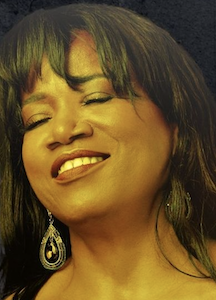
Eugenie Jones is an award-winning American Jazz singer/songwriter, producer, and legacy activist. Born and raised in Morgantown, West Virginia, Jones grew up with four sisters and three brothers. Her father, Eugene, was the choir director at the family’s church, and her mother, Tommie Lee, was the choir’s lead soprano. Jones grew up listening to her mother’s voice, perpetually singing around the house and at local community events. However, in these early years, Jones possessed no latent desire to follow in her mother’s footsteps. She grew up, earned her MBA, and eventually made her home in Seattle, entering the business world as a nonprofit marketing communications expert working in housing for the homeless advocacy.
Her singing career began late in life after the death of her mother in 2008. “Beyond my grief, I felt a void that I later recognized as missing the sound of my mother singing. Seeking solace and a positive way forward, I wondered if I could carry on that part of her.” That speculation led Jones to the Seattle jazz scene and ultimately to pursue something she had never imagined – a career in music. On her independent label, Open Mic Records, Jones has successfully produced three award-winning recording projects comprised primarily of her original material. She has recorded more than 30 original songs and is characterized as a “cleverly gifted lyricist.” Her projects have resulted in her winning the Pacific NW Earshot Jazz Vocalist of the Year and Recording of the Year Golden Ear awards.
The Band:
Eugenie Jones ~ voice
Peter Adams ~ piano
Jonathan Green ~ upright bass
Ron Steen ~ drums
More Posts: adventure,bandleader,club,genius,history,instrumental,jazz,music,preserving,travel,vocal
CHARITO & DA HOUSE TRIO
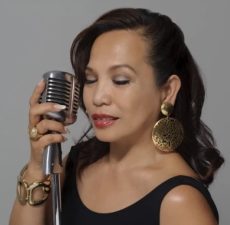
Gifted with an exceptional voice and swing, she is remarkable in ballads, fast tempos and improvisations. She is part of the most perfect tradition of vocal jazz while retaining the charisma of her personality.
Line up
Charito Vocal
Stéphane Mondesir Piano
Jean Paul Artero Double bass
Bernard Cesari Drums
Cover: 22.00€
More Posts: adventure,bandleader,club,genius,instrumental,jazz,music,preserving,travel,vocal