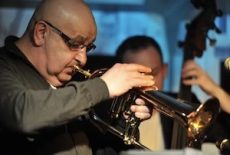
Listening to trumpet and flugelhorn player Mr. Julius Baroš is a very good opportunity to make your Prague visit an experience. Let yourself be embraced with good jazz and snap your fingers to swinging jazz or ballads, projected by scintillating tones of Mr. Baroš. His playful melodic lines and imaginative improvisation flowing out of his horn and with his excellent backing group will make any jazz standard stomp your feet. Just open your ears and let the music do the rest by joining a jazz cruise along the Vltava River.
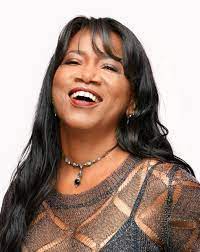
Celebrate Jazz Journalist Association (JJA) Jazz Hero Award Recipient Eugenie Jones for her community work in jazz promotion, education, and outreach !!!
Eugenie Jones is an award-winning American singer/songwriter, producer, and legacy activist. Her 2022 release Players ranked #30 on Jazz Week’s Top 100 Albums for 2022. She was also a first-round Best Jazz Vocal Album Grammy® contender and ranked #7 on Jazz Week’s Top 50 charts.
On her independent label, Open Mic Records, Jones has successfully produced three projects and has earned recognition as an Earshot Jazz Vocalist and the Year Award recipient while also being the first-ever vocal recording artist to receive the Earshot Jazz Recording of the Year Golden Ear Award.
As a warm, engaging singer with an electric stage presence, 2022 found Jones praised by jazz legends and favorably reviewed in every major jazz publication, including DownBeat, JazzTimes, Jazzlz, and many others.
KNKX Radio’s Robin Lloyd will present the award on behalf of JJA.
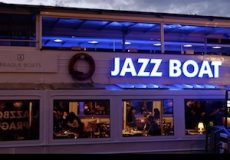
Leaving Rome but keeping with the tradition of the moving jazz venues for a second time, this Jazz Voyager is heading to Prague to take a first time cruise on the Jazz Boat. I’m told it’s a multidimensional experience where one can savor the beautiful sights and delights of the city, historical and off the beaten path as we cruise down the Vitava River
During the two and a half hour cruise I will be dining on salmon and potato gratin with apple strudel topped with ice and whipped creams for dessert while listening and enjoying three sets of music with bassist Jan Kořinek and his trio.
The Jazz Boat is located at Naplavka Na Františku Gate 18, 110 00 Staré Město, Czechia, next to St. Agnes Monestary and The Brewery boat. The cover is 38€ and dinner will run 25€. Boarding begins at 8:00pm, departure at 8:30pm, return at 11:00pm. More information needed, you may call +420 734 141 554.
Charles Edward Smith was born on June 8, 1904 in Thomaston, Connecticut He began to collect early hot jazz records in the 1920s and worked with William Russell, Eugene Williams, John Hammond, Hugues Panassié and Charles Delaunay in the Hot Record Society. It was from this society that the jazz label HRS Records sprang in 1937 and with Steve Smith he was editor of the jazz magazine Hot Record Society Rag.
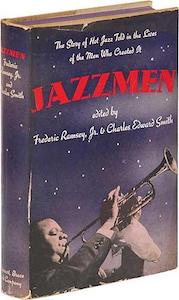
With essays in journals such as the Symposium, Daily Worker and Esquire, Charles was among the early jazz critics in the 1930s. Collaborating with Frederic Ramsey he published the book Jazzmen, and, with Wilder Hobson’s American Jazz Music, was one of America’s first jazz books. The latter book included articles on groups like the Austin High School Gang and interviews from early jazz musicians like Willie Cornish, Papa Jack Laine, Leon Roppolo and Nick LaRocca.
Smith and Ramsey argued that then-popular swing was rooted stylistically in blues and traditional jazz. In the course of the research on the book, the interviewed musicians mentioned the name Bunk Johnson again and again. This led to the then-forgotten trumpeter of New Orleans Jazz being rediscovered by Bill Russell in 1942.
With the 1942 Jazz Record Book, an attempt was made to generate a canon of important jazz records, which was later taken up by many other writers, including Marshall Stearns’s The Story of Jazz, Joachim-Ernst Berendt/Günther Huesmann’s jazz book , Barry Kernfeld’s Encyclopedia of Jazz, and Allen Lowe’s That Devilin’ Tune.
Smith also wrote for The New Republic, the magazine Jazz Information, and wrote a series of liner notes for Folkways Records that included Negro folk music, folk blues, early and modern jazz albums. He also wrote the accompaniment text for the LP edition of John Hammond’s Concert Series, From Spirituals to Swing – Carnegie Hall Concerts, 1938/39 on Vanguard Records.
In the opinion of the International Society of Jazz Research, Smith was one of the most important early serious jazz critics, alongside Hugues Panassié, Winthrop Sargeant, Wilder Hobson, Don Knowlton, and Aaron Copland. Jazz author, editor and critic Charles Edward Smith transitioned on December 16, 1970 in New York City.
During the two and a half hour cruise I will be dining on salmon and potato gratin with apple strudel topped with ice and whipped creams for dessert while listening and enjoying three sets of music with bassist Jan Kořinek and his trio.
The cover is 38€ and dinner will run 25€. Boarding begins at 8:00pm, departure at 8:30pm, return at 11:00pm. More