

The Jazz Voyager
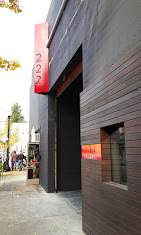
Crossing the country once again and heading to California to catch a rare performance of Nilson Matta and Jovino Santos Neto with Ami Molinelli. The club they will be hanging out at is located at 222 Healdsburg Avenue in Healdsburg 95448.
The club is 222 which was disclosed to me by a jazz fan. The space is a performing arts center presenting various world-class events in the areas of jazz, film, poetry, choral music, and more. They are committed to embracing innovation and developing performances for the 21st century while strengthening the interaction between artists, audiences and the community.
Two Brazilian musicians, multi~Grammy nominee Matta and three-time Latin Grammy nominee Neto, both with successful international careers, join forces to present a new project with original music and new interpretations of pieces by renowned Brazilian composers.
Matta is known for his work with Trio da Paz, Don Pullen African Brazilian Connection, Joe Henderson, Yo Yo Ma, and Nilson Matta’s Brazilian Voyage. Neto is a master pianist, flutist, composer, arranger, and conductor from Rio de Janeiro. They are joined by percussionist Ami Molinelli as a special guest, enriching the contagious rhythm of the dynamic duo for this rare collaboration.
The center’s number is 707-473-9150. For more information on days and time of sets visit https://notoriousjazz.com/event/nilson-matta-jovino-santos-neto.

More Posts: adventure,album,bass,club,festival,genius,jazz,museum,music,percussion,piano,preserving,restaurant,travel
Daily Dose Of Jazz…
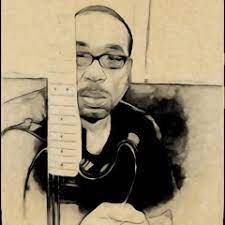
Kenn Smith was born Kenneth Lamont Smith on April 27, 1962 in Chicago, Illinois.
As a child of the 60s and Seventies living on the WestSide of his hometownhe first heard the sounds of Motown, Soul, Funk, Country, Jazz and Rock. His school was shows like Hee Haw and Midnight Special, his parents’ record collection, and a neighborhood filled with amateur and professional musicians.
When the family moved to the SouthSide in 1975, Smith began his guitar studies at age 13 with a visit to the local music store purchasing two Mel Bay books. Three years later the family moved to the western suburbs of Maywood, Illinois. At 16 he began classical guitar studies with guitarist Bruce Walters, and later continued studies at Jack Cecchini Studio.
While attending Proviso East High School, he played electric and classical guitar as well as timpani in the Proviso Township Orchestra, electric guitar and bass in the Proviso East High School jazz band, where he received the Louis Armstrong Award for Outstanding Jazz Improvisation during his senior year.
1982 saw Kenn beginning his career teaching guitar at Robinson’s Music Academy in Maywood, as well as performing with local funk and fusion bands. This he did while attending Columbia College of Chicago, studying music management and production. In 1987 he enrolled at the American Conservatory of Music where he studied jazz guitar and composition. In between those years of teaching, performing and study, he became an avid fan of progressive rock and fusion, developing skills as a guitarist, bassist and composer.
In 1986, he began his career as a freelance guitarist and bassist, performing on Chicago’s jazz, blues and rock scene. But it wasn’t till 1989 his professional career took off, working as a guitarist at the Chicago Cotton Club. It was here he later formed his first jazz trio and opened for jazz greats Shirley Horn, Stanley Turrentine, Freddy Cole, and Art Porter. As a jazz side man he played with other jazz greats, Jodie Christian, Guy Fricano, Johnny Frigo, Bobby Broom, Najee and many others.
He would go on tour with the Chi-Lites, start his own label Kenn Smith Music, has written, produced and recorded eight albums, as well as authored an instruction book for electric bass and numerous articles for online magazines such as Mel Bay Bass Sessions, and Bass Musician Magazine.
Guitarist, bassist, composer, educator and journalist Kenn Smith, who is well versed in many styles of music, continues to explore his music.
More Posts: author,bass,composer,educator,guitar,history,instrumental,jazz,music
Daily Dose Of Jazz…
Lakshminarayana Shankar was born on April 26,1950 in Madras, India and raised in Ceylon, now Sri Lanka. His father was a violinist and singer who worked as a teacher at the Jaffna College of Music. The young boy learned to play the violin and first performed in public in a Ceylonese temple at the age of seven.
In 1969 he traveled to the United States where he studied ethnomusicology at Wesleyan University. While attending college at Wesleyan University, he met jazz musicians like Ornette Coleman, Jimmy Garrison, and John McLaughlin. With McLaughlin, Shankar founded the group Shakti in 1975, one of the early groups in which Eastern and Western musical traditions met. They released three albums between 1975 and 1977 titled Shakti, A Handful of Beauty, and Natural Elements.
Post performing with various Indian singers for several years, Shankar founded a trio with his brothers, L. Vaidyanathan and L. Subramaniam and they performed throughout India. After the band dissolved, Shankar was a violinist with Frank Zappa for a short time, and then founded the group The Epidemics and released a number of albums as a band leader.
Collaborating with Peter Gabriel, he wrote the soundtrack for the film The Last Temptation of Christ, for which he received a Grammy Award. In the following years, Shankar worked on several of Gabriel’s albums. Since 1996, he has been working with his niece, the violinist Gingger Shankar as the duo Shankar & Gingger.
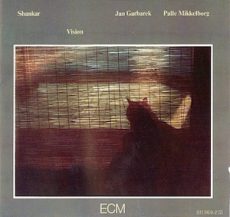
He has performed in trio with trumpeter Palle Mikkelborg and saxophonist Jan Garbarek and has stretched with Elton John, Eric Clapton, Phil Collins, Bruce Springsteen, Van Morrison, Yoko Ono, Stewart Copeland, John Waite, Charly García, Steve Vai, Ginger Baker, Nils Lofgren, Jonathan Davis, The SFA, and Sting.
Better known as L. Shankar, Shankar and Shenkar, violinist, singer and composer Lakshminarayana Shankar continues to perform among other endeavors.
More Posts: bandleader,composer,history,instrumental,jazz,music,violin,vocal
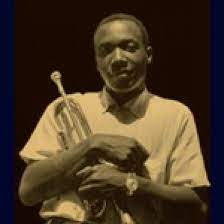
Three Wishes
Carmell Jones and the Baroness Pannonica were talking one night and she asked him if he was given three wishes what would he ask for. His reply was:
- “I would like, first of all, to be at peace with myself, you know? And that would enable me to be at peace with my instrument.”
- “That I wouldn’t have to worry about money and all that it takes to make a living, but that I would be able to look – be free to look – for something other than money. A spiritual thing, you know?”
- “I’d like to have a home. A home is very important for me, because a home is where you make up everything you want to do.”
*Excerpt from Three Wishes: An Intimate Look at Jazz Greats ~ Compiled and Photographed by Pannonica de Koenigswarter

More Posts: baroness,composer,history,instrumental,jazz,music,pannonica,three,trumpet,wishes
Daily Dose Of Jazz…
Harold Land Jr. was born April 25, 1950 in San Diego, California to Harold and Lydia Land. Five years later the family moved to Los Angeles, California where he was raised in a world of jazz through his father’s acclaimed career. His earliest influences were drummer Frank Butler, bassist Curtis Counce, pianist Elmo Hope, trumpeters Carmell Jones and Jack Sheldon. But what really turned him onto jazz piano was a pair of albums by Sonny Clark, Cool Struttin’ and Leapin’ and Lopin‘.
He began piano lessons at the age of seven and began performing in jazz clubs by the age of 16. Crusaders pianist Joe Sample introduced Harold to Wayne Henderson which led to his first professional gig, and to his first two album appearances, including the cult favorite People Get Ready. He credits bandleader Gerald Wilson with giving him his first traditional Jazz gig, which came shortly after his time with Henderson. He accumulated important credits touring with guitarist Kenny Burrell and saxophonist Pharoah Sanders.
Over a career, spanning jazz, funk, and jazz fusion, Land has worked with Marvin Gaye, Roy Ayers, Gerald Wilson, Freddie Hubbard, Bobby Hutcherson, Lee Morgan, Eric Gale, and Roland Kirk.
He has recorded with Dwight Trible, Fela Kuti, Justo Almario, Gerald Wilson, Roy Ayers, Gene Ammons, Anna Fisher, Spiders Webb, The Freedom Sounds, Paul Humphrey. He performed often with his father and has recorded on three of his albums, Choma (Burn), Damisi, and Xocia’s Dance.
As an educator Land has taught and given workshops at several Los Angeles based music schools and high schools, such as Washington Prepatory High School, Alain LeRoy Locke College Preparatory Academy, Alta Loma Music, and The World Stage.
Pianist Harold Land Jr., who also played with his father, currently performs with his trio.
More Posts: bandleader,history,instrumental,jazz,music,piano