

Daily Dose Of Jazz…
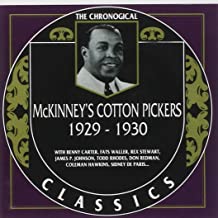
Edward Emerson Cuffee was born on June 7, 1902 in Norfolk, Virginia. He moved to New York in the 1920s, where he recorded with Clarence Williams from 1927 to 1929 and played with Bingie Madison.
Playing in McKinney’s Cotton Pickers from 1929 to 1934, he moved to Fletcher Henderson’s band for three years beginning in 1935. Ed went on to play with Leon Abbey in 1940 and subsequently through the decade with Count Basie, Chris Columbus and Bunk Johnson.
He quit playing professionally after the late 1940s. Trombonist Ed Cuffee passed away on January 3, 1959 in New York City.

More Posts: history,instrumental,jazz,music,trombone
Requisites
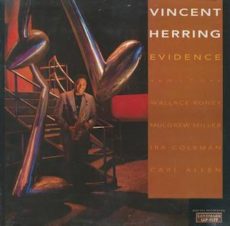
Evidence ~ Vincent Herring | By Eddie CarterThis next choice from the library is by alto saxophonist Vincent Herring who I first heard at the 1992 Atlanta Jazz Festival as a member of The Nat Adderley Quintet. Their performance was a highlight of the AJF, and Herring’s solos were breathtaking throughout the set, mesmerizing the crowd. Evidence (Landmark Records LLP-1527) is his second album as a leader, and accompanying him are Wallace Roney on trumpet, Mulgrew Miller on piano, Ira Coleman on bass, and Carl Allen on drums. My copy used in this report is the 1991 Swiss Digital Stereo pressing.
Side One opens with Mr. Wizard by Vincent and Larry Willis, swinging from the outset with an invigorating theme statement. Wallace takes off first driven by jet propulsion, followed by an energetic workout by Vincent. Mulgrew speaks last with a fierce intensity preceding an exuberant closing chorus and abrupt ending. The mood moves to a slower tempo for a beautiful rendition of I Sing a Song by Tex Allen. This tune opens showing grace and politeness with a Bossa-Nova beat on the melody. Roney begins with a seductively appealing performance, the altoist delivers a sublimely beautiful reading next. Miller’s closing presentation is an equal mix of elegance, poignancy, and warmth. Stars Fell on Alabama, the 1934 jazz standard by Frank Perkins and Mitchell Parish is a touching tribute to Cannonball Adderley who recorded it on Cannonball Adderley Quintet in Chicago (1959). Vincent opens the soloing with a sweet lyricism like a rare vintage wine that’s mellowed with age. Mulgrew adds a richly evocative romanticism to the finale matched by Ira and Carl’s tender interplay.
Voyage by Kenny Barron is the Side One finale with a lively, uptempo beat by the quintet on the opening chorus. Herring solos first with a captivating interpretation. Roney bursts into the next reading with a blazingly hot attack of electrically charged energy. Miller takes the final spot for an effervescent statement into the reprise and ending. Never Forget is Herring’s second contribution to the album and a very pretty ballad by Vincent expressing a voluptuous richness on the opening chorus and affectionate intimacy on the lead solo. Mulgrew gives a vivid example of his ability to communicate something special by caressing each phrase of the closing reading, making it truly distinctive and memorable for a deeply satisfying performance.
Evidence was written by Thelonious Monk in 1948, this jazz standard was first recorded as a single, and later on Milt Jackson and The Thelonious Monk Quintet (1955). The quintet starts with a happy groove exhibited in the opening statement by Herring showing a remarkable maturity beyond his age. Roney takes over in fine spirits and exceptional form on the second solo. Miller comes in next for an equally inspired reading. Carl shares the finale with all three soloists before the ensemble’s exit. Soul-Leo by Mulgrew Miller begins with a joyous medium theme. Wallace delivers tremendous excitement on the first solo. Vincent continues with an infectious groove next, then Mulgrew provides the summation ahead of a few closing comments by Vincent into the close.
The engineer on Evidence is Paul Goodman who has a large discography of notable jazz albums for Atlantic, Cobblestone, Elektra Musician, MPS Records, Muse Records, Onyx Records, Prestige, RCA Victor, and Xanadu. The digital mastering is by George Horn who also has a lengthy resume of albums at Fantasy Studios, and his own company, George Horn Mastering. The quality of this digital recording is splendid with a natural soundstage surrounding your listening chair with sweet sounds. In his closing remarks of the liner notes, producer Orrin Keepnews described Vincent Herring as “a force to be reckoned with in the world of jazz”. I agree with his statement and will only add that Vincent’s playing is indeed a satisfying experience supporting the Evidence found in the seven selections on this album!
~ Cannonball Adderley Quintet in Chicago (Mercury Records MG 20449/SR 60134), Evidence (Blue Note 549), Milt Jackson and The Thelonious Monk Quintet (Blue Note BLP 1509/BST 81509) – Source: Discogs.com ~ Stars Fell on Alabama – Source: JazzStandards.com © 2021 by Edward Thomas Carter

More Posts: choice,classic,collectible,collector,history,instrumental,jazz,music,saxophone
Daily Dose Of Jazz…
Leonard Walter Bush was born in London, England on June 6, 1927 and contracted polio as a child which left him with a limp for the rest of his life. He studied and played violin before switching to bass at sixteen. By 17 he was playing professionally in a variety show called The Rolling Stones and Dawn. He played with Nat Gonella in the middle of the 1940s but turned to bebop later in the decade.
From 1950 onwards Lennie did a lot of freelance work and worked with Roy Fox in 1951. He was one of the founding members of London’s Club Eleven, the first London jazz club to offer performers a paid gig. He played there from 1952-1956 in a band with Ronnie Scott, trumpeter Hank Shaw, pianist Tommy Pollard, and drummer Tony Crombie.
He studied with James Merrett at the Guildhall School of Music and participated in the European tours of Benny Goodman, Louis Armstrong, Zoot Sims, and Roy Eldridge. Becoming a member of Jack Parnell’s ATV Orchestra in 1957, he recorded with Stephane Grappelli, Anita O’Day, and Eddie Vinson. He continued to play in the 1990s as part of the Ralph Sharon Trio with Jack Parnell. During that decade he also appeared with Don Lusher’s Ted Heath tribute band and played in the final Ted Heath concert in 2000.
Double bassist Lennie Bush continued to freelance into the 2000s until his death on June 15, 2004.
More Posts: bandleader,bass,history,instrumental,music
Daily Dose Of Jazz…
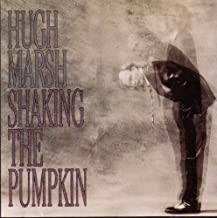
Hugh Marsh was born June 5, 1955 in Montreal, Quebec, Canada and brought up in Ottawa, Ontario, where he learned to play the violin from the age of five. While in high school, when trying to play the saxophone he was led to exploring jazz, funk and rhythm and blues. With his father’s encouragement, he transferred these improvisation skills to the electric violin.
By 1978, Marsh was invited by jazz musician Moe Koffman to perform with him in a concert series at the Art Gallery of Ontario in Toronto. This led to gigs at top Toronto clubs and to perform with Canadian jazz musicians Doug Riley, Claude Ranger, Sonny Greenwich and Don Thompson. In 1979 he joined Bruce Cockburn, recording and touring with him.
In 1984, he recorded his independent album The Bear Walks and was distributed by Duke Street Records. He was joined by Doug Riley on keyboards, Peter Cardinali on bass, and Michael Brecker on tenor saxophone. His next recording ventured into other genres mixed with jazz. Since 1990 HUgh has recorded and toured with Celtic songstress Loreena McKennitt, contributing to six multi-platinum albums and a number of world tours. He has worked with Turkish Sufi deejay Mercan Dede, and has worked with Turkish artists Ihsan Ozgen, Kani Karaca, Goksel Baktagir and Ozcan Deniz.
Marsh would go on to collaborate on film scoring projects with composers Harry Gregson Williams and Don Rooke, and with Hans Zimmer on scores for Tears of the Sun and The Da Vinci Code.
In 2004 he joined clarinetist Don Byron’s new quartet “Swiftboat”, along with bassist Kermit Driscoll, and drummer Pheeroan Aklaff. He toured as a member of trumpeter Jon Hassell’s new quartet with bassist Peter Freeman and percussionist Steve Shehan. A four-time winner of the Jazz Report Award for violinist of the year and a three-time recipient of the National Jazz Award for violinist of the year, he has been nominated for a 2007 Juno Award in the best contemporary jazz album category.
Violinist Hugh Marsh continues to perform and record across genres, regularly performing with Rheostatics.
More Posts: bandleader,history,instrumental,jazz,music,violin

Daily Dose Of Jazz…
John W. Russell was born on June 4, 1909 in Charlotte, North Carolina but was raised in New York City. He began on violin at age nine, later picking up saxophone and clarinet. He played in both capacities with Jimmy Campbell in 1926, then worked at the Strand Danceland under Earle Howard.
While continuing to play violin in live settings, there are no known recordings of him as a violinist. In the early 1930s after working with Harry White, he replaced Chu Berry in Benny Carter’s ensemble in 1933-34, then joined up with Willie Bryant in 1935-36. Johnny toured with Bobby Martin’s orchestra in Europe in 1938, and played with this group on the soundtrack to the 1938 Erich von Stroheim film, L’alibi; it is for his solos in this recording that he is best known.
Following this Russell remained in Europe to play with Willie Lewis from 1939 to 1941. Upon his return to the U.S. he played with Garvin Bushell briefly before being drafted. He played in military bands, including Russell Wooding’s, during World War II, then played following the war with Cecil Scott in 1945 and Eddie Cornelius.
Tenor saxophonist, clarinetist, and violinist Johnny Russell, who stopped playing full-time later in the 1940s, but occasionally did club dates later in his life, passed away on July 26, 1991 in New York City.
More Posts: clarinet,history,instrumental,jazz,music,saxophone,violin