

Daily Dose Of Jazz…
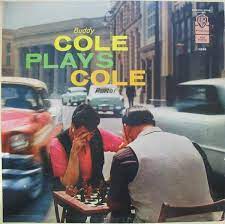
Buddy Cole was born Edwin LeMar Cole on December 15, 1916 in Irving, Illinois. He started his musical career in the theater, playing between movies and by age 19 he was recruited to be part of the Gil Evans band.
Moving to Hollywood, California in the second half of the 1930s, Buddy played in dance bands, including those led by Alvino Rey and Frankie Trumbauer. From the 1940s, his main work was as a studio musician, utilizing piano, electric organ, celeste, harpsichord and Novachord.
Cole worked with Henry Mancini, who used his Hammond organ for the soundtrack to the TV series Mr. Lucky. He also played most of the piano parts in the 1951 film Young Man with a Horn, subbing for Hoagy Carmichael, who appeared on screen. He also wrote the music for the television game show Truth or Consequences.
He performed on Bing Crosby’s hits In a Little Spanish Town and Ol’ Man River, and on the albums Some Fine Old Chestnuts and New Tricks. Buddy also played on Rosemary Clooney’s radio program and some recordings from the show were released on the album Swing Around Rosie.
Pianist, organist, orchestra leader, and composer Buddy Cole, who recorded several organ albums as a leader for Warner Brothers, Columbia, Alshi and Doric, passed away on November 5, 1964 in Hollywood, California.

More Posts: bandleader,composer,history,instrumental,jazz,music,organ,piano
Daily Dose Of Jazz…
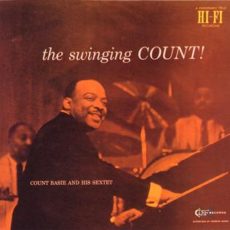
William James “Count” Basie was born on August 21, 1904 in Red Bank, New Jersey. His father played the mellophone, his mother played the piano and gave him his first piano lessons. Taking in laundry and baking cakes for sale for a living, she paid 25 cents a lesson for his piano instruction. The best student in school, he inished junior high school and spent much of his time at Red Bank’s Palace Theater, where he quickly learned to improvise music appropriate to the acts and the silent movies.
A natural pianist but preferring drums he was discouraged by the obvious talents of Sonny Greer, who also lived in Red Bank and became Duke Ellington’s drummer in 1919, He let the idea of drumming go and concentrated on the piano exclusively at age 15. He and Greer played together in venues until Greer set out on his professional career. By then, Basie was playing with pick-up groups for dances, resorts, and amateur shows, and Harry Richardson’s Kings of Syncopation.
By 1920 Basie was in Harlem where he bumped nto Greer and started meeting the musicians making the scene like Willie “The Lion” Smith and James P. Johnson. Before he was 20 years old, he toured extensively on the Keith and TOBA vaudeville circuits as a solo pianist, accompanist, and music director for blues singers, dancers, and comedians. This provided an early training that was to prove significant in his later career.
Back in Harlem in 1925, he met Fats Waller, who taught him how to play that instrument. As he did with Duke Ellington, Willie “the Lion” Smith helped Basie out during the lean times by arranging gigs at house-rent parties, introducing him to other leading musicians, and teaching him some piano technique.
In 1928, Basie joined Walter Page and his Famous Blue Devils. It was at this time that he picked up the moniker of Count. The next year saw him in Kansas City holding down the piano chair with Bennie Moten. After a couple of re-organizations of the band, Basie formed his own nine-piece band, Barons of Rhythm who played regularly at the Reno Club and on the radio. Moving to Chicago, Illinois the band eventually became the Count Basie Orchestra where they did their first recordings for Vocalion under the name Jones-Smith, as Basie had already signed with Decca.
Over the course of the fifty years he led the band he was instrumental in creating innovations like the use of two “split” tenor saxophones, emphasizing the rhythm section, riffing with a big band, using arrangers to broaden their sound, which any other bands copied. He also brought to prominence such players as Lester Young, Herschel Evans, Freddie Green, Buck Clayton, Harry “Sweets” Edison, Al Grey, Jimmy Rushing, Helen Humes, Thelma Carpenter, and Joe Williams.
Pianist, organist, bandleader, and composer Count Basie, who recorded close to two hundred albums and in 1958 became the first Black man to win a Grammy Award, passed away on April 26, 1984.

More Posts: bandleader,composer,instrumental,music,organ,piano
Requisites
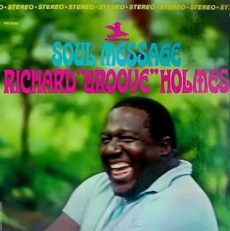
Soul Message ~ Richard “Groove” Holmes | By Eddie Carter
This morning’s choice from the library is an album I first heard on our then R&B station in Cleveland, Ohio, WJMO 1490 AM. I knew the song Misty from my uncle’s weekend jazz listening sessions but had never heard it played on the organ before. I called the station and that’s how I discovered organist Richard “Groove” Holmes. Soul Message (Prestige PR 7435/PRST 7435) serves up six delicious tunes of Soul-Jazz that are something special. Gene Daniels on guitar and Jimmie Smith complete the trio, and my copy used in this report is the 1965 US Stereo pressing. Daniels played with Holmes on two earlier albums in 1961 and 1962, Groovin’ With Jug and After Hours. This was Smith’s only time recording with Richard, but he would go on to enjoy a successful career playing with Toshiko Akiyoshi, Benny Carter, Eddie “Lockjaw” Davis, Erroll Garner, Gene Harris, Terry Gibbs, and Joe Pass.
Groove’s Groove, a soulful blues by Holmes starts with an infectious melody compelling one to snap their fingers and tap their toes right away. Richard hits a groove immediately with a marvelous interpretation. Gene follows with a statement as succulent as a huge Sunday meal from Mom’s or Grandma’s kitchen. Holmes returns for a brief anecdote ahead of the finale. Dahoud by Clifford Brown moves the tempo up to a tropical flavor in the opening chorus. Daniels emerges first with a perfectly constructed opening solo. Holmes delves down into the tune’s roots, stating his point with excellent enunciation into the trio’s reprise. Misty by Erroll Garner and Johnny Burke begins on an upbeat note with Richard soaring at length after the melody. Gene and Jimmie propel the song forward into a charming climax. Misty became Richard’s biggest hit and his signature song whenever he performed live.
Side Two starts with the trio easing into the melody of Song For My Father by Horace Silver. Daniels brings blues-rooted energy to the first solo, then Holmes builds on the momentum with a happy performance that he manages tastefully. The Things We Did Last Summer is a beautiful song by Jule Styne and Sammy Cahn. The trio cultivates an irresistible warmth on this 1946 evergreen with a remarkably respectful opening chorus. Richard approaches every note of the lead and closing solos softly and tenderly. Gene completes the gentle mood with a lovely interpretation of romantic reflection before the trio’s delightfully delicate ending. The title track, Soul Message wraps up this set with a cheerful sermon by Holmes who preaches a concise mellow statement with light and airy verses after the catchy melody.
Soul Message was recorded by Rudy Van Gelder and it’s a good recording, but not perfect. On Groove’s Groove during Richard’s second solo, and on Misty, the microphone picks up a bit of distortion in the upper register lasting about one verse on Groove’s Groove and during the second, third and fourth verses on Misty. This is particularly noticeable if you are wearing a good pair of headphones as I do when listening to jazz late at night. These two issues aside, the instruments have a good soundstage on the remainder of the album. Richard also recorded for Groove Merchant, Muse Records, and Pacific Jazz. He passed away from a heart attack on June 29, 1991, at the age of sixty after battling prostate cancer. If you are a fan of the jazz organ or are just discovering the music of Richard “Groove” Holmes, I invite you to audition Soul Message for a spot in your jazz library. It’s a vibrant, inspired album by the organist, and after you’ve heard it, I’m almost certain you’ll get the message!
~ After Hours (Pacific Jazz PJ-59/ST-59), Groovin’ With Jug (Pacific Jazz PJ-32/ST-32) – Source: Discogs.com ~ Misty – Source: JazzStandards.com ~ Richard “Groove” Holmes, Jimmie Smith, The Things We Did Last Summer – Source: Wikipedia.org © 2021 by Edward Thomas Carter

More Posts: choice,classic,collectible,collector,history,instrumental,jazz,music,organ
The Quarantined Jazz Voyager
It amazes me how many people want to get back to the old normal so quickly that they are walking around without any protection. Honor is rare in America, so that system is flawed. However, I remain vigilant with my safety and health as governors across the country are removing mandatory masking and social distancing.
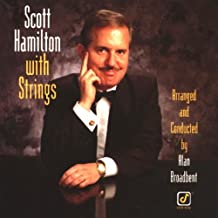
So in light of those decisions, I have chosen from my collection the 1993 Concord Records album by one of the industry’s most seasoned musicians. The album Scott Hamilton With Strings paired the tenor saxophonist with pianist Alan Broadbent, who served as musical director, conductor, and arranger for the session. Throw in a 20-piece string orchestra and you have the makings of an enjoyable listening experience.
The recording sessions were done October 5, 1992 & October 6, 1992 at Group IV Recording Studios, Hollywood, California. The photography was taken by David Lubarsky, the art direction by Kent Judkins, and the liner notes were written by Peter Straub. The recording and remix engineer was Phil Edwards, and the assistant recording engineer was Dann Thompson. The album was mastered by George Horn. The producer on the recording dates was Carl E. Jefferson along with his assistant producers, Elizabeth Bell and Nick Phillips.
Track List | 57:54- My Foolish Heart (Ned Washington, Victor Young) ~ 5:28
- Goodbye Mr. Evans (Phil Woods) ~ 7:29
- The Shining Sea (Peggy Lee, Johnny Mandel) ~ 6:07
- Angel Eyes (Ned Brent, Matt Dennis) ~ 6:09
- Heart’s Desire (Alan Broadbent, Dave Frishberg) ~ 5:27
- The Look Of Love (Burt Bacharach, Hall David) ~ 5:15
- Nancy(With The Laughing Face) (James Van Heusen, Phil Silvers) ~ 4:21
- Young And Foolish (Albert Hague, Arnold B. Horwitt) ~ 5:26
- I Concentrate On You (Cole Porter) ~ 6:48
- Tonight I Shall Sleep (With A Smile On My Face) (Duke Ellington, Mercer Ellington, Irving Gordon) ~ 5:24
- Scott Hamilton ~ tenor saxophone
- Alan Broadbent ~ piano,
- Bob Maize ~ bass
- Roy McCurdy ~ drums
- Cello ~ Dennis Karmazyn, Fred Seykora, Jodi Burnett, Paula Hochhalter, Ray Kramer*
- Viola ~ Carole Mukogawa, Dan Neufeld, Harry Shirinian, Maria Newman, Pamela Goldsmith
- Violin ~ Bonnie Douglas, Darius Campo, Endre Granat, Gordon Marron, Haim Shtrum, Harris Goldman, Henry Ferber, Israel Baker, James Getzoff, John Wittenberg, Juliann French, Ken Yerke*, Mari Tsumura-Botnick, Paul Shure, Robert Brosseau
- Violin, Concertmaster ~ Murray Adler
More Posts: adventure,album,club,genius,jazz,museum,music,organ,preserving,restaurant,travel

Requisites
Open House~Jimmy Smith | By Eddie Carter
During his time at Blue Note, any album by Jimmy Smith was considered something special to have in one’s library. Jimmy knew his instrument and his contributions to help popularize the Hammond B3 organ in Hard-Bop and Soul-Jazz are a notable achievement. Open House (Blue Note BLP 4269/BST 84269) was recorded in 1960 but remained shelved until 1968. The gentlemen joining Jimmy for this informal session are Blue Mitchell (tracks: A1, B1) on trumpet, Jackie McLean (tracks: A1, B1, B2) on alto sax, Ike Quebec (tracks: A1, A2, B1) on tenor sax, Quentin Warren on guitar, and Donald Bailey on drums. This lineup also appears on the companion album, Plain Talk, and my copy used in this report is the 1970 US Stereo reissue.
Side One starts with a visit inside Jimmy’s Open House. The ensemble builds the melody gradually with Jimmy alternating sections with the front line. Blue opens the lead solo with a relaxing informality, then Jackie takes over in low gear on the second reading, building steadily to a satisfying groove. Ike comes in next for a delightful interpretation and Jimmy wails on the closing statement preceding the ending theme and fadeout. Old Folks by Willard Robison and Dedette Lee Hill is one of the prettiest jazz standards ever recorded. It was composed in 1938 and Quebec gets the honors as the only horn, backed by the trio. Ike’s deeply thoughtful stating the pensive theme and also gives a tender first statement. Jimmy closes with a reflective comment before Quebec returns to take the song out with a tender ending.
The sextet begins Side Two with a visit to Jimmy’s Sista Rebecca. After a brief collective theme by the ensemble, Ike moves into a steady medium tempo on the opening chorus with the trio comfortably backing him. Blue follows, sailing smoothly with a sassy groove that’s sure to get the listener to snap their fingers and tap their toes. Jackie’s alto flows nicely on the third reading and Jimmy adds the final touch with some down-home country cooking leading to the theme’s reprise and fadeout. A pretty introduction and melody by McLean begins the 1928 song, Embraceable You by George and Ira Gershwin. The altoist creates a romantic atmosphere with a dreamy lead solo, then Jimmy briefly conveys a loving sentiment into an elegant ending.
Open House was produced by Alfred Lion and engineered by Rudy Van Gelder. The good news is the musicians are excellent, the music features great solos from the principals and solid support from Warren and Bailey. The issue I have with the record is the microphone placement for Jimmy’s organ has a tone of harshness as he’s playing on two of the tunes (tracks: A1, B1). I think that’s the reason the album wasn’t released after the session was recorded. That issue aside, if you’re a fan of Jimmy Smith, Soul-Jazz, or enjoy jazz organ, I invite you to audition Open House for a spot in your library. It’s one of the albums deserving greater recognition and with a stellar supporting cast of Blue Mitchell, Jackie McLean, and Ike Quebec is worth the price of admission! ~ Plain Talk (Blue Note BST 84296) – Source: Discogs.com ~ Embraceable You, Old Folks – Source: JazzStandards.com © 2021 by Edward Thomas Carter
More Posts: choice,classic,collectible,collector,history,instrumental,jazz,music,organ