

Daily Dose Of Jazz…
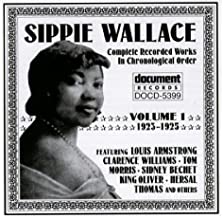
Sippie Wallace was born Beulah Belle Thomas on November 1, 1898 in Plum Bayou, Jefferson County, Arkansas, one of thirteen children. Coming from a musical family, two of her brothers and a niece had prolific music careers. As a child, her family moved to Houston, Texas, and growing up she sang and played the piano in Shiloh Baptist Church but at night she and her siblings would sneak out to tent shows. By her mid-teens, they were playing in those tent shows, performing in various Texas shows, building a solid following as a spirited blues singer.
Along with her brother Hersal, Wallace moved to New Orleans, Louisiana in 1915 and two years later she married Matt Wallace and took his surname. She followed her brothers to Chicago, Illinois in 1923 and worked her way into the city’s bustling jazz scene. Hersal died three years later, but her reputation led to a recording contract with Okeh Records that same year with her first recorded songs, Shorty George and Up the Country Blues, sold well enough to make her a blues star in the early 1920s. Moving to Detroit, Michigan in 1929, she would lose her husband and her brother George in 1936.
For some 40 years, Sippie sang and played the organ at the Leland Baptist Church in Detroit. From 1945 she basically retired from music until launching a comeback in 1966, recording an album, Women Be Wise, on October 31st in Copenhagen, Denmark, with Roosevelt Sykes and Little Brother Montgomery playing the piano. Over the course of her career, she worked with Louis Armstrong, Johnny Dodds, Sidney Bechet, King Oliver, and Clarence Williams.
Singer, songwriter, pianist, and organist Sippie Wallace, who was nominated for a Grammy Award in 1982 and was posthumously inducted into the Michigan Women’s Hall of Fame in 1993, passed away at Sinai Hospital in Detroit, Michigan from complications of a severe stroke suffered post~concert in Germany on November 1, 1986. She was 88.
More Posts: history,instrumental,jazz,music,organ,piano,songwriter,vocal
Daily Dose Of Jazz…
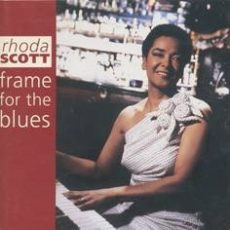
Rhoda Scott was born in Dorothy, New Jersey on July 3, 1938 the daughter of an A.M.E. pastor. She spent most of her childhood in New Jersey, where she learned to play the organ in her father’s churches from the age of seven. Soon she was organist for youth and gospel choirs in her father’s church or in other churches. Later she studied classical piano and focused more on the organ while earning a Masters in Music Theory from the Manhattan School of Music.
During this time, a choir member asked her to be in a small band as a jazz pianist. Accepting under the condition that she play the organ instead of the piano, and overtime on the Hammond organ, she became an outstanding jazz musician. She played the church organ barefoot, and continued this practice earning her the nickname “The Barefoot Lady”. It is considered a role model for many who also play the organ barefoot today. Because of her church training, Scott uses the pedals to play walking bass lines. This leaves her left hand free for more sophisticated chords.
Scott was discovered by Count Basie, who hired her for his club in Harlem, New York. In 1967 she moved to France, where her success was far greater than in the United States. She performed at the Paris Olympia and appeared on stage with many greats such as Ray Charles, George Benson , Ella Fitzgerald, Kenny Clarke and Gilbert Bécaud. In the 1970s she was frequently requested by Joe Thomas, Cees Kranenburg Jr., Bill Elliott, Kenny Clarke, Julie Saury, Sophie Alour, Lisa Cat-Berro, Anne Paceo, Géraldine Laurent, Julien Alour, and Thomas Derouineau.
Her music is a fusion of jazz, gospel, and classical and reflects both her early practice and formal training. Hard bop and soul-jazz organist Rhoda Scott, who has recorded eight albums from 1963 to today, continues to perform and record.

More Posts: bandleader,history,instrumental,jazz,music,organ
Daily Dose Of Jazz…
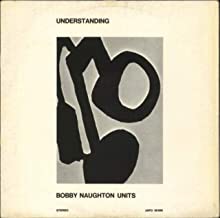
Robert Naughton was born on June 25, 1944 in Boston, Massachusetts. He studied piano from the age of seven through his teens, playing in rock bands and lounge bands.
After serving in the U.S. Army, Naughton started playing organ with a blues band. Following this period he studied painting in art school, then in the 1960s vibraphone became his instrument in the 1960s he was accompanying Sheila Jordan and Perry Robinson.
In 1969 Bobby recorded for the first time, releasing music on his label, Otic, and five more through 2002 as a leader. He composed the score for the silent film Everyday by German artist Hans Richter. In 1972 he played in the Jazz Composers Orchestra. Beginning a year later working with Wadada Leo Smith he recorded several albums through the 1980s. From 1978 to 1982 he toured and recorded with Anthony Braxton, Roscoe Mitchell, the Creative Music Orchestra, and the Creative Improvisers Orchestra.
Vibraphonist Bobby Naughton, who plays fluently with four sticks, exploits the instrument’s overtones and sometimes controls manually the instrument’s vanes continues to perform and record.

More Posts: bandleader,history,instrumental,jazz,music,organ,piano,vibraphone
Requisites
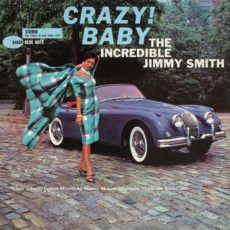
Crazy! Baby ~ Jimmy Smith | By Eddie Carter
The Incredible Jimmy Smith steps into the spotlight for this morning’s discussion with his first release of the sixties and fifteenth of his career. Crazy! Baby (Blue Note BLP 4030) is a 1960 trio album featuring the organist’s bandmates, Quentin Warren on guitar, and Donald Bailey on drums. My copy used in this report is the 1966 Liberty Records Stereo reissue (BST 84030).
When Johnny Comes Marching Home, the album opener has been around since 1863 and the Civil War. I first heard the 45-rpm single of this song in 1962 and was blown away by the group’s musicianship. Quentin is up first after the ensemble’s introduction and marching theme for an opening statement that goes down smoothly and easily like chilled Chardonnay. Jimmy follows with one of his meatiest solos, nearly five-minutes of electrifying jazz preceding the out-chorus march and trio vanishing. Makin’ Whoopee by Gus Kahn and Walter Donaldson premiered in the 1928 Broadway musical, Whoopee! The trio eases into the wonderfully nostalgic theme and Smith executes a marvelous mellow interpretation with a stunning bass line using his left foot.
A Night In Tunisia by Dizzy Gillespie and Frank Paparelli was first sung as a vocal by Sarah Vaughan under the title Interlude on the 1950 album, Hot Jazz. This 1942 Bebop classic is one of Gillespie’s most recorded tunes and the trio establishes the opening chorus made famous by Dizzy. Jimmy kicks off the lead solo with a riveting performance. Quentin closes with a funky statement matched by Donald’s rocking timekeeping propelling the trio into a thrilling coda.
Sonnymoon For Two is by tenor saxophonist Sonny Rollins and the composer introduced it on the 1957 album, A Night at The Village Vanguard. The group opens with a bluesy melody, then Warren dances and grooves on two short, but strong verses. Jimmy comes in next for some extensive wailing on the finale before the reprise and fadeout. Mack The Knife by Kurt Weill and Bertolt Brecht made its debut in the 1928 German play, The Threepenny Opera. This jazz and pop evergreen is a showcase for Smith who does a superlative job illustrating the title character in a thoroughly satisfying performance.
Up next is the thoughtfully pensive ballad by Bob Haggart and Johnny Burke, What’s New? Smith starts with a delicately wistful melody, segueing into a melancholic one-sided interpretation reflecting on the love that’s now just a memory before ending his conversation in grand fashion. The album closes with Smith’s dedication to Blue Note co-founder Alfred Lion, Alfredo. The trio flows vibrantly on the melody into Quentin soloing first with a leisurely, carefree swing that’ll get fingers snapping and toes tapping. Jimmy raises the temperature on a vivaciously brisk closing presentation taking no prisoners into the ending.
Rudy Van Gelder’s recording has a pleasant soundstage across the treble, midrange and bass spectrum resulting in sweet sounds emerging from your speakers that make this LP an easy choice to recommend for your library. If you’re a fan of jazz organ or are just discovering the music of Jimmy Smith, I submit for your consideration, Crazy! Baby. It’s a tasty combination of Hard-Bop and Soul-Jazz that once heard, you’ll want to replay repeatedly!
~ A Night at The Village Vanguard (Blue Note BLP 1581/BST 81581); Hot Jazz (Remington RLP-1024) – Source: Discogs.com ~ A Night In Tunisia, Mack The Knife, Makin’ Whoopee, What’s New? – Source: JazzStandards.com ~ When Johnny Comes Marching Home – Source: Wikipedia.org ~ When Johnny Comes Marching Home https://www.youtube.com/watch?v=7YpKGKF7_XY ~ A Night In Tunisia – https://www.youtube.com/watch?v=S3c-564EE0o © 2020 by Edward Thomas Carter Synopsis
Crazy! Baby is an album by jazz organist Jimmy Smith with performances that were recorded on January 4, 1960 and released by Blue Note. This was the first album Smith recorded at Rudy Van Gelder’s studio in Englewood Cliffs, New Jersey.
Tracks | 37:08
- When Johnny Comes Marching Home (Traditional) – 7:58
- Makin’ Whoopee (Walter Donaldson, Gus Kahn) – 4:57
- A Night in Tunisia (Dizzy Gillespie) – 5:40
- Sonnymoon for Two (Sonny Rollins) – 7:15
- Mack the Knife (Bertolt Brecht, Kurt Weill) – 4:58
- What’s New? (Bob Haggart, Johnny Burke) – 3:50
- Alfredo (Jimmy Smith) – 4:30
- Jimmy Smith – organ
- Quentin Warren – guitar
- Donald Bailey – drums
- Alfred Lion – producer
- Rudy Van Gelder – engineer
- Reid Miles – design
- Bob Ganley – photography
- Leonard Feather – liner notes

More Posts: choice,classic,collectible,collector,history,instrumental,jazz,music,organ
Three Wishes
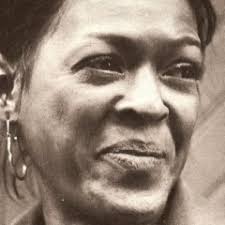
During girl talk with Shirley Scott, Nica asked her if she was given three wishes what would they be, and she replied:
-
-
“I wish my children could have everything. Anything that would be good for them.”
-
“Good health for my husband’s family and for mine.”
-
“Happiness.”
-
*Excerpt from Three Wishes: An Intimate Look at Jazz Greats ~ Compiled and Photographed by Pannonica de Koenigswarter

More Posts: baroness,history,instrumental,jazz,music,organ,pannonica,three,wishes