

Daily Dose Of Jazz…
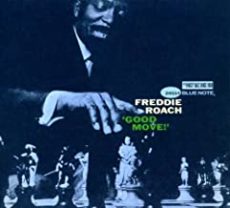
Frederick Roach was born on May 11, 1931 in The Bronx, New York. He made his record debut in 1960 with saxophonist Ike Quebec on the albums Heavy Soul and It Might as Well Be Spring and played with Willis Jackson.
>From 1962-64 he recorded five albums as a leader for the Blue Note Records label. He also recorded with Donald Byrd on the album I’m Tryin’ to Get Home. His original writing, steady basslines, and highly musical fleet-fingered right hand set him apart.
1966-67 saw Freddie recording three more albums as a leader for Prestige Records, which are in a more commercial vein than his Blue Note dates. He left the music business in 1970 and became involved in theater, playwriting and film.
Roach was a soulful organist, certainly influenced by Jimmy Smith, but with a distinct sound and a quite original concept, which was perhaps best heard on “Good Move” for Blue Note. His Blue Note albums are critically acclaimed
Soul jazz Hammond B3 organist Freddie Roach, who moved to California for the film industry, suffered a heart attack and passed away on October 3, 1980.

More Posts: bandleader,composer,history,instrumental,jazz,music,organ
Daily Dose Of Jazz…
Eddy Louiss was born on May 2, 1941 in Paris, France. Playing in his father Pierre’s orchestra in the 1950s, his primary instrument became the Hammond organ. The original family name was Louise, which he changed to the current spelling. As a vocalist, he was a member of Les Double Six of Paris from 1961 through 1963.
For 13 years, between 1964 and 1977, Eddy played with leading French musician Claude Nougaro. Leaving Nougard, he ventured out on a solo career. He went on to work with Kenny Clarke, René Thomas, and Jean-Luc Ponty. In 1971 he was a member of the Stan Getz quartet with René Thomas and Bernard Lubat. The quartet recorded the 1971 Getz album Dynasty.
After suffering artery problems, Louiss had his left leg amputated in the early 1990s, following which he made few public appearances.
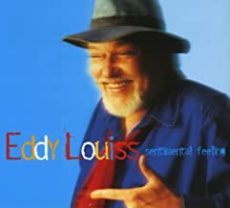
In duet, he recorded with pianist Michel Petrucciani in 1994, and accordionist Richard Galliano in 2002. His later recordings, such as Sentimental Feeling and Récit proche, combined jazz with rock and world music.
Hammond organist and vocalist Eddy Louiss, who was awarded the Prix Django Reinhardt in 1964, passed away on June 30, 2015 in Poitiers, France.
More Posts: bandeader,history,instrumental,music,organ,vocal
Requisites
I’ve Got A Woman ~ Jimmy McGriff | By Eddie Carter
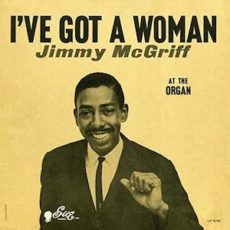
This morning’s subject of discussion to begin March is a 1962 Soul-Jazz album by organist Jimmy McGriff who steps into the spotlight with his debut, I’ve Got A Woman (Sue Records LP 1012/LPST 1012). He would make quite an impression on the jazz world in the early sixties. McGriff was twenty-six when he recorded it, and the title tune became his first of ten hits over the next three years. Accompanying him is his working trio at the time, Morris Dow on guitar and Jackie Mills on drums. The LP used in this report is a friend’s copy of the 1962 Mono deep groove release.
Side One kicks off with a rapid reworking of I’ve Got A Woman by Ray Charles. Jimmy takes flight on the song’s only solo with a vigorously spirited performance that sizzles to the rhythm section’s supplement into an enthusiastic fadeout.
On The Street Where You Live by Fredrick Loewe and Alan Jay Lerner offers a subtle change of pace from the previous cooker. It was written in 1956 and featured in the Broadway musical, My Fair Lady that year, and also in the 1964 film version. McGriff steers clear of the pitfall of imitation on the melody and song’s only statement with a quaint and very charming reading preceding the climax. Satin Doll by Duke Ellington, Johnny Mercer, and Billy Strayhorn was written in 1953. It’s one of Ellington’s most popular and recorded songs and is considered one of his best compositions in The Great American Songbook. Jimmy leads the threesome on the melody, then continues on a brief pretty solo. Morris delivers a short meaningful interlude with Jackie provides significant support into the ensemble’s climax.
Thelonious Monk is represented by the most famous of all his tunes, ‘Round Midnight was written in 1944 with Bernie Hanighen and Cootie Williams. It debuted on the album, Genius of Modern Music, Volume 1 (1952), and Miles Davis also recorded it under the title, Round About Midnight (1957). McGriff starts the song with a passionately majestic opening statement, then continues in that vein on a lead solo that’s the personification of elegance. Dow follows with a tender reading as affectionate as a loving embrace or kiss. McGriff returns for a final intimate thought culminating with a delightfully delicate finale. Jimmy’s original, All About My Girl expresses the highly elated and joyful feeling one has about that special woman in their life. The organist opens with an exhilarating statement, and Morris gives with a scintillating reading before the upbeat reprise and coda.
Side Two starts with a medium tempo blues by McGriff, M.G. Blues possessing a sassy attitude that the leader states proficiently in the opening chorus and song’s only solo. It’s a fun tune that’s full of high spirits and enhanced by the rhythm section’s groovy groundwork. Jimmy’s That’s The Way I Feel establishes a sanctified rhythm on the melody that would be perfectly at home in that setting. The trio begins the tune with an earthy, down-home flavor, then Jimmy swings hard on a short reading into the close. After Hours by Avery Parrish, Robert Bruce, and Buddy Feyne is the perfect blues for late-night listening. McGriff honors the 1946 jazz standard by reaching into the heart of the melody with a lengthy warm, affectionate performance that’s sure to bring tears to your eyes as the threesome disappears into nothingness.
Flying Home by Benny Goodman, Lionel Hampton, and Sid Robin was composed in 1939 during a cross-country flight while Hampton was a member of Goodman’s orchestra. Jimmy gives this ageless favorite a vigorously fast workout on the introduction, main theme, and opening statement. Jackie makes a brief comment in his only reading before Jimmy catapults the closing chorus into a rousing finale. McGriff gives a nod to his friend Jimmy Smith with a rocking performance of The Sermon that Smith recorded with an all-star group four-years earlier and released in 1959. McGriff gets good and funky on the lead solo at a swifter speed than the original. Dow fuels the next reading with an energized performance that cooks into McGriff’s return to express a bit more joy before the ending theme trails off into a slow fade.
On the strength of three hits, I’ve Got A Woman, All About My Girl, and M.G. Blues, Jimmy recorded six more albums for Sue Records that ultimately produced seven more hits for the label, making a convincing argument for his reputation as a Soul-Jazz organist. The date was engineered by Irving Greenbaum, and produced by label co-owners, Henry “Juggy” Murray, Jr. and Bobby Robinson. The sound quality is not up to the engineering level by Roy DuNann, Jack Higgins, and Rudy Van Gelder. However, it’s good enough to crank up the volume because the music radiates an infectious enthusiasm and is fun to listen to. If your musical appetite is craving some soul-food for your ears, I offer for your consideration, I’ve Got A Woman by Jimmy McGriff. It’s an appetizing dish of finger-popping, toe-tapping jazz organ that’s worth seeking out on your next vinyl hunt!
~ Genius of Modern Music, Volume 1 (Blue Note BLP 5002), Round About Midnight (Columbia CL 949/CS 8649), The Sermon (Blue Note BLP 4011/BST 84011) – Source: Discogs.com ~ After Hours, Flying Home, ‘Round Midnight, Satin Doll – Source: JazzStandards.com ~ On The Street Where You Live – Source: Wikipedia.org © 2021 by Edward Thomas Carter

More Posts: choice,classic,collectible,collector,history,instrumental,jazz,music,organ
The Quarantined Jazz Voyager
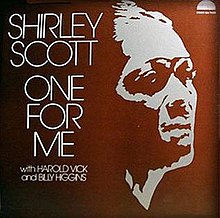
As life moves forward and I remain steadfast in social distancing, I was reminded of an album produced by hard bop, soul~jazz organist Shirley Scott. This was a very personal album for the artist as it is filled with the music she always wanted to create but the demands of her vibrant career always overshadowed. With her friend and executive producer Maxine Gordon, they produced and recorded the session that became the album titled One For Me. This album was made to please no one but the artist herself.
Given two monikers, The Queen Of The Organ and Little Miss Half-Steps, the latter given to her by saxophonist George Coleman, this Philadelphian raised the funds to make the record, she had complete control over her masters and with her dream band, recorded in November 1974 at Blue Rock Studios in New York City. The album was released on the Strata~East label in Januray 1975. It has been re-released in 2020 on Arc Records.
Track List | 41:54- What Makes Harold Sing? ~ 8:53
- Keep on Movin’ On (Harold Vick) ~ 9:52
- Big George ~ 5:22
- Don’t Look Back (Vick) ~ 8:56
- Do You Know a Good Thing When You See One? ~ 8:51
- Shirley Scott – organ, mellotron
- Harold Vick – tenor saxophone
- Billy Higgins – drums
- Jimmy Hopps – cowbell, triangle (track 2)

More Posts: adventure,album,club,genius,jazz,museum,music,organ,preserving,restaurant,travel
Daily Dose Of Jazz…
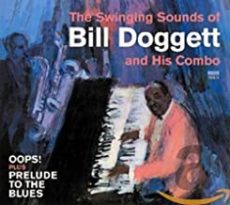
William Ballard Doggett was born February 16, 1916 in Philadelphia, Pennsylvania. During the 1930s and early 1940s he worked for Lucky Millinder, Frank Fairfax and arranger Jimmy Mundy. In 1942 he was hired as the Ink Spots’ pianist and arranger.
By 1951 Doggett had organized his own trio and began recording for King Records. He also arranged for many bandleaders and performers, including Louis Armstrong, Count Basie, Ella Fitzgerald, and Lionel Hampton. He also recorded with Fitzgerald, as well as Coleman Hawkins, Helen Humes, Willis Jackson, Illinois Jacquet, Louis Jordan, Lucky Millinder, Paul Quinichette, Buddy Tate, Lucky Thompson
Crossing over to rhythm & blues his best known recording is Honky Tonk, a rhythm and blues hit of 1956, which sold four million copies (reaching No. 1 R&B and No. 2 Pop), and which he co-wrote with Billy Butler. The track topped the US Billboard R&B chart for over two months. He also worked with the Ink Spots, Johnny Otis, and Wynonie Harris.
Pianist and organist Bill Doggett continued to play and arrange until passing away of a heart attack on November 13, 1996 in New York City. He was 80.

More Posts: bandleader,history,instrumental,music,organ,piano