

Daily Dose Of Jazz…
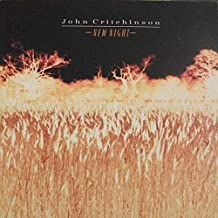
John William Frank Critchinson was born on December 24, 1934 in London, England. He worked as a part-time musician with Ronnie Scott, Tubby Hayes, and Jimmy Deuchar, among others. In 1979, at the recommendation of his mentor, Bill Le Sage, he became a member of Ronnie Scott’s Quartet until it folded in 1995. During that time, he worked with many visiting American artists, including Chet Baker, George Coleman, James Moody, Joe Henderson and Johnny Griffin.
In the early 1980s, he had an association with the British jazz fusion duo Morrissey–Mullen, appearing on two of their albums. He recorded with Dick Morrissey and was a member of Martin Drew’s Our Band, with Ron Mathewson, Jim Mullen, and Dick Morrissey.
In 1995, he formed a quartet with saxophonist Art Themen, bassist Dave Green and Dave Barry on drums. When Scott died in 1996, Critchinson formed the Ronnie Scott Legacy with Pat Crumly on saxophone and flute. Later in his life, he played and recorded with saxophonist Simon Spillett.
Pianist John Critchinson, who recorded eleven albums as a leader and was affectionately known as Critch, passed away on December 15, 2017.

More Posts: bandleader,history,instrumental,jazz,music,piano
Daily Dose Of Jazz…
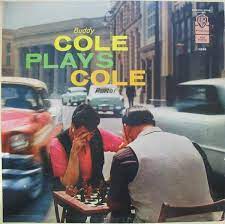
Buddy Cole was born Edwin LeMar Cole on December 15, 1916 in Irving, Illinois. He started his musical career in the theater, playing between movies and by age 19 he was recruited to be part of the Gil Evans band.
Moving to Hollywood, California in the second half of the 1930s, Buddy played in dance bands, including those led by Alvino Rey and Frankie Trumbauer. From the 1940s, his main work was as a studio musician, utilizing piano, electric organ, celeste, harpsichord and Novachord.
Cole worked with Henry Mancini, who used his Hammond organ for the soundtrack to the TV series Mr. Lucky. He also played most of the piano parts in the 1951 film Young Man with a Horn, subbing for Hoagy Carmichael, who appeared on screen. He also wrote the music for the television game show Truth or Consequences.
He performed on Bing Crosby’s hits In a Little Spanish Town and Ol’ Man River, and on the albums Some Fine Old Chestnuts and New Tricks. Buddy also played on Rosemary Clooney’s radio program and some recordings from the show were released on the album Swing Around Rosie.
Pianist, organist, orchestra leader, and composer Buddy Cole, who recorded several organ albums as a leader for Warner Brothers, Columbia, Alshi and Doric, passed away on November 5, 1964 in Hollywood, California.
More Posts: bandleader,composer,history,instrumental,jazz,music,organ,piano
Daily Dose Of Jazz…
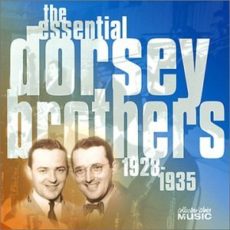
Fulton “Fidgy” McGrath was born in Superior, Wisconsin on December 6, 1907. He played with Red Nichols early in the 1930s, then joined the band of the Dorsey boys and worked on their studio recordings and radio broadcasts.. Additionally he worked extensively as a studio musician and in radio orchestras.
From 1935-37 McGrath played in Lennie Hayton’s radio ensemble, before playing later in the decade with Bunny Berigan, Joe Venuti, and Chauncey Morehouse. After spending time in an NBC orchestra, he moved to the West Coast around 1943, where he became a first-call studio musician who worked on film soundtracks in Hollywood.
His compositions include Shim Sham Shimmy and Mandy Is Two, the latter of which was recorded by Billie Holiday.
Pianist and songwriter Fidgy McGrath passed away at the age of 51 on January 1, 1958 in Los Angeles, California.
Daily Dose Of Jazz…
Jolyon Hunter was born on December 1, 1926 in Ealing, London, England and moved with his actor parents to America in 1935. He studied the French horn at two military schools before switching to trumpet. By 1943 he returned home to Britain and attended the Royal College of Music before joining the war effort in the British Army.
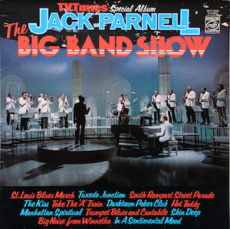
In 1950 Jo left Army service and joined the Kenny Graham Afro Cubists, working with them off and on until 1957. Departing the group, he then worked for a short time with Roy Fox, followed by a five year residence with the Jack Parnell Big Band. He went on to play with Oscar Rabin, replacing Jimmy Deuchar.
Moving to Brighton, he worked with local bands and was an active freelancer on both trumpet and piano. In his later years he worked on cruise ships and played harmonica. Trumpeter and pianist Jo Hunter, who also played pianist and harmonica, passed away on August 14, 2016 at the age of 89.
More Posts: harmonica,history,instrumental,jazz,music,piano,trumpet
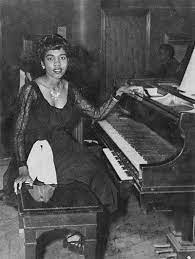
Three Wishes
While having girl talk between Nica and Terry Pollard she asked her what her three wishes would be if they could be granted:
- “A baby girl.”
- “Guaranteed good health.”
- “An un~segregated world.”
*Excerpt from Three Wishes: An Intimate Look at Jazz Greats ~ Compiled and Photographed by Pannonica de Koenigswarter

More Posts: baroness,history,instrumental,jazz,music,pannonica,piano,three,wishes