


Daily Dose Of Jazz…
Alain Mion was born of French extraction on January 14, 1947 in Casablanca, Morocco but was raised in Paris, France.Influenced by Bobby Timmons, Ray Charles and Les McCann, his style varies between jazz, soul jazz and funky music. By the time he was 19 he formed his own trio and performed at the Blue Note. This subsequently led to him gigging at various festivals with Hank Mobley and Philly Joe Jones.
1974 Alain created the jazz funk group Cortex and recorded a dozen albums before embarking upon a career under his own name in 1982, recording to date eleven albums, such as Pheno-Men, Alain Mion in New York recorded with David Binney and Marc Johnson, and Some Soul Food recorded in Stockholm, Sweden with Patrik Boman and Ronnie Gardiner.
In 2008, he emerged with a new group, Alain Mion FunKey Combo with drums, bass and a saxophone section consisting of Italian and French musicians. He reinvented his new group Alain Mion & The New Cortex with the singer Adeline de Lépinay reprising the role originally performed by Mireille Dalbray on the Troupeau Bleu album.
In the United States, Alain Mion and Cortex’s songs have been sampled by several hip-hop artists including but not limited to Madlib, Fat Joe, DJ Day, MF DOOM, Wiz Khalifa, Curren$y, Mellowhype, Tyler The Creator, Rick Ross, and Lupe Fiasco.
Pianist, composer, arranger, and vocalist Alain Mion continues his exploration of the jazz idiom.
More Posts: arranger,bandleader,composer,history,instrumental,jazz,music,piano,vocal
Three Wishes
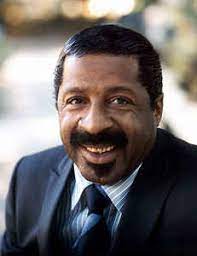
Erroll Garner was puzzled by the question asked of the Baroness he said to her this:
- “I don’t know! I feel as though I’m limited with only three wishes. I feel as though I’m limited.”
*Excerpt from Three Wishes: An Intimate Look at Jazz Greats ~ Compiled and Photographed by Pannonica de Koenigswarter
More Posts: baroness,history,instrumental,jazz,music,pannonica,piano,three,wishes
Requisites
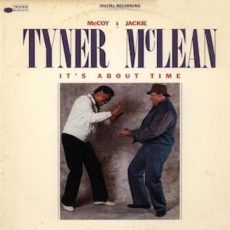
It’s About Time ~ McCoy Tyner and Jackie McLean | By Eddie Carter
This morning’s discussion brings two jazz giants together for their only collaborative album. It’s About Time (Blue Note BT 85102) is a 1985 release by pianist McCoy Tyner and alto saxophonist Jackie McLean (tracks: A1 to A3, B1) that rekindles a sixties Hard-Bop or Post-Bop date and is one of the best kept secrets in both musician’s discographies. The supporting cast is a stellar one, Jon Faddis (tracks: A1, B1) on trumpet, Ron Carter (tracks: A1, B1, B2) on acoustic bass, Marcus Miller (tracks: A2, A3, B3) on electric bass, Al Foster on drums, and Steve Thornton (tracks: A2, A3, B3) on percussion. My copy used in this report is the 1985 US Stereo Full Digital Recording.
Side One opens with the first of five tunes from Tyner’s pen, Spur of The Moment begins with a lively opening chorus in unison. Jon opens the opening solo with tremendous fire and spirit, followed by Jackie who produces some commanding choruses on the second performance. McCoy cooks confidently on the finale with inexhaustible energy into the climax. You Taught My Heart To Sing is a beautiful ballad that’s a showcase for McLean who gives the melody and first solo a warm and moving treatment. Tyner is up next with a delicately gentle reading shadowed by Miller, Foster, and Thornton who anchor both soloists with gorgeous groundwork preceding McLean’s return for the reprise and Tyner’s quiet ending.
It’s About Time begins with a tropical flavor in its blood on a delightfully, feisty midtempo theme led by Jackie who also leads the solos this time with an effective groove, then McCoy follows with a perfectly crafted closing statement. Marcus and Steve provide the spicy compliment that keeps our fingers popping and toes tapping into the group’s soft fadeout. Side Two opens with Hip Toe, a mid~tempo swinger that starts with the front-line and Tyner cruising comfortably into the infectious opening chorus. McLean is up first and comes out swinging on a peppy reading. Faddis answers him with a sharp, zesty statement that builds to a satisfying conclusion. Tyner provides the exclamation point on an extremely happy closing solo before the theme’s return and disappearance.
No Flowers Please by Ron Carter is a trio performance of tranquil beauty that the bassist introduces thoughtfully. McCoy takes the first solo and paints an intimate portrait. Ron closes with a polite, considerate reading executed with fingertip delicacy leading to a tender climax. Travelin’ invites us to take a mid~tempo trip without leaving the comfort of our sweet spot. Miller is the highlight here and demonstrates some stellar bass playing on the opening solo after Tyner’s opening chorus propelled by the rhythm section and Thornton’s percussion. Tyner makes a very personal statement on the closing reading with a grand delivery that brings us safely home after this six-song journey into a gentle culmination.
It’s About Time was produced by Jeffrey Weber and was digitally recorded by Ron Saint German. The sound quality is superb with an outstanding soundstage and excellent stereo separation matching the exceptional interaction between the musicians. The music also flows smoothly and is reminiscent of a classic Blue Note recording of the late fifties or early sixties. If you’re a fan of McCoy Tyner and Jackie McLean, I invite you to audition It’s About Time at your earliest opportunity. It’s an album of wonderful jazz music deserving further investigation for a spot in your library!
© 2021 by Edward Thomas Carter
More Posts: choice,classic,collectible,collector,history,instrumental,jazz,music,piano,saxophone
Requisites
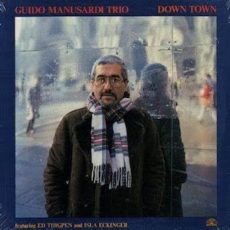
Down Town ~ Guido Manusardi Trio | By Eddie Carter
This morning’s choice from the library is Down Town (Soul Note SN 1131) by The Guido Manusardi Trio. It was released in 1986 and the album’s title comes from the restaurant in the Galleria where Manusardi plays solo piano. He’s one of the incomparable musicians whose records are consistently outstanding. Guido also played and recorded with Don Byas, Roy Eldridge, Art Farmer, Dexter Gordon, Red Mitchell, and many others over a nearly five-decade career. He’s joined here by the Swiss jazz bassist, Isla Eckinger whose catchy grooves flow smoothly whether at fast, medium, or slow tempos. The drummer is Ed Thigpen who needs no introduction to anyone owning albums by Ella Fitzgerald, Oscar Peterson, Bud Powell, Dinah Washington, and others. Thigpen could swing straight ahead with a strong, but not heavy touch on the drums and his rock-solid beat is the foundation sustaining the happy, relaxed mood of this date. I was introduced to his music on this album, and my copy used in this report is the original Italian Stereo pressing.
Downtown, the first of four tunes by the pianist starts Side One in good spirits with the trio’s mellow melody. The pace picks up on the opening chorus with the most solo space devoted to Manusardi who delivers an efficient statement. Eckinger displays his rhythmic virtuosity on the closing reading with a charming, melodic performance. Thigpen holds the song together with subtle support ahead of the finale. Guido’s very pretty ballad, Alexandra, is a stunning centerpiece for him on the song’s only solo. His presentation is elegantly graceful and tender thanks to the intimately gorgeous groundwork of his bandmates. The first side finale is the pianist’s Fairway. It’s ablaze from the pulse-quickening introduction by Thigpen into the trio’s vigorous theme. Guido dances brightly on the keys with an energetic opening statement. Isla follows with an expediently paced, uptempo reading that fuels Ed to raise the energy level higher with a brisk attack on the drums ending with a very satisfying closing chorus.
Side Two opens with the 1935 standard, My Romance by Richard Rodgers and Lorenz Hart. The ensemble introduces the melody at a medium tempo, and Manusardi permits his fingers full sway on the joyously happy lead solo. Eckinger fascinates endlessly on the next reading with incisively expressive lines, and Thigpen exchanges lively brushwork with the leader on the closer before the trio’s exit. Dino’s Mood, Manusardi’s second ballad allows the pianist another opportunity to weave a magic mist of great sensitivity as the song’s lone soloist with a soft-spoken spirit. Isla and Ed shadow Guido as he plays delicately, culminating into a tender climax. The album ends with The Meaning of The Blues by Bobby Troup and Leah Worth. It was composed in 1957 and Manusardi’s lone interpretation is delivered to perfection. He entices the listener with a performance of exquisite beauty and melancholy poetry into the ensemble’s gentle ending.
The solos throughout Down Town are enticing by the exceptional energy, interaction, and technical skill of Manusardi, Eckinger, and Thigpen. The album is also superbly recorded by engineer Giancarlo Barigozzi with an open and airy soundstage, stunning sound, and incredible definition of each instrument. If you’re unfamiliar with pianist Guido Manusardi and enjoy a solid jazz trio of piano, bass, and drums, I invite you to audition Down Town by The Guido Manusardi Trio. Your diligence in seeking the album out for your library will be rewarded with nearly thirty-seven minutes of outstanding jazz that still sounds as fresh as it did over three decades ago on a stellar album that’s highly recommended!
~ My Romance, The Meaning of The Blues – Source: JazzStandards.com © 2021 by Edward Thomas Carter
More Posts: choice,classic,collectible,collector,history,instrumental,jazz,music,piano
Daily Dose Of Jazz…
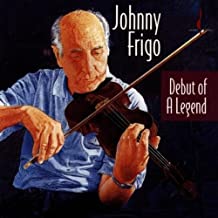
Johnny Frigo was born on December 27, 1916 in Chicago, Illinois and studied violin for three years beginning at age seven. In high school he started to play double bass in dance orchestras. In 1942 he played with Chico Marx’s orchestra and performed a comedy routine on violin with Marx on piano.
Entering the United States Coast Guard during World War II, he played in an Ellis Island band with Al Haig and Kai Winding. After his brief turn at active service near the end of the war he moved to New Jersey and from 1945 to 1947 he toured with Jimmy Dorsey’s band. He later formed the Soft Winds trio with Dorsey’s guitarist Herb Ellis and pianist Lou Carter. During this time he wrote the music and lyrics to Detour Ahead and I Told Ya I Love Ya, Now Get Out.
In 1951, returning to Chicago, Johnny primarily worked as a studio bassist and arranger. He also led the band at Mr. Kelly’s, and until 1960 he played fiddle hoedowns and novelties with the Sage Riders, WLS radio house band for the National Barn Dance. Then in 1961 WGN revived the show and he played with the Sage Riders for another fourteen years.
He went on to work with Chicago jazz vocalist Anita O’Day in live and studio recordings. In the mid-1980s Frigo largely abandoned playing bass and concentrated on violin. He performed as a jazz violinist at festivals worldwide. Frigo also was a published poet and artist and played flugelhorn. He wrote and performed the 1969 Chicago Cubs fight song Hey Hey, Holy Mackerel.
Violinist and bassist Johnny Frigo, who was also a composer, lyricist, published poet and artist, passed away of cancer on July 4, 2007 at age 90.

More Posts: composer,history,instrumental,jazz,lyricist,music,piano,violin