

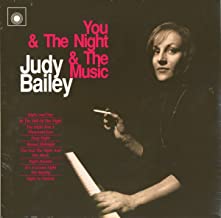
Daily Dose Of Jazz…
Judy Bailey was born on October 3, 1953 in Auckland, New Zealand and raised in Whangarei, a town in the north country. As a young child she learned ballet, followed by piano and theory when she was 10 years old. She graduated from Trinity College London in the United Kingdom when she was 16.
Moving to Australia in 1960, Judy has spent most of her time in Sydney. She performed live on television, live music venues like the legendary El Rocco and on many recordings.
As an eductor Bailey is a senior lecturer in jazz composition and jazz piano at the Sydney Conservatorium of Music since 1973 and is also musical director of the Sydney Youth Jazz Ensemble. In 1973, Bailey became the pianist on the Australian Broadcasting Corporation children’s radio show Kindergarten, which often featured presenters from Play School.
She has received the Order of Australia, was inducted into the Graeme Bell Jazz Hall of Fame by Jazz Australia, and was awarded an Honorary Doctorate from the University of Sydney. Pianist and composer Judy Bailey, who has lived in Australia since the 1960s, seldom performs.
More Posts: bandleader,educator,history,instrumental,jazz,music,piano
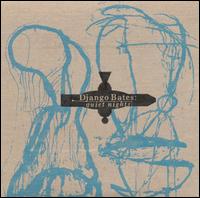
Daily Dose Of Jazz…
Django Bates was born Leon Bates on October 2, 1960 in Beckenham, Kent, England where he attended Sedgehill School. While at this school, for six years he also attended the Centre for Young Musicians in London, England, where he learned trumpet, piano, and violin. In 1977 he studied at Morley College. The following year he enrolled at the Royal College of Music to study composition but left after two weeks.
He founded Human Chain in 1979 and, in the 1980s, he rose to prominence in a jazz orchestra called Loose Tubes. In 1991, Django started the 19-piece jazz orchestra Delightful Precipice. He also assembled the Powder Room Collapse Orchestra and created Circus Umbilicus, a musical circus show. As a sideman he was a member of Dudu Pukwana’s Zila, Tim Whitehead’s Borderline, Ken Stubbs’s First House, Bill Bruford’s Earthworks, Sidsel Endresen, and in the bands of George Russell and George Gruntz.
As an educator, he has tutored at the Banff Centre jazz program, and was appointed Professor of Rhythmic Music at the Rhythmic Music Conservatory in Copenhagen. Bates was appointed visiting professor of jazz in 2010 at the Royal Academy of Music in London, and the next year was appointed Professor of Jazz at HKB Bern Switzerland.
He has performed with Michael Brecker, Tim Berne, Christian Jarvi, Vince Mendoza, David Sanborn, Kate Rusby, and Don Alias. Pianist, keyboardist, tenor hornist Django Bates continues to perform and record.
More Posts: bandleader,educator,history,instrumental,jazz,keyboards,music,piano,tenorhorn
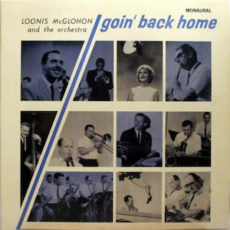
Daily Dose Of Jazz…
Loonis McGlohon was born on September 29, 1921 in Ayden, North Carolina, and graduated from East Carolina University. After a spell in the Air Force during World War II, he played with the Jimmy Dorsey and Jack Teagarden orchestras and became involved with broadcasting in Charlotte, North Carolina, working as music director for radio and television.
An accompanist to many well-known singers that included Judy Garland, Mabel Mercer and Eileen Farrell. He co-hosted the Peabody Award-winning NPR radio series American Popular Song with his friend and collaborator, Alec Wilder. He also composed and wrote lyrics for several songs with Wilder.
For his hometown of Charlotte he wrote the music for The Hornet’s Nest, and in 1980, Frank Sinatra recorded two of his songs with Alec Wilder, South to a Warmer Place and A Long Night on the album She Shot Me Down. He received a commission to write a piece in celebration of North Carolina’s 400th birthday, which resulted in North Carolina Is My Home. a symphonic work. McGlohon was inducted into the North Carolina Music Hall of Fame in 1999.
NationsBank Performance Place in Charlotte’s Spirit Square was named Loonis McGlohon Theatre in 1998, and the following year he was inducted into the North CArolina Music Hall of Fame. A 2004 biography, Loonis! Celebrating a Lyrical Life by Jerry Shinn was published posthumously by the East Carolina University Foundation in 2004. Pianist and songwriter Loonis McGlohon passed away at the age of 80 following a long-term battle with lymphoma on January 26, 2002.

More Posts: bandleader,history,instrumental,jazz,music,piano,songwriter
Daily Dose Of Jazz…
Archie “Skip” Hall was born in Portsmouth, Virginia on September 27, 1909 and studied piano under his father. From the age of eight he lived in New York City and in the late 1920s he relocated to Cleveland, Ohio where he led his own band for most of the 1930s.
He worked as an arranger on contract and arranged for Jay McShann from 1940 to 1944 and during World War II played with Don Redman. In 1943 he entered military service and played in a band while stationed in England. Around 1945 Skip worked with Hot Lips Page and then joined the Sy Oliver band, who was his brother-in-law. Following this he worked with Wynonie Harris, Thelma Houston, and Jimmy Rushing before joining Buddy Tate’s group in 1948.
Hall went on to work with Tate for twenty years both as a performer and arranger. He also played in the 1950s and 1960s with Dicky Wells, Emmett Berry, and George James, as well as solo and with his own small groups. Arranger, pianist, and organist Skip Hall, who never recorded as a leader, passed away in November 1980 in Ottawa, Canada.
More Posts: arranger,bandleader,history,instrumental,jazz,music,piano

Three Wishes
Duke Jordan was asked by the Baroness, if given three wishes, what he would he wish for and he told her:
-
- “I want to master my instrument.”
- “I’d like the world to be happy.”
- “I’d like to, some kind of how, come into some money and be happy with it.”

More Posts: baroness,history,instrumental,jazz,music,pannonica,piano,three,wishes