

Daily Dose Of Jazz…
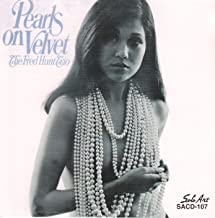
Herbert Frederick Hunt was born September 21, 1923 in London, England to musician parents. A self taught pianist, he started playing at the age of 13 and played local gigs before joining the Royal Air Force.
After demobilization, he began his musical career playing semi-professionally with Mike Daniels and the Cy Laurie Four in 1951. He then became professional and went on to join the Alex Welsh Band from 1954 to 1962 and again from 1964 to 1974.
As Welsh’s primary pianist and a featured soloist, he became one of Britain’s leading trad jazz musicians. He recorded with Eddie Davis, Bud Freeman, Eddie Miller, and Ben Webster in 1967. His work with Alex Welsh did not stop him from accompanying visiting Americans, including recording with the four-tenor group, Tenor Of Jazz, featuring Ben Webster and Eddie “Lockjaw” Davis, which toured in the late 60s.
After leaving Welsh in 1974, he played in Copenhagen, Denmark and South Africa, then after 1976 split his time between Britain, Denmark and Germany. He led a trio featuring drummer Lennie Hastings from 1978 although Hastings died that year. In 1979 the German label Erus Records released a live recording titled Yesterdays, featuring the Fred Hunt Trio, with Hunt on piano, bassit Brian Mursell and drummer Roger Nobes.
In the late Seventies Hunt toured with Wild Bill Davison and played with Welsh once more in the early 1980s. He retired due to failing health after being incapacitated and confined to wheelchair, though he worked frequently at London’s PizzaExpress Jazz Club until his death. Pianist Fred Hunt, who played in both modern and trad jazz musical settings, passed away in Weybridge, Surrey, England at the age of 62 on April 25, 1986.

More Posts: bandleader,history,instrumental,jazz,music,piano
Three Wishes
When Pannonica inquired about three wishes if given to Art Simmons he answered with his the following:
-
- “Sex.”
- “Music. I can’t think of anything else but those two!Well, there really isn’t anything else but those two. What else is there?”
- “Music takes more than just music: to me it’s God! What is God? All the beauty there is in the world. All the love. God is music, and sex, too! I don’t mean sex the way Americans mean it _ not the rabbit kind. The Americans don’t understand about sex, not the way they do in France. I very soon found that out. Sex and music, and everything that is beautiful, it is all the same thing, really.And that is all that matters.”

More Posts: baroness,history,instrumental,jazz,music,pannonica,piano,three,wishes
Daily Dose Of Jazz…
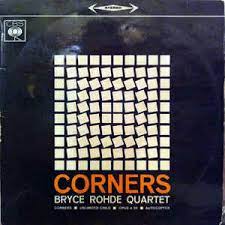
Bryce Benno Rohde was born on September 12, 1923 in Hobart, Tasmania, an island state of Australia. His early influences were Art Tatum and Nat King Cole but eventually leaned towards George Russell’s Lydian Concept.
He played jazz in Adelaide, Australia early in his career before a 1953 move to Canada. In 1954 he and two other expats plus an American formed the Australian Jazz Quartet/Quintet. The group recorded several albums and toured widely in the United States, but broke up in 1958 following a tour of Australia.
Rohde led his own quartets in Australia until 1964, then moved to California in 1965. After then he based himself out of San Francisco, leading his own ensembles at times. Among those Australian musicians with whom he worked extensively are Bruce Cale and Charlie Munro.
The pianist played New York City and Chicago, and recorded for Bethlehem Records. He also published a book combining original jazz compositions and his other passion, black and white photography. It shares the title of one of his seven recordings as a leader, Turn Right At New South Wales.
Over a career in jazz spanning more than 50 years he performed with Count Basie, Miles Davis, Billie Holiday, and John Coltrane among others. He eventually settled in San Francisco, California where he continued to perform and record until his death. Pianist, composer and bandleader Bryce Rohde passed away on January 26, 2016.
More Posts: bandleader,composer,history,instrumental,jazz,music,piano
Daily Dose Of Jazz…
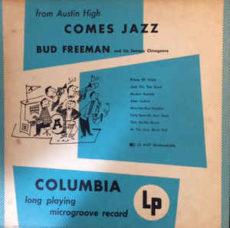
David Walter Bowman was born September 8, 1914 in Buffalo, New York but was raised in Hamilton, Ontario, Canada, where he learned to play piano as a four year old.
He moved to Pittsburgh, Pennsylvania and played there for a time, then went to London, England working with Jack Hylton in the mid-1930s. After returning to the States he settled in New York and played with Bobby Hackett, Sharkey Bonano, Sidney Bechet, and Bud Freeman late in the decade.
In the early 1940s, he worked with Jack Teagarden, Joe Marsala, Muggsy Spanier, Lee Wiley, and Eddie Condon. He took positions with ABC and NBC in the late 1940s including Perry Como and worked as a studio musician on recordings.
In the 1950s, he once again worked with Bud Freeman and with Phil Napoleon shortly before his own death. Pianist Dave Bowman passed away from an automobile accident on December 28, 1964 in Miami, Florida.
More Posts: history,instrumental,jazz,music,piano

Requisites
Yuko Mabuchi Plays Miles Davis, Volume 1 ~ Yuko Mabuchi | By Eddie Carter
Yuko Mabuchi has been making a positive statement on the jazz scene since her 2018 releases, Yuko Mabuchi Trio, Volumes 1 and 2. She steps into the spotlight this morning to give her second live performance at Cammilleri Hall before an enthusiastic crowd. Yuko Mabuchi Plays Miles Davis, Volume 1 (Yarlung Records YAR45588-171V) is a single 45-rpm audiophile album offering two jewels from Kind of Blue and two original tunes by the leader. She’s working again with trio members Del Atkins on bass and Bobby Breton on drums, plus JJ Kirkpatrick on trumpet. JJ is a member of Sophisticated Lady Jazz Quartet and my copy used in this report is the 2020 US Stereo album.
Yuko sets the groove for Side One with Miles’ All Blues, her enthusiastic notes on the introduction flowing as naturally as spoken words. JJ makes his entrance on the melody and first solo next with a gorgeous tone that fits the rhythm section like a comfortable glove. Yuko proceeds into the second statement at an easy pace that builds to a feisty finale before the quintet’s closing chorus. Blue In Green is a haunting and very beautiful song by Miles and Bill Evans. The pianist opens with a gentle introduction segueing into Kirkpatrick’s delicate opening chorus. Yuko leads off with a serenely beautiful solo, followed by an incredibly tender statement by JJ. Del offers a few intimate thoughts on the closer preceding an elegantly graceful ending.
Missing Miles, the first of two from Yuko’s pen, gets Side Two underway with an infectious introduction that moves to an easygoing bounce by her and JJ on the melody. Yuko struts comfortably into the first reading making every note count to the relaxing momentum of Del and Bobby’s accompaniment. The drummer gets a brief moment of solo space next, then JJ keeps the ingredients stirring on the closing statement culminating with Yuko’s descent into a soft climax. Sky With No Tears is a very pretty tune expressing Yuko’s feelings about the environment and caring for the planet’s health. She delivers the melody with a charming simplicity and offers a delicate and subtle opening statement. Del comes in next for a brief reading of refined taste preceding Yuko’s tenderly passionate ending.
The album was produced by Bob Attiyeh, engineered by Bob and Arian Jansen, and the mastering is by Bernie Grundman. The album sounds fantastic with a stunning soundstage that brings the listener to Cammilleri Hall as the musicians are performing. The record is silent until the music begins, making it a perfect demonstration record for any good mid-fi or high-end audio system. I was also impressed with JJ Kirkpatrick; he plays some tasty jazz here and complements the trio very well. Although there are only two tunes of Miles’ music heard here, Yuko Mabuchi breathes fresh air into both selections and she shows a maturity beyond her years as a composer. If you’re a fan of piano jazz, I invite you to audition Yuko Mabuchi Plays Miles Davis, Volume 1. It’s a live album worth investigating, and I hope will bring attention to a talented pianist who continues to exceed expectations and deserves to be heard!
~ Kind of Blue (Columbia CL 1355/CS 8163), Sophisticated Lady Jazz Quartet, Volume 1 (Yarlung Records YAR09272-004V1), Yuko Mabuchi Trio, Volume 1 (Yarlung Records YAR88157-161V), Yuko Mabuchi Trio, Volume 2 (Yarlung Records YAR71621-161V) – Source: Discogs.com ~ All Blues, Blue In Green – Source: Wikipedia.org © 2021 by Edward Thomas Carter

More Posts: choice,classic,collectible,collector,history,instrumental,jazz,music,piano