


Requisites
Yuko Mabuchi Plays Miles Davis, Volume 1 ~ Yuko Mabuchi | By Eddie Carter
Yuko Mabuchi has been making a positive statement on the jazz scene since her 2018 releases, Yuko Mabuchi Trio, Volumes 1 and 2. She steps into the spotlight this morning to give her second live performance at Cammilleri Hall before an enthusiastic crowd. Yuko Mabuchi Plays Miles Davis, Volume 1 (Yarlung Records YAR45588-171V) is a single 45-rpm audiophile album offering two jewels from Kind of Blue and two original tunes by the leader. She’s working again with trio members Del Atkins on bass and Bobby Breton on drums, plus JJ Kirkpatrick on trumpet. JJ is a member of Sophisticated Lady Jazz Quartet and my copy used in this report is the 2020 US Stereo album.
Yuko sets the groove for Side One with Miles’ All Blues, her enthusiastic notes on the introduction flowing as naturally as spoken words. JJ makes his entrance on the melody and first solo next with a gorgeous tone that fits the rhythm section like a comfortable glove. Yuko proceeds into the second statement at an easy pace that builds to a feisty finale before the quintet’s closing chorus. Blue In Green is a haunting and very beautiful song by Miles and Bill Evans. The pianist opens with a gentle introduction segueing into Kirkpatrick’s delicate opening chorus. Yuko leads off with a serenely beautiful solo, followed by an incredibly tender statement by JJ. Del offers a few intimate thoughts on the closer preceding an elegantly graceful ending.
Missing Miles, the first of two from Yuko’s pen, gets Side Two underway with an infectious introduction that moves to an easygoing bounce by her and JJ on the melody. Yuko struts comfortably into the first reading making every note count to the relaxing momentum of Del and Bobby’s accompaniment. The drummer gets a brief moment of solo space next, then JJ keeps the ingredients stirring on the closing statement culminating with Yuko’s descent into a soft climax. Sky With No Tears is a very pretty tune expressing Yuko’s feelings about the environment and caring for the planet’s health. She delivers the melody with a charming simplicity and offers a delicate and subtle opening statement. Del comes in next for a brief reading of refined taste preceding Yuko’s tenderly passionate ending.
The album was produced by Bob Attiyeh, engineered by Bob and Arian Jansen, and the mastering is by Bernie Grundman. The album sounds fantastic with a stunning soundstage that brings the listener to Cammilleri Hall as the musicians are performing. The record is silent until the music begins, making it a perfect demonstration record for any good mid-fi or high-end audio system. I was also impressed with JJ Kirkpatrick; he plays some tasty jazz here and complements the trio very well. Although there are only two tunes of Miles’ music heard here, Yuko Mabuchi breathes fresh air into both selections and she shows a maturity beyond her years as a composer. If you’re a fan of piano jazz, I invite you to audition Yuko Mabuchi Plays Miles Davis, Volume 1. It’s a live album worth investigating, and I hope will bring attention to a talented pianist who continues to exceed expectations and deserves to be heard!
~ Kind of Blue (Columbia CL 1355/CS 8163), Sophisticated Lady Jazz Quartet, Volume 1 (Yarlung Records YAR09272-004V1), Yuko Mabuchi Trio, Volume 1 (Yarlung Records YAR88157-161V), Yuko Mabuchi Trio, Volume 2 (Yarlung Records YAR71621-161V) – Source: Discogs.com ~ All Blues, Blue In Green – Source: Wikipedia.org © 2021 by Edward Thomas Carter

More Posts: choice,classic,collectible,collector,history,instrumental,jazz,music,piano
The Quarantined Jazz Voyager
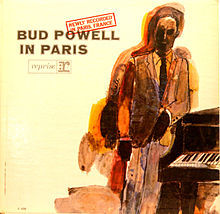
As the Delta variant continues to ravage the country in another wave of rising illness and once again full hospitals, for those of us remaining vigilant I offer you listeners a classic album Bud Powell in Paris. This studio album was produced by Duke Ellington and released in 1964 for Reprise Records.
On this album recorded in Paris, France in February 1963, Leonard Feather wrote the liner notes, the cover painting was done by Donald Leake and digital mastering was performed by Lee Herschberg.
Track List | 49:21- How High the Moon (Morgan Lewis, Nancy Hamilton) ~ 3:54
- Dear Old Stockholm (Traditional) ~ 3:53
- Body and Soul (Johnny Green, Edward Heyman, Robert Sour, Frank Eyton) ~ 6:05
- Jor-Du” (Duke Jordan) ~ 4:18
- Reets and I (Benny Harris) ~ 3:43
- Satin Doll (Duke Ellington, Billy Strayhorn, Johnny Mercer) ~ 4:45
- Parisian Thoroughfare (Bud Powell) ~ 1:56
- I Can’t Get Started (Vernon Duke, Ira Gershwin) ~ 5:40
- Little Benny (aka Bud’s Bubble) (Harris) ~ 3:31
Personnel
- Bud Powell ~ piano
- Gilbert Rovere ~ bass
- Kansas Fields ~ drums

More Posts: adventure,album,club,genius,jazz,museum,music,piano,preserving,restaurant,travel
Daily Dose Of Jazz…
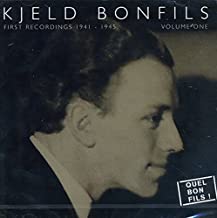
Kjeld Bonfils was born on August 23, 1918 in Copenhagen, Denmark. He was one of the figures involved in the Golden Age of Danish jazz in the 1930s.
During the Nazi occupation of Denmark from 1940 to 1945, jazz was discouraged by the regime, but Bonfils played with Svend Asmussen in Valdemar Eiberg’s band, as well as elsewhere. Jazz became a symbol of the underground and political protest.
Pianist and vibraphonist Kjeld Bonfils, who was hailed as one of the best soloists of his day, passed away on October 13, 1984 at age 66.

More Posts: bandleader,history,jazz,music,piano,vibraphone
Daily Dose Of Jazz…
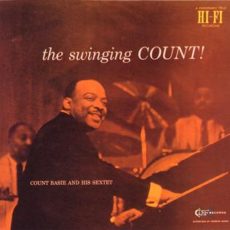
William James “Count” Basie was born on August 21, 1904 in Red Bank, New Jersey. His father played the mellophone, his mother played the piano and gave him his first piano lessons. Taking in laundry and baking cakes for sale for a living, she paid 25 cents a lesson for his piano instruction. The best student in school, he inished junior high school and spent much of his time at Red Bank’s Palace Theater, where he quickly learned to improvise music appropriate to the acts and the silent movies.
A natural pianist but preferring drums he was discouraged by the obvious talents of Sonny Greer, who also lived in Red Bank and became Duke Ellington’s drummer in 1919, He let the idea of drumming go and concentrated on the piano exclusively at age 15. He and Greer played together in venues until Greer set out on his professional career. By then, Basie was playing with pick-up groups for dances, resorts, and amateur shows, and Harry Richardson’s Kings of Syncopation.
By 1920 Basie was in Harlem where he bumped nto Greer and started meeting the musicians making the scene like Willie “The Lion” Smith and James P. Johnson. Before he was 20 years old, he toured extensively on the Keith and TOBA vaudeville circuits as a solo pianist, accompanist, and music director for blues singers, dancers, and comedians. This provided an early training that was to prove significant in his later career.
Back in Harlem in 1925, he met Fats Waller, who taught him how to play that instrument. As he did with Duke Ellington, Willie “the Lion” Smith helped Basie out during the lean times by arranging gigs at house-rent parties, introducing him to other leading musicians, and teaching him some piano technique.
In 1928, Basie joined Walter Page and his Famous Blue Devils. It was at this time that he picked up the moniker of Count. The next year saw him in Kansas City holding down the piano chair with Bennie Moten. After a couple of re-organizations of the band, Basie formed his own nine-piece band, Barons of Rhythm who played regularly at the Reno Club and on the radio. Moving to Chicago, Illinois the band eventually became the Count Basie Orchestra where they did their first recordings for Vocalion under the name Jones-Smith, as Basie had already signed with Decca.
Over the course of the fifty years he led the band he was instrumental in creating innovations like the use of two “split” tenor saxophones, emphasizing the rhythm section, riffing with a big band, using arrangers to broaden their sound, which any other bands copied. He also brought to prominence such players as Lester Young, Herschel Evans, Freddie Green, Buck Clayton, Harry “Sweets” Edison, Al Grey, Jimmy Rushing, Helen Humes, Thelma Carpenter, and Joe Williams.
Pianist, organist, bandleader, and composer Count Basie, who recorded close to two hundred albums and in 1958 became the first Black man to win a Grammy Award, passed away on April 26, 1984.
More Posts: bandleader,composer,instrumental,music,organ,piano
The Quarantined Jazz Voyager
As the pandemic wages on, rising numbers amongst the unvaccinated, the unmasked and the ignorant threaten the spread to the vaccinated and the children, while once again filling our hospitals. I cringe to think of the children who are going to be forced back to school without a vaccine. I’ve personally had a vaccinated friend who tested positive while working at a day camp with exposed children. Camp was shut down immediately, friend is fine but the Delta variant is highly contagious, like chicken pox. Be vigilant and stay safe.
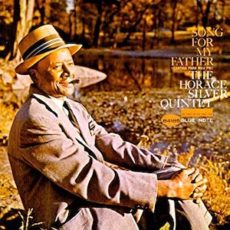
With that in mind, I am pulling out the classic Song for My Father, the hard bop album by the Horace Silver Quintet, inspired by a trip that Silver made to Brazil. The songs were recorded at Van Gelder Studios in Englewood Cliffs, New Jersey by two different ensembles over two sessions ~ 3,6 on October 31, 1963 and 1,2,4,5 on October 26, 1964. Produced by Alfred Lion, it was released on the Blue Note record label in January, 1965.
The cover artwork features a photograph of Silver’s father, John Tavares Silver, to whom the title composition is dedicated. The title track, Song for My Father, is the leader’s most recognized composition, blending his native Cape Verdean folk music with bossa nova.
Track Listing | 42:12 All compositions by Horace Silver, except #5- Song for My Father ~ 7:17
- The Natives Are Restless Tonight ~ 6:09
- Calcutta Cutie ~ 8:31
- Que Pasa ~ 7:47
- The Kicker (Joe Henderson) ~ 5:26
- Lonely Woman ~ 7:02
- Horace Silver ~ piano
- Carmell Jones ~ trumpet (2, 5 solo | 1, 4 ensemble)
- Joe Henderson ~ tenor saxophone (1,2,4,5)
- Teddy Smith ~ bass (1,2,4,5)
- Roger Humphries ~ drums (1,2,4,5)
- Blue Mitchell ~ trumpet (3, ensemble)
- Junior Cook ~ tenor saxophone (3, ensemble)
- Gene Taylor ~ bass (3,6)
- Roy Brooks ~ drums (3,6)
More Posts: adventure,album,club,genius,jazz,museum,music,piano,preserving,restaurant,travel