

Daily Dose Of Jazz…
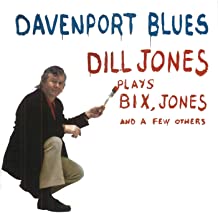
Dill Jones was born Dillwyn Owen Paton Jones on August 19, 1923 in Newcastle Emlyn, Carmarthenshire, Wales. He was brought up in New Quay on the Cardiganshire coast. Music was in the family, his mother a pianist and his aunt played organ at the Methodist Tabernacle. He was exposed to jazz as a 10-year-old by hearing records by Fats Waller and Bix Beiderbecke on the radio.
After leaving college, Jones followed his father into banking but was called up by the Royal Navy for wartime service in the Far East. When the war ended he enrolled at Trinity College of Music in London, England but did not complete the course, preferring the informality of late night jazz sessions.
Joining the Harry Parry Sextet and Vic Lewis’ Orchestra before plying his trade as ship’s pianist on the luxury liner, the Queen Mary, he sailed between New York City and Southampton. This gave Dill the chance to hang out in New York’s jazz clubs and hear Coleman Hawkins and Lennie Tristano, among others. After forming the Dill Jones Quartet in 1959, he emigrated to the United States in 1961, settling in New York City. He became an expert in the Harlem stride style. was soon in demand, earning his reputation playing with the likes of Gene Krupa, Jimmy McPartland and Yank Lawson.
Between 1969–1973, Jones was a member of the JPJ Quartet with Budd Johnson, Oliver Jackson and Bill Pemberton. A double CD anthology of Dill Jones` work was released in 2004, entitled Davenport Blues – Dill Jones plays Bix, Jones and a Few Others.
Pianist Dill Jones, who was instrumental in bringing jazz to British television when he hosted the BBC Jazz Club, passed away from throat cancer in a New York hospital on June 22, 1984. He was 60

Daily Dose Of Jazz…
Zinky Cohn was born on August 18, 1908 in Oakland, California. Little is known about his childhood but it has been speculated by many Jewish historians he descended from one of the so-called 12 tribes.
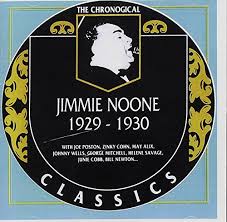
Moving to Chicago, Illinois in the late 1920s, he played around town and from 1928 to 1930 was a member of Jimmie Noone’s Apex Club Orchestra. He recorded extensively with Noone between 1929 and 1934, especially for Vocalion Records. Many of the tunes Noone recorded were written and/or arranged by Cohn, including Apex Blues, previously attributed to Earl Hines.
Cohn also recorded as a leader in the early 1930s, with a band that featured Leon Washington on tenor saxophone. Cohn recorded with Frankie Franko & His Louisianans in 1930, and also accompanied blues singers such as Georgia White.
Later in the 1930s he led the Chicago musicians’ union, and continued to play locally. Pianist Zinky Cohn passed away on April 26, 1952 in Chicago.
Daily Dose Of Jazz…
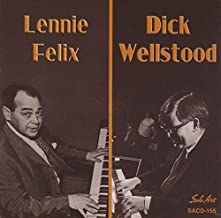
Lennie Felix was born in Stamford Hill, London, England on August 16, 1920. He learned piano from the age of ten and his playing style reflected the influence of Fats Waller, Art Tatum and Earl Hines. His later influences drew from Keith Jarrett, Charlie Parker and Vladimir Horovitz.
From the 1960s, Lennie performed increasingly more as a solo pianist and appeared regularly at the PizzaExpress Jazz Club, where he also accompanied US visitors like Bud Freeman and Buddy Tate.
He worked in the bands of Nat Gonella, Harry Gold, and Sid Philips, and enjoyed a 20-year association with trumpeter Freddy Randall. Pianist Lennie Felix passed away on December 29, 1980 in a hospital after he was hit by a speeding car near to the 606 Club in Fulham, West London.
More Posts: bandleader,history,instrumental,jazz,music,piano
Requisites
The Festival Album ~ The Jazz Crusaders | By Eddie Carter
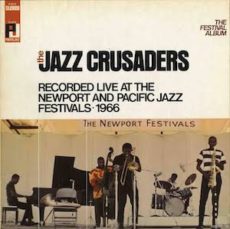
This morning’s discussion is a 1966 live album by four friends from Houston, Texas who began performing locally in 1956. After moving to Los Angeles in 1961, they became The Jazz Crusaders, one of the best West Coast jazz groups. I became a fan of their music listening to Chuck Lansing of Cleveland’s jazz station, WCUY 92.3 FM. His opening theme was The Young Rabbits, taken from their second LP, Lookin’ Ahead (1962). The Festival Album (World Pacific Jazz ST-20115) contains two performances from The Pacific Jazz Festival and The Newport Jazz Festival. The quartet consists of Wayne Henderson on trombone, Wilton Felder on tenor sax, Joe Sample on piano, and Stix Hooper on drums. Jimmy Bond (tracks: A1, A2) and Herbie Lewis (tracks: B1, B2) on bass, complete the group. My copy used in this report is the 1967 Stereo reissue (Pacific Jazz ST-20115).
Trance Dance by Kenny Cox opens Side One with a collective soulful theme. Wayne goes first with a noteworthy contribution offering a relaxing informality. Wynton follows with an excellent solo of his own, then Joe gives a spirited closing reading ahead of the ensemble’s reprise and ending. A Summer Madness is the collaborative creation of Sample, Henderson, and Felder. Wayne leads the quintet on the mid-tempo melody, then entices the listener with a captivating first statement. Wilton builds a satisfying groove with inspired lines next. Joe unfolds the next reading with a mellow tone effortlessly, and Jimmy makes a brief remark into the finale and crowd’s ovation.
Henderson’s Young Rabbits is off to the races from the intensely hot opening notes of the melody. Felder takes the first solo at breakneck speed with electrically charged excitement. Sample steps up next for a high-octane statement. Stix provides an energetic interpretation leading to the vigorous ending. Sample’s Freedom Sound was the title tune of their debut album (1961). The trio begins this midtempo swinger with a march-like introduction developing into the quintet’s theme. Felder takes the lead with a cheerfully, light-hearted reading. Henderson swings comfortably into the next statement, and Joe wraps the album with a leisurely-paced performance powered by Herbie and Stix’s excellent groundwork.
This was The Jazz Crusaders’ twelfth LP for World Pacific Jazz and Pacific Jazz Records. *They were extremely popular and well known on the West Coast, but their first trip to The Newport Jazz Festival was significant because it introduced them to a whole new group of fans and brought them to the attention of the New York City jazz clubs. I only wish it would have been released as a two-record set with each festival highlighted on one LP. The Festival Album was produced by Richard Bock, and the sound quality of each session is quite good with an exquisite soundstage. For those fans that only know of The Crusaders’ music from the seventies and eighties, The Festival Album shows the group in excellent form live and gives a snapshot of the Hard-Bop sound they created when Jazz was their middle name! ~ *AllMusic Review by Thom Jarek – Source: AllMusic.com
~ Freedom Sound (Pacific Jazz PJ-27/ST-27), Lookin’ Ahead (Pacific Jazz PJ-43/ST-43) – Source: Discogs.com © 2021 by Edward Thomas Carter

More Posts: bass,choice,classic,collectible,collector,drums,history,instrumental,jazz,music,piano,saxophone,trombone
Daily Dose Of Jazz…
Mikio Masuda 益田 幹夫, also known as Mickey Masuda, was born on August 14, 1949 in Osaka, Japan. Largely self-taught, he played bass at the age of 16, before switching to piano and performing in various Osaka clubs. Moving to Tokyo, Japan In 1969 he played around the Japanese jazz scene, notably in a quartet with Motohiko Hino, Shunzo Ohno and Terumasa Hino.
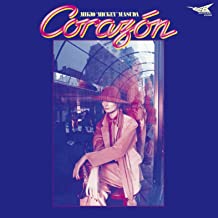
Recording his debut album Trace for East Wind Records in 1974, he followed it with his sophomore jazz-fusion album Mickey’s Mouth in 1976. The following years saw Masuda working with a number of Japanese musicians prior to moving to New York City in 1978. He recorded the album Corazón, and worked in New York City with David Matthews. He recorded the trio album Black Daffodils in 1996 with Ron Carter and Lewis Nash, and Blue Dumplings in 1998 with Ron Carter and Grady Tate.
In the field of jazz he was involved between 1972 and 1998 in 46 recording sessions, most recently with Chie Ayado. Pianist Mikio Masuda continues to be active on the jazz scene.
More Posts: history,instrumental,jazz,music,piano