

Daily Dose Of Jazz…
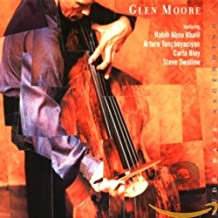
Glen Moore, born October 28, 1941 in Portland, Oregon started his performing career began at age 14 with the Young Oregonians in Portland. It was at this time where he met and played with Native American saxophonist, Jim Pepper.
Graduating with a degree in History and Literature from the University of Oregon, his formal bass instruction started after college with Jerome Magil in his hometown, James Harnett in Seattle, Washington, Gary Karr in New York City, Plough Christenson in Copenhagen, Denmark, Ludwig Streicher in Vienna, Austria, and Francois Rabbath in Hawaii.
Moore is a founding member of Oregon but worked also regularly with Rabih Abou-Khalil, Vasant Rai, Nancy King, and Larry Kar. For the past 30 years, has played a Klotz bass fiddle crafted in Tyrol circa 1715 on which he has made extensive use of a unique tuning with both a low and high C string. He has recorded ten albums as a leader, twenty~eight with Oregon, and twenty as a sideman. Double bassist Glen Moore, who also plays piano, flute, and violin continues to perform and record.

More Posts: bandleader,bass,flute,history,instrumental,jazz,music,piano,violin
Daily Dose Of Jazz…
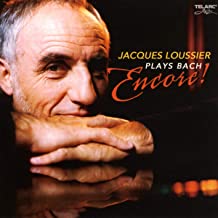
Jacques Loussier was born on October 26, 1934 in Angers, France. Starting piano lessons there aged ten, the following year he heard a piece from the Notebook for Anna Magdalena Bach. He fell in love with the music and began adding his own notes and expanding the harmonies. By 13, he met the pianist Yves Nat in Paris, who regularly gave him projects for three months, after which he returned for another lesson.
While studying at the Conservatoire National Musique, Loussier began composing music, having moved by then to Paris, with Nat, from the age of 16. He played jazz in Paris bars to finance his studies, and fusing Bach and jazz was unique at the time. After six years of studies, he traveled to the Middle East and Latin America, where he was inspired by different sounds. He stayed in Cuba for a year.
Early in his career, he was an accompanist for the singers Frank Alamo, Charles Aznavour, Léo Ferré, and Catherine Sauvage, before forming a trio in 1959 with string bass player Pierre Michelot, a Reinhardt alum, and percussionist Christian Garros. The trio began with Decca Records then moved to Philips/Phonogram in 1973, selling over six million albums in 15 years.
By the mid-1970s, the trio dissolved and Jacques set up his own recording studio, Studio Miraval, where he composed for acoustic and electric instruments. He recorded with musicians such as Pink Floyd, Elton John, Sting, Chris Rea, and Sade. Reviving his trio in 1985, with the percussionist André Arpino and the bassist Vincent Charbonnier. As early as 1998 the trio recorded interpretations). Besides Bach, the trio recorded interpretations of classical compositions on the album Satie: Gymnopédies Gnossienne. His last albums, My Personal Favorites, and Beyond Bach, Other Composers I Adore, were released in 2014, on the occasion of his 80th birthday.
Suffering a stroke during a performance at the Klavier-Festival Ruhr on July 14, 2011 retired from the stage. Pianist Jacques Loussier, who performed in the classical, jazz, and third stream arenas, passed away on March 5, 2019 at the age of 84.
More Posts: bandleader,composer,history,instrumental,jazz,music,piano
Daily Dose Of Jazz…
David Friedrich Dallwitz was born on October 25, 1914 in Freeling, South Australia. He studied violin as a child and after moving with his family to Adelaide, South Australia in 1930, he developed an aptitude for jazz piano. Beginning in 1933 for two years he studied concurrently at the South Australian School of Art and the North Adelaide School of Fine Art.
He led the Southern Jazz Group, a Dixieland band that performed at the first Australian Jazz Convention. Abandoning jazz for a period, he studied at the Elder Conservatorium of Music, composing symphonic and chamber music and taking up bassoon and cello. He became involved in composing and arranging music for revues, leading to the formation of the Flinders Street Revue Company, for which he also directed and played piano.
Returning to jazz in 1970, he resumed recording. He worked with Australian progressive musicians such as John Sangster, Bob Barnard, and Len Barnard. He led the Dave Dallwitz Ragtime Ensemble.
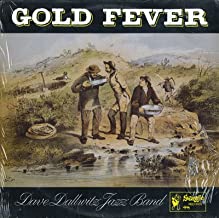
Pianist, bandleader, composer, and arranger, painter, and art teacher Dave Dallwitz, who led jazz, Dixieland and ragtime bands, passed away on March 24, 2003 in Adelaide after finishing the artwork for his album The Dave Dallwitz Big Band live at Wollongong, December 1984.
More Posts: arranger,bandleader,composer,educator,history,instrumental,jazz,music,painter,piano
Daily Dose Of Jazz…
Frank Hewitt was born on October 23, 1935 in Queens, New York, living most of his life in Harlem. His mother was a church pianist, and he initially studied classical and gospel music but switched to jazz after hearing a Charlie Parker record. He took the bop pianists Thelonious Monk, Bud Powell, and Elmo Hope as his role models.
In the 1950s and 1960s, he worked with Howard McGhee, Cecil Payne, John Coltrane, Dinah Washington, and Billie Holiday, among others. 1961 saw him participating in the Living Theater’s production of Jack Gelber’s The Connection. He became a regular figure in the circle of the pianist Barry Harris. In the 1990s Hewitt became a central figure at New York’s Smalls Jazz Club; aside from playing there several nights a week, he sometimes also ended up using the walk-in refrigerator as a place to bunk when times were rough.
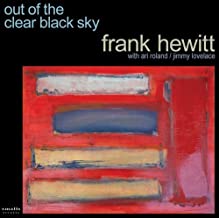
During his lifetime only one track of Hewitt’s playing was released, a version of the Kenny Dorham tune Prince Albert on the compilation Jazz Underground: Live at Smalls on Impulse in 1998. After his death, however, recordings made by Luke Kaven began to surface on Kaven’s Smalls Records label: the trio discs We Loved You, Not Afraid To Live, Fresh From The Cooler, and Out Of The Clear Black Sky, and the quintet date Four Hundred Saturdays.
Hard bop pianist Frank Hewitt, whose reputation as a neglected jazz master has steadily grown among fans of bebop piano, on September 5, 2002.
More Posts: bandleader,history,instrumental,jazz,music,piano
Daily Dose Of Jazz…
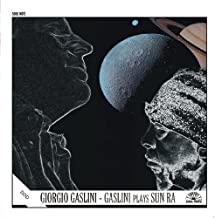
Giorgio Gaslini was born on October 22, 1929 in Milan, Italy and began performing aged 13 and recorded with his jazz trio at 16. In the 1950s and 1960s, Gaslini performed with his own quartet. He was the first Italian musician mentioned as a “new talent” in the Down Beat poll and the first Italian officially invited to the New Orleans Jazz Festival in 1976-77. He collaborated with leading American soloists, such as Anthony Braxton, Steve Lacy, Don Cherry, Roswell Rudd, Max Roach, but also with the Argentinian Gato Barbieri and Frenchman Jean-Luc Ponty.
Adapting the compositions of Albert Ayler and Sun Ra for solo piano, issued on the Soul Note label, he also composed the soundtrack of Michelangelo Antonioni’s La Notte, The Night, in 1961. In the early Seventies, he was the first holder of jazz courses at the Santa Cecilia Academy of Music in Rome.
As to contemporary music, he composed symphonic works, operas and ballets represented at the Scala Theatre in Milan and other Italian theatres. In addition from 1970 to 1977 he scored nine films, including Your Hands On My Body, Cross Current, and Kleinhoff Hotel. From 1991 to 1995, Gaslini composed works for Carlo Actis Dato’s Italian Instabile Orchestra.
Pianist, composer and conductor Giorgio Gaslini passed away on July 29, 2014 at age 84 in Borgo Val di Taro, Parma, Italy, where he had been living for years together with his longtime wife and fourteen dogs and cats.
More Posts: composer,conductor,history,instrumental,jazz,music,piano