


Daily Dose Of Jazz…
Herbert Anthony Charles Spanier was born in Cupar, Canada on December 25, 1928. He played guitar and harmonica at five, bugle in Regina, Canada cadet bands, and trumpet in high school. One of the first beboppers in Canada, and a figure of some legend on the Canadian jazz scene,
He played with Paul Perry and with his own band ‘Boptet’ in Regina before working in Chicago, Illinois from 1949-1950 and from 1950-1954 in Toronto, Canada. He was a sideman to Paul Bley in New York 1954-1955 and Los Angeles, California 1958-1959, and toured out of New York with the Claude Thornhill and Hal McIntyre orchestras in 1955.
He was an influential jazz musician in Montreal, Canada from 1956-1958 and between 1960-1971. Spanier taught briefly at Sir George Williams University, performed in various dance, hotel, and CBC orchestras, contributed music to NFB films. Herbie was the leader on the CBC’s ‘Jazz en Liberté’ and in various clubs. Returning to Toronto in 1971, he was a featured soloist for nine years with Nimmons ‘N’ Nine Plus Six.
For the next two and a half decades he led his own groups, won the Juno Awards, received a Special Recognition Award and recorded sessions in 1993-1994 in which he produced new works which combined with earlier recordings on compact discs.
Trumpeter, flugelhornist, pianist, and composer Herbie Spanier died in Toronto, Canada on December 13, 2001.

More Posts: bandleader,composer,flugelhorn,history,instrumental,jazz,music,piano,trumpet
Daily Dose Of Jazz…
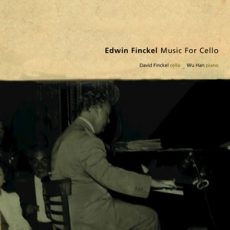
Edwin A. Finckel was born on December 23, 1917 in Washington, D.C. to musical parents and was the youngest of six children. Left to his own devices his artistic talents won him a scholarship at the Corcoran School of Art. Finding access to a piano within a year he had taught himself to play, albeit without the ability to read music. He took to jazz although he also showed skill as a tennis player while still a teenager.
Well regarded for his ability to improvise music he went on to arrange others and later composed over 200 of his own melodies. He appeared professionally as a teenager and he went on to introduce string instruments into his arrangement for big bands. His best known song may be Where Is The One, which was recorded by Frank Sinatra..
In the Forties he wrote songs for film, was chosen as a representative of a musical, then went into teaching in the music department at Far Brook School in New Jersey for 39 years. There he gave private lessons, conducted the choir and orchestra, and wrote much of the music that the children sing. He continued to perform jazz and in his forties he also wrote classical music.
Pianist, composer and arranger Edwin Finckel, who ran a summer camp with his wife for 17 years while performing jazz and composing classical music, died on 7 May 7, 2001 at 83 in Madison, Wisconsin.
More Posts: arranger,composer,educator,history,instrumental,jazz,music,piano
Requisites
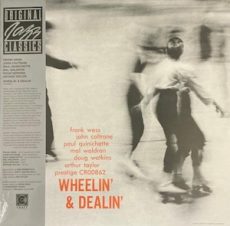
Wheelin’ & Dealin’ ~ Frank Wess, John Coltrane, Paul Quinichette, Mal Waldron, Doug Watkins and Arthur Taylor | By Eddie Carter
This morning’s album from the library is an excellent 1957 jam session by Frank Wess, John Coltrane, Paul Quinichette, Mal Waldron, Doug Watkins and Arthur Taylor. Wheelin’ & Dealin’ (Prestige PRLP 7131) is an outstanding album featuring an impressive team of musicians. The ensemble consists of John Coltrane and Paul Quinichette on tenor saxophones, Frank Wess on flute (tracks: A1, B1, B2) and tenor saxophone (track: A2), Mal Waldron on piano, Doug Watkins on bass, and Arthur Taylor on drums. The copy of this album that I own is the 2025 Worldwide Stereo audiophile reissue (Craft Recordings CR00862).
The album opens with Things Ain’t What They Used To Be by Mercer Ellington and Ted Parsons. Frank’s flute sets a welcoming tone for the sextet’s laid-back melody before moving into a relaxing first solo. Paul soars with graceful ease, then John follows him effortlessly with a mellow reading, then the saxophones revisit the sequence. Mal responds with a breezy interpretation, and Doug takes a quick walk, leading to the closing chorus. Wheelin’ by Mal Waldron takes off with the ensemble’s spirited theme. Coltrane leads the way with an energetic statement. Quinichette lets loose next, then Wess wails on the tenor saxophone. Waldron delivers a lengthy, vigorous performance. Taylor adds a brief footnote that leads to the ensemble reprising the theme and a rousing finish.
Side Two opens with Robbins’ Nest by Illinois Jacquet, Bob Russell, and Sir Charles Thompson, a tribute to DJ Fred Robbins. Frank, returning on flute, gently guides the ensemble through the melody, then enters like a cool breeze for the first solo. Paul then offers some down-home cooking; John makes every note count in a relaxed interpretation. Mal then keeps the mood easygoing, and Doug takes a brief walk before the closing ensemble. Mal Waldron’s Dealin’ starts with the sextet’s collective melody; Waldron leads with an inviting opening solo. Wess, on flute, produces a warm, fluid sound. Quinichette steps in for a few relaxing choruses, then Coltrane flows with fresh, creative ideas. Wess makes a short return on tenor sax, and Waldron has the last word before the group reunites to close the set.
The dynamic combination of Coltrane and Quinichette on tenor saxophones infuses the sextet with vibrant energy, establishing an engaging lead voice for the group. Coltrane, poised on the threshold of stardom, plays with deep emotion and a sense of adventurousness, while Quinichette’s silky, relaxed approach pays homage to Lester Young’s signature sound. Frank Wess further elevates the ensemble’s texture, seamlessly alternating between flute and tenor sax; his flute contributions, in particular, bring a light, breezy quality to the arrangements. Supporting them, the rhythm section of Waldron, Watkins, and Taylor lays down a consistent, swinging foundation, artfully mixing delicacy with spirited drive to enhance each soloist’s performance throughout the album.
Bob Weinstock supervised the first session, and Rudy Van Gelder was at the recording console. Kevin Gray did an excellent job mastering this audiophile reissue from the original tapes at Cohearant Audio. The sound quality truly shines, offering a spacious soundstage and vibrant clarity that makes you feel like the musicians are right in front of you. The record is pressed on 180-gram Virgin Vinyl and is silent until the music begins. If you’re craving a fantastic Hard-Bop album, I highly recommend checking out Wheelin’ & Dealin’ by Frank Wess, John Coltrane, Paul Quinichette, Mal Waldron, Doug Watkins, and Arthur Taylor on your next record-shopping trip. It’s an outstanding album by the talented group that later became The Prestige All-Stars, and I believe it will become a beloved favorite in the libraries of both new and seasoned jazz fans for many years to come!
Things Ain’t What They Used To Be – Source: JazzStandards.com © 2025 by Edward Thomas Carter
Wheelin’ & Dealin’: 1957 | Frank Wess, John Coltrane, Paul Quinichette, Mal Waldron, Doug Watkins, Arthur Taylor
For the serious collector of jazz… #Jazz #Classic #Collectible #Music #Notorious

More Posts: bass,choice,classic,collectible,collector,drums,flute,history,instrumental,jazz,music,piano,saxophone
Daily Dose Of Jazz…
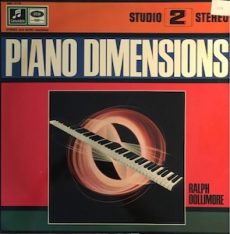
Ralph Dollimore was born on December 20, 1930 in Ealing, London, England. During the 1950s he worked with Kenny Graham, Terry Brown Sextet, Jimmy Walker Quintet, Ted Heath, Eric Winstone, Harry Bence, Vic Ash, Geraldo. He was Petula Clark’s pianist in variety shows around the United Kingdom in 1959.
During the Sixties he accinoanied singer Matt Monro, led his own trio, and once again joined Ted Heath. The 1970s and 1980s saw Ralph as a pianist in Monte Carlo hotel. Returning to Britain he formed his own small group.
Pianist, arranger and composer Ralph Dollimore died on August 25, 1988 in London, England.
More Posts: arranger,bandleader,composer,history,instrumental,jazz,music,piano
EITHER/ORCHESTRA
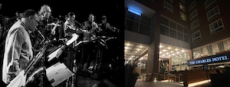
In the decades since the Either/Orchestra debuted on December 17, 1985 at the Cambridge MA Public Library, the group has made over 1000 performances in 38 of the United States and 12 foreign countries, as well as releasing a dozen albums and being nominated for a Grammy, winning five Boston Music awards and numerous Downbeat Critics Poll placements, among many other honors. From prestigious festivals like Glastonbury Pop and Chicago Jazz to tiny clubs, schools and churches in out of the way places, the group has been “dependably marvelous,” according to the Village Voice.
No obstacles deterred leader Russ Gershon and his intrepid musical explorers from visiting new musical worlds – until the Covid pandemic. The band’s most recent performance was in December of 2019 at Tufts U., with one of their distinguished Ethiopian collaborators, vocalist Teshome Mitiku. But now, they’re coming back!
To celebrate the exact 40th anniversary of their first show, the Either/Orchestra returns to the stage not a mile from where they started. The E/O began playing the Regattabar when the club was band new in the ’90’s. There is no better and more appropriate venue for them to inaugurate their fifth decade.
The E/O will be making selections from their vast catalog of originals and original arrangements of classic and obscure jazz, as well as dipping into their unparalleled repertoire of Ethiopian music in honor of their upcoming release, éthiopiques 32: Nalbandian the Ethiopian.
Their second release on the legendary éthiopiques series features music by Nerses Nalbandian, a teenage refugee of the Armenian genocide who rose to become music director of Emperor of Ethiopia Haile Selassie’s National Theater in Addis Ababa. Nalbandian’s interest in American music helped set the stage for the birth of the modern Ethiopian pop music which has bewitched music aficionados the world over the past couple of decades. His music has seldom been played since the totalitarian revolution which deposed Haile Selassie in 1974, and the E/O was asked by the Nalbandian family and éthiopiques producer Frances Falceto to reconstruct and play it at the National Theater of Ethiopia. The album is a record of that labor of love.
E/O personnel:
Tom Halter | trumpet
Dan Rosenthal | trumpet
Joel Yennior | trombone
Sam Spear | alto sax
Russ Gershon | tenor sax
Charlie Kohlhase | baritone sax
Alexei Tsiganov | piano
Rick McLaughlin | bass
Brooke Sofferman | drums
Vicente Lebron | congas
Cover: Sold Out
More Posts: adventure,bandleader,bass,club,congas,drums,genius,instrumental,jazz,music,piano,preserving,saxophone,travel,trombone,trumpet