

Daily Dose Of Jazz…
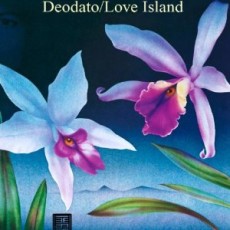
Eumir Deodato was born Eumir Deodato de Almeida on June 22, 1943 in Rio de Janiero of Italian and Portuguese parents. He began his musical training at twelve on the accordion but rapidly learned instrumental and orchestral skills that gave him his first recording session at 17.
Originally working as pianist and arranger in the Rio bossa nova scene, he rapidly outgrew this and, along with many other Brazilian musicians during the military dictatorshipin their country, moved to New York and began working with composer Luis Bonfa and later with producer Creed Taylor as an arranger. Additionally, he became keyboardist in Taylor’s expanding group of CTI backing artists.
His first U.S. album “Prelude” released in 1973 for CTI was a big band Latin jazz project that immediately attracted a wide audience. His funky version of Also Sprach Zarathustra won him the 1974 Grammy for Best Pop Instrumental Performance and hitting #2 on the charts.
Deodato has been in demand as a producer and arranger since the 1960s. In all, he has worked on more than 500 albums, fifteen of which have reached platinum. His skills as an arranger provided entree to the American recording industry, writing charts for Wes Montgomery, Astrud Gilberto, Frank Sinatra, Bjork, k.d. lang and Kool and the Gang among others.
He has scored several films over his career and recorded a live album in Rio in 2007. He continues to produce and arrange.
More Posts: piano
Daily Dose Of Jazz…
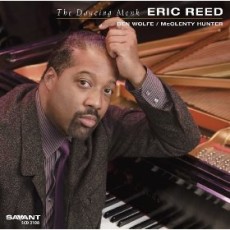
Eric Reed was born in Philadelphia, Pennsylvania on June 21, 1970 and began playing piano at age two, transitioning into his minister father’s church at five and at seven began formal study at the Philadelphia Settlement Music School. By the time he was 11 his family was moving to Los Angeles where he studied at the Colburn School of Arts.
In 1986 his encounter with Wynton Marsalis would greatly aid his career beginning with him joining his septet in 1990 and over the next five years he would work with Wynton along with Joe Henderson and Freddie Hubbard. In 1996 he joined the Lincoln Center Jazz Orchestra and towards the end of the decade he was venturing out to lead his own group, Black Note, that released several albums during the 1990s.
Eric has worked with jazz luminaries such as Irvin Mayfield, Cassandra Wilson, Mary Stallings, Clark Terry, Dianne Reeves, Elvin Jones, Ron Carter, Paula West and Benny Carter.
Eric has also worked as a composer, scoring music for independent and mainstream films, including the comedy ‘Life’, featuring Eddie Murphy and Martin Lawrence. With nearly two dozen albums under his belt, he most recently recorded his Monk project, having already released The Dancing Monk in 2011 and The Baddest Monk in 2012 with an audience anticipation of the final recording as he continues to perform, tour and record.
More Posts: piano

Daily Dose Of Jazz…
Jaki (John) Byard was born on June 15, 1922 in Worcester, Massachusetts and began playing professionally at age 15. Adept not only on the piano, he played trumpet and saxophone among other instruments. After serving in WWII he toured with Earl Bostic in the late 40s, based himself in Boston and had his recording debut with Charlie Mariano in 1951.
Known for his eclectic style, Byard added everything from ragtime to free jazz in his delivery. Through the fifties and into the sixties he was a member of Herb Pomeroy’s band followed by a stint with Maynard Ferguson.
Moving to New York, Byard recorded extensively with Charles Mingus from 1962 to 1964 and in 1970, touring Europe with him in 1964. He also made important recordings as a sideman with Eric Dolphy, Booker Ervin and Sam Rivers.
As a leader, he recorded a string of albums for the Prestige label during the 1960s and fronted an occasional big band, the Apollo Stompers. He taught at the New England Conservatory, Manhattan School of Music, Hartt School of Music, and the New School for Social Research.
Jaki Byard was shot dead on February 11, 1999 in New York City. The circumstances surrounding his death have not been determined. Phil Woods described him as “one of the most compelling and versatile pianists in jazz”.

Daily Dose Of Jazz…
Kenny Drew, Jr. was born on June 14, 1958 in New York City is the son of jazz pianist Kenny Drew. His initial study was in classical music with his mother and grandmother. In his teens he gigged in clubs became interested in jazz and pop, but initially worked in funk bands. Kenny attended Iona College in New Rochelle, NY for a spell from 1977 to 1978. There, he became pianist for the Iona College Singers, an entertainment troop promoting the College’s name and goodwill among local high schools, retirement homes and the like in the Northeast region of the USA.
Later he went into jazz piano and in 1990 Kenny won the Great American Jazz Piano competition at the Jacksonville Jazz Festival in Florida. He has continued to perform jazz, but has also performed some chamber music. He made his recording debut with Charnett Moffet, worked with Stanley Jordan and OTB, and recorded with Eddie Gomez, Sadao Watanabe and the Mingus Big Band.
Although his style has some similarities to his father’s, but is different enough to generally avoid comparison. Drew is considered the more eclectic of the two and his music is known for its hard-swinging bluesy sound and large, two-handed rooty chords contrasting with fast runs. His style is said to be similar to that of his father and Oscar Peterson, though he cites Thelonious Monk as his major influence and like Monk often recorded and performed solo. He has 20 albums under his name as a leader and continued to perform until his death at home in St. Petersburg, Florida on August 3, 2014.
More Posts: piano
Daily Dose Of Jazz…
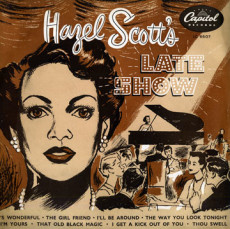
Hazel Dorothy Scott was born on June 11, 1920 in Port of Spain, Trinidad but was raised in New York City from age four. Performing extensively as a child pianist, she trained at Julliard and appeared in the 1942 production of Priorities and performed numerous times at Carnegie Hall.
A jazz and classical pianist and singer, Scott was known for improvising on classical themes and also played boogie-woogie, blues, and ballads. She was the first woman of color to have her own television series “The Hazel Scott Show” that premiered on the Dumont Television Network on July 3, 1950. However, due to her public opposition to McCarthyism and racial segregation the show was canceled in 1950 when she was accused of being a Communist sympathizer; the final broadcast was September 29, 1950.
The talented Hazel went on to have a brief motion picture career included films Something To Shout About, I Dood It, Broadway Rhythm, The Heat’s On and Rhapsody In Blue. Her album Relaxed Piano Moods on the Debut Record label with Charles Mingus and Max Roach is the album critics hold in high regard.
She married U.S. Congressman Adam Clayton Jr., a union that lasted from 1945 to 1956 and produced one child, Adam III. Pianist and vocalist Hazel Scott passed away of pancreatic cancer in New York City on October 2, 1981. She was 61 years old.