


Daily Dose Of Jazz…
Kenny Barron was born June 9, 1943 in Philadelphia, Pennsylvania, the younger brother of the late tenor saxophonist Bill Barron. Starting on piano at 12, by 1957 he was playing in with Mel Melvin’s R& B band. By the time he turned 18, he was living in New York and playing with the likes of James Moody, Lee Morgan, Roy Haynes and Lou Donaldson. From 1962 to 1966 he was a member of Dizzy Gillespie’s quartet, followed by stints with Freddie Hubbard, Yusef Lateef, Stanley Turrentine, Milt Jackson, Buddy Rich and Ron Carter.
In the Eighties, Barron along with Buster Williams, Ben Riley and Charlie Rouse co-founded the quartet Sphere, focusing on music composed by Thelonious Monk and original compositions inspired by him. He has also co-led the Classical Jazz Quartet and led his own trios and quintets with a multitude of players.
Kenny recorded several albums with Stan Getz between 1987 and 1991 including his last duet project. He has been nominated for a Grammy nine times often for both album and solo performance, he consistently wins jazz critics and readers polls for Down Beat, Jazz Times and Jazziz magazines and is a six time recipient of Best Pianist by the Jazz Journalists Association.
Known for his lyrical, adaptive style, Barron is the pianist of choice for the most prestigious jazz musicians in the world. In 2005 he was inducted into the American Jazz Hall of Fame, won the MAC Lifetime Achievement Award and in 2010 was honored as a National Endowment for the Arts Jazz Master.
For over 25 years, Barron taught piano and keyboard harmony at Rutgers University in New Jersey mentoring young musicians like David Sanchez, Terence Blanchard and Regina Bell. He now teaches at the Manhattan School of Music, has recorded nearly four dozen albums as a leader and many more as a sideman with jazz greats such as Ella Fitzgerald, Booker Ervin, Roy Haynes, Joe Henderson, Bobby Hutcherson, Elvin Jones, Yusef Lateef and James Moody. He continues to perform, record and tour with his newest quintet “Brazilia” featuring some of Brazil’s greatest musicians.

More Posts: piano

Daily Dose Of Jazz…
Uri Caine was born June 8, 1956 in Philadelphia, Pennsylvania and began playing piano at seven, studying with French jazz pianist Bernard Peiffer at 12. He later studied at the University of Pennsylvania and gained great familiarity with classical music and worked in clubs around the city.
His professional career started in 1981 and a mere four years later saw his debut with the Rochester-Gerald Veasley band recording session. During the decade he moved to New York City, appeared on a klemzer album with Mickey Katz and played with Don Byron and Dave Douglas.
Caine has recorded 16 albums and is celebrated for his eclectic and inventive interpretations of the classical repertoire. His 1997 jazz tribute to Gustav Mahler received an award from the German Mahler Society, while outraging some jury members. Caine has also reworked Bach, Beethoven, Wagner, Schumann and Mozart.
In 2001 he teamed up with drummer Zach Danziger to conceive an original project fusing live jungle and drum ‘n’ bass beats with fusion jazz called “Uri Caine Bedrock 3” and he worked with Ahmir “Questlove” Thompson of The Roots, Christian McBride, Pat Martino and Jon Swana.
Jazz pianist and composer Uri Caine has been named Composer-in-Residence of the Los Angeles Chamber Orchestra, has received a nomination for a Grammy, been named U.S. Artists Fellow, has recorded twenty-eight albums as a leader and continues to perform and tour.
Daily Dose Of Jazz…
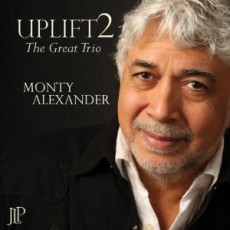
Monty Alexander was born Montgomery Bernard Alexander on June 6, 1944 in Kingston, Jamaica. Discovering the piano at the age of 4, Alexander began taking classical music lessons at 6 and became interested in jazz at the age of 14. He started playing in clubs, and on recording sessions by Clue J & His Blues Blasters, deputizing for Aubrey Adams. Two years later, he directed his dance orchestra Monty and the Cyclones and played in the local clubs. Performances at the Carib Theater in Jamaica by Louis Armstrong and Nat King Cole left a strong impression on the young pianist.
In 1961 Alexander and his family moved to Miami, Florida, he went to New York in 1962 and started to play at the jazz club Jilly’s. In addition to performing with Frank Sinatra there, he also met and became friends with bassist Ray Brown and vibist Milt Jackson. In 1964, he went to California and recorded his first album “Alexander the Great” for Pacific Jazz at the age of 20.
He has recorded with Milt Jackson, Ernest Ranglin and Ed Thigpen, toured with Ernestine Anderson, steel pan player Othello Molineaux, Mary Stallings, Dizzy Gillespie, Benny Golson, and Frank Morgan among others. In some of successive trios he has collaborated with Oscar Peterson, Herb Ellis, Ray Brown, Mads Vinding, and Niels-Henning Orsted Pederson.
Alexander married the late great jazz guitarist Emily Remler in 1981, a union that would last only three years. In the 90s, Alexander formed a reggae band featuring all Jamaican musicians, releasing several reggae albums, including “Yard Movement” and “Stir It Up”, a collection of Bob Marley songs. Monty Alexander, pianist and melodica player, influenced by Art Tatum, Oscar Peterson, Wynton Kelly and Ahmad Jamal and the strong Caribbean influence and swinging feeling is consistently representative in his 67 albums as a leader and his numerous sideman collaborations as he continues to record, perform and tour.
Daily Dose Of Jazz…
Oliver Edward Nelson was born on June 4, 1932 in St. Louis, Missouri. His brother played sax with Cootie Williams and his sister sang and played piano. He began playing the piano when he was six, the saxophone by eleven and by age 15 he was playing in territory bands around St. Louis. In 1950 he joined Louis Jordan’s big band, playing alto saxophone and arranging.
After military service Nelson returned to Missouri to study music composition and theory at Washington and Lincoln University graduating in 1958. He married, had a son, divorced, moved to New York City, and began playing with Erskine Hawkins and Wild Bill Davis, and arranged for the ApolloTheatre. In 1959 he briefly worked the West coast with Louie Bellson’s big band and played tenor for Quincy Jones.
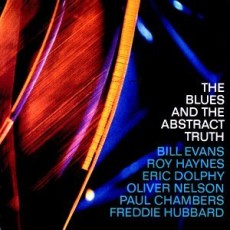
After six albums as leader between 1959 and 1961 for Prestige with Kenny Dorham, Johnny Hammond Smith, Eric Dolphy, Roy Haynes and others. Oliver’s big break came with his Impulse album The Blues and The Abstract Truth featuring his now classic standard “Stolen Moments”. Propelling him into prominence as a composer and arranger, it opened up opportunities to arrange for Cannonball Adderley, Irene Reid, Sonny Rollins, Billy Taylor, Wes Montgomery, Johnny Hodges and many others.
Moving to Los Angeles in 1967 Nelson spent a great deal of time composing for television shows like Colombo, Ironside, Bionic Woman and films like Death of a Gunfighter and Last Tango In Paris. He produced for Nancy Wilson, James Brown, the Temptations and Diana Ross.
Less well-known is the fact that Nelson composed several symphonic works, and was also deeply involved in jazz education, returning to his alma mater, Washington University, in the summer of 1969 to lead a five-week long clinic that also featured such performers as Phil Woods, Mel Lewis, Thad Jones, Sir Roland Hanna, and Ron Carter.
Oliver Nelson, saxophonist, clarinetist, pianist, arranger and composer died of a heart attack on October 28, 1975, aged 43.
Daily Dose Of Jazz…
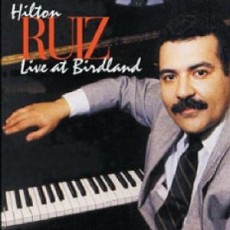
Hilton Ruiz was born in New York City on May 29, 1952 of Puerto Rican heritage. He began playing piano at the age of eight, and gigged with Freddie Hubbard and Joe Newman when he was young. Later, he was Rahsaan Roland Kirk’s main pianist from 1974 to 1977 and was featured on such records as The Case of the 3 Sided Dream in Audio Color and The Return of the 5000 Lb. Man.
Hilton recorded several solo albums between the 1980s and 2000s. On May 19, 2006, found unconscious on Bourbon Street in New Orleans, police concluded that he stumbled and fell and was not attacked. As a result of the accident, he remained in a coma until eventually passing away on June 6, 2006 at the age of 54.
Hilton Ruiz, jazz pianist steeped in Afro-Cuban music, was also a talented bebop musician.
More Posts: piano