

Daily Dose Of Jazz…
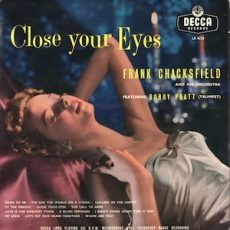
Robert Stuart Pratt was born on January 24, 1927 in Aberdeen, Scotland and was a professional musician from the age of 16, having mastered trumpet, flugelhorn, piano, drums and vocals. He served in the Royal Corps of Signals leading the Skyliners Army Dance Band.
In 1948 he joined Ken McIntosh’s outfit for a year before joining Ted Heath the following year. Due to his ability to play high and loud brought distinction to the brass section and his high note duets with Bert Ezzard became a highlight of the band’s appearances. Bobby was a mainstay with Heath until 1960.
As one of the busiest session players in Britain, Pratt found himself in high demand not only for jazz big band work but consistent work with top jazz and pop perfprmers in both record, tv and film studios. He played in the big bands of Humphrey Littelton, Eddie Harvey, Tubby Hayes, Tommy Watts, Vic Feldman, Jack Parnell, the Forty Two Big Band and the Downbeat Big Band.
Over the course of his career Bobby also recorded as a member of the Tommy Whittle Septet, The Kirchin Band, the Johnny Keating All Stars, Frank Chacksfield and Kenny Baker’s Dozen.
Trumpeter Bobby Pratt committed suicide on June 5, 1968 at the age of 41.

More Posts: drums,flugelhorn,history,instrumental,jazz,music,piano,trumpet,vocal
Daily Dose Of Jazz…
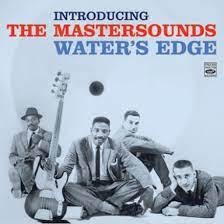
Richie Crabtree was born January 23, 1934 in Sidney, Montana. A student of legendary piano virtuoso Freddie Saatman, the pianist first popped up on the jazz scene in the company of the Montgomery Brothers. His short recording career seems to have taken place between the late ’50s and early ’60s, largely as a member of a quartet called the Mastersounds. This group, which duplicated the Modern Jazz Quartet’s popular instrumentation of piano, vibes, bass, and drums, but not its style, was an even mix of Montgomery siblings and others. Monk played the bass, with Buddy on the vibraphone, and Crabtree took rhythmic cues from drummer Benny Barth.
While Wes sat in at times, it was Buddy and Monk that were continually looking for a way of making the intricate inventions of bebop more appealing to easy listening and pop listeners. In 1957 the group was gigging in San Francisco and landed a contract with the World Pacific label. They recorded two albums before label honcho Dick Bock went to Indianapolis to check out Wes that they had been bragging about. The resulting recordings were also the debut on vinyl for a 19-year-old Freddie Hubbard.
A serious devotee of the founding fathers of bebop, Richie was not about to slouch on the harmonic contribution. However, little seems to have been written about him since 1961, a point where discographers place his last recording session. The Mastersounds group was at the height of its popularity in 1960, so naturally this was also the year the group decided to break up.
Pianist Richie Crabtree faded into obscurity and to date nothing has surfaced about his whereabouts or whether he is living or dead.
DIANNE REEVES
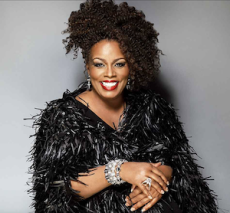
“The most admired jazz diva since the heyday of Sarah Vaughan, Ella Fitzgerald and Billie Holiday,” (NY Times) GRAMMY winner and 2018 NEA Jazz Master Dianne Reeves is jazz’s greatest living vocalist — an artist who embodies the music’s enduring values of elegance, class, and improvisational poise.
Her string of GRAMMYs includes an unprecedented three consecutive Best Jazz Vocal Performance awards and another for her contributions to the soundtrack of George Clooney’s film Good Night and Good Luck. She’s a performer with a gift for imbuing any performance space with the intimacy of a living room, and her 2015 Concord Records debut, Beautiful Life, won the GRAMMY for Best Jazz Vocal Album, melding jazz with elements of R&B, pop and Latin music.
Whether putting a personal stamp on lilting Brazilian standards, exploring contemporary fair by Ani DiFranco and Stevie Nicks, interpreting American Songbook classics by the Gershwin, Porter, and Berlin, or breathing fresh life into holiday chestnuts, Dianne Reeves always gets to the heart of a song. More than two generations have passed since jazz stars took on aristocratic titles, otherwise Dianne Reeves would surely be known as The Queen.
Frida & Saturday Performance | 7:30pm
Sunday Performance | 7:00pm
More Posts: adventure,club,genius,jazz,music,piano,preserving,travel,vocal

KANDACE SPRINGS
“A bewitching amalgam of Dusty Springfield’s caliginous, cream-filled soulfulness and Nancy Wilson’s sensual sophistication, with distinct shades of Michael Jackson” (JazzTimes), the stunning soul jazz singer Kandace Springs presents music from her latest Blue Note release, The Women Who Raised Me, joined by master drummer Camille Gainer and Oakland-born bassist Aneesa Strings, a former SFJAZZ High School All-Star known for work with José James.
Springs first gained national attention with her 2014 self-titled EP, a hip-hop inflected project that led to performances on Jimmy Kimmel Live and The Tonight Show Starring Jimmy Fallon, appearances at the Afropunk and Bonnaroo festivals, and an invitation to perform with Prince at Paisley Park for the 30th anniversary of Purple Rain. While elated by these opportunities, she started rethinking her musical direction and gravitated toward the jazz and soul-based sounds of her Nashville upbringing.
Reuniting with Grammy-winner Larry Klein, who produced her stunning debut Soul Eyes, Springs chose to honor the women whose music was such an inspiration during her early life in Nashville. Working with Klein (whose credits include albums by Lizz Wright, Melody Gardot, Joni Mitchell, and Herbie Hancock), The Women Who Raised Me is a loving tribute to Ella Fitzgerald, Billie Holiday, Nina Simone, and Dusty Springfield, featuring Springs’ lustrous voice and deft piano accompanied by heavyweight players Christian McBride, Chris Potter, Avishai Cohen, and Elena Pinderhughes.
More Posts: adventure,club,genius,jazz,music,piano,preserving,travel,vocal
CHUCHO VALDÉS & IRAKERE 50
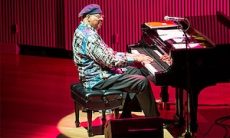
The most influential figure in modern Afro-Cuban jazz for more than half a century, virtuoso pianist, composer and arranger Chucho Valdés returns with Irakere 50, the new iteration of the legendary band that changed the course of Latin music in the 1970s and 80s.
The son of Cuban pianist Bebo Valdés, the winner of seven GRAMMYs and four Latin GRAMMY Awards joined Armando Romeu’s celebrated Cuban Orchestra of Modern Music in 1967, a time when the communist government still considered American jazz anti-revolutionary. He was already recognized as the most formidable pianist of his generation when he launched Irakere in 1973 with a phenomenal cast that included saxophonist Paquito D’Rivera and trumpeter Arturo Sandoval.
Discovered and introduced internationally by Dizzy Gillespie, the band’s unprecedented synthesis of folkloric Afro-Cuban rhythms, sacred drums, rock, funk, R&B, and jazz opened up vast new frontiers, and helped pave the way for the pervasively popular dance music known as timba. Over the ensuing years, Valdés has concentrated on his career as a solo artist, recording 25 albums and co-writing the landmark 2018 book Decoding Afro-Cuban Jazz in collaboration with SFJAZZ Director of Education Rebeca Mauleón.
A springboard from Valdes’ GRAMMY-winning Afro-Cuban Messengers band, Irakare 50 showcases a blazing new generation of Cuban talent.
Thursday ~ Saturday Performance | 7:30pm
Sunday Performance | 7:00pm
More Posts: adventure,club,genius,jazz,music,piano,preserving,travel