

Daily Dose Of Jazz…
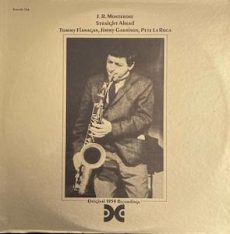
J.R. Monterose steps into the spotlight of this discussion with Straight Ahead (Xanadu Records 126). It was his second album as a leader and was released initially as The Message in 1960. J.R. was born Frank Anthony Peter Vincent Monterose Jr., and his initials come from Junior. He began playing the clarinet at age thirteen, then started the tenor sax two years later. Monterose was equally proficient on the soprano sax, but the tenor became his primary instrument. He’s collaborated with Kenny Burrell, Teddy Charles, Kenny Dorham, Jon Eardley, Charles Mingus, Buddy Rich, and George Wallington over his career. His bandmates on this date are three of the best in the business, Tommy Flanagan on piano, Jimmy Garrison on bass, and Pete La Roca on drums. My copy is the 1976 U.S. Mono reissue.
Straight Ahead, the first of five tunes composed by J.R. Monterose, opens the album with a brief introduction segueing into the quartet’s fleet melody. J.R. kicks off the solos with a brisk interpretation; next, Tommy builds a statement of pure excitement. J.R. and Pete share a swift exchange of notes, leading to the closing chorus and exit. Violet For Your Furs is a beautiful composition by Matt Dennis and Tom Adair from the forties. It begins with a brief dialogue between Monterose and Flanagan that blossoms into the ensemble’s elegant opening chorus. J.R. has the song’s only statement and brings out its warmth and lyricism in a display of intimate tenderness complemented by the rhythm section ahead of a soothing ending.
Chafic is the saxophonist’s tune for a French poodle he owned. The word’s definition in Arabic is merciful, and the pace moves upward for the foursome’s central theme. J.R. expresses his love and admiration for his pet in the opening statement. Tommy extends the pleasant feeling in the second interpretation, and Jimmy gets a bit of work leading to the climax. I Remember Clifford by Benny Golson, and Jon Hendricks closes the first side with a very touching rendition by the ensemble. The jazz standard is one of Golson’s most recorded tunes and a moving tribute to trumpeter Clifford Brown. A concise introduction by the leader opens the way for the foursome’s delicately gentle theme. Monterose again has the solo spotlight and crafts a charming interpretation into a serene finale.
Side Two is occupied by the final three tunes by J.R. Monterose, beginning with Green Street Scene, a blues that swings easily from the theme’s opening notes. The saxophonist goes to work first on an infectiously cheery solo. Tommy comes in next for an entertaining romp; then Jimmy takes a short stroll on the following reading. J.R. and Pete share a stimulating conversation before the close. You Know That is a swinger that the quartet brings vibrantly to life in the opening chorus. The saxophonist leads off with a compelling interpretation, then Flanagan gets into a swinging groove on the following statement. La Roca has a brief remark before Monterose returns for the closing theme reprise and a slow dissolve into nothingness.
Short Bridge is an exercise of pure joy, opening with a beautifully conceived melody and the opening statement by J.R. Tommy slides in next with one of his most mellow readings. The saxophonist returns with a memorable exclamation point ahead of the song’s conclusion. It’s unknown who produced the original album, but Don Schlitten produced the Xanadu reissue, and Paul Goodman remastered it. The album has an excellent soundstage through the treble, midrange, and low end. If you’re in the mood for an album that recaptures the spirit of Hard-Bop, I offer for your consideration Straight Ahead by J.R. Monterose. It’s a beautiful performance that’s highly recommended and worth the price of admission for a spot in any jazz library!
~ The Message (Jaro International JAM-5004/JAS-5004) – Source: Discogs.com ~ I Remember Clifford – Source: JazzStandards.com ~ Violet For Your Furs – Source: Wikipedia.org © 2022 by Edward Thomas Carter
More Posts: choice,classic,collectible,collector,history,instrumental,jazz,music,saxophone
Daily Dose Of Jazz…
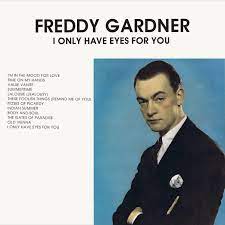
Frederick James Gardner was born on December 23, 1910 in London, England and took up the saxophone at 15 to help alleviate asthma. After minimal coaching he formed the semi-professional New Colorado Band in 1928, and a year later, while working as an office clerk, entered the band in a contest at Chelsea Town Hall and won. He was spotted by the founding editor of Melody Maker magazine who was distributing the prizes, and a year later secured his first professional position.
In 1933, Gardner was taken under the wing of Ray Noble and recorded with the New Mayfair Orchestra. He played in London clubs when working with Sidney Lipton’s Orchestra and at the Mayfair Hotel with Bert Firman’s band and with Billy Bissett. He became a prolific session musician, doubling on all the reeds, although his main instrument was alto saxophone.
He recorded with Benny Carter, Ray Noble, Valaida Snow, Jay Wilbur Buck Washington, and John W. Bubbles. From 1936 to 1937 Freddy arranged and performed on the radio, led small groups and his Swing Orchestra, which included Ted Heath.
During World War II, he was part of the official dance band for the RNPS called the Blue Mariners led by George Crow. He was regularly given special leave to continue his recording and broadcasting. Some recordings were made under the band name Freddie Gardner and his Mess Mates. Folowing the war he continued with extensive freelance work, including as a soloist with the Peter Yorke Concert Orchestra.
Saxophonist Freddy Gardner was taken ill while mending one of his son’s bicycles in the garden of his Brooke Street home in London. An hour later at St. Mary’s Hospital in London he transitioned from a stroke on July 26, 1950 at the age of 39.
More Posts: arranger,bandleader,history,instrumental,jazz,music,saxophone


MARCUS ELLIOTT QUINTET
Dinner & A Show
Marcus Elliot is a saxophonist, composer, improviser, and educator based in Detroit, Michigan. His list of achievements and credentials are substantial including:
-2020 Kresge Artist Fellow, awarded by Kresge Arts in Detroit
-Current director of the University of Michigan’s Creative Arts Orchestra
-A Fellow of the Geri Allen Gathering Orchestra
-Co-founder of the nonprofit Polyfold Musical Arts Collective
-Director of the Detroit Symphony Orchestra’s Civic Jazz Ensembles
Elliot is a disciple of the Detroit music scene. His mentors include Rodney Whitaker, Marcus Belgrave, Robert Hurst, Donald Walden, Bennie Maupin, Marion Hayden, and Karriem Riggins. After graduating with a bachelors degree in Jazz Studies from Michigan State University, Marcus began to curate weekly performances in Detroit, showcasing some of Detroit’s young jazz musicians. He held a weekly residency at Detroit’s premiere jazz club, Cliff Bell’s, for four years. Marcus self-released three albums with his ensemble, the Marcus Elliot Quartet and co-released an album with his duo project with Michael Malis, Balance.
Showtimes ~ 6:00pm~8:00pm | 8:30pm~10:30pm
More Posts: adventure,album,club,festival,genius,jazz,museum,music,preserving,restaurant,saxophone,travel

Daily Dose Of Jazz…
Eric Marienthal was born on December 19, 1957 in Sacramento, California but moved with his family to San Mateo, California when he was two years old. He was taught music while in school and picked up the saxophone in the fourth grade. His father bought him a $400 Selmer saxophone and enrolled him in Corona Del Mar High School. Throughout his education, he learned to play guitar, flute, clarinet and piano.
After graduating from high school he studied saxophone at the Berklee College of Music. By the time he left Berklee, Eric had achieved the highest proficiency rating given by the school. He began his professional career in 1980 with New Orleans trumpeter Al Hirt. Heading west he settled in Los Angeles, California and became a member of the Chick Corea Elektric Band. He recorded six albums with that band and two of them won Grammy Awards.
Marienthal has also written instructional books, including Comprehensive Jazz Studies & Exercises, The Ultimate Jazz Play Along, and The Music of Eric Marienthal. He has made instructional videos, Play Sax From Day One, Modern Sax and Tricks of the Trade. He occupies the lead alto chair of Gordon Goodwin’s Big Phat Band, playing alto saxophone, soprano saxophone, flute, and piccolo.
Grammy Award-nominated alto saxophonist Eric Marienthal continues to perform and record.

More Posts: bandleader,flute,history,instrumental,jazz,music,piccolo,saxophone