

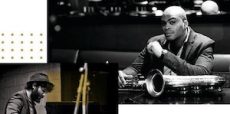
WAYNE ESCOFFERY & TAL COHEN
Wayne Escoffery is a 2014 & 2021 Downbeat Critics Poll Winner for both the Tenor and Soprano Saxophones, and a Grammy Award winning musician. He is considered one of the Jazz world’s most talented saxophonists and in-demand sidemen. Originally from London, England Wayne grew up in New Haven, Connecticut which is where his love for Jazz and formal study of music began. As a high-school student and an undergraduate at The Hartt School, Escoffery studied under the mentorship of Saxophone legend Jackie McLean, and was among the second class of students at the prestigious Thelonious Monk Institute of Jazz at The New England Conservatory which is where he received a Master’s degree in Music. In 2006 he secured one of the most coveted gigs in jazz: a frontline position in Tom Harrell’s working quintet. For over a decade, Escoffery was mostly associated with trumpet master having toured the globe with him, recording seven CDs with The Tom Harrell Quintet and co-producing four of those releases. Escoffery has also been a member of The Mingus Dynasty, Big Band and Orchestra since 2000 and has made several recordings with the group. Over the years he has recorded and performed internationally with a who’s who in Jazz including Ron Carter, Ben Riley, Abdulah Ibrahim, Eric Reed, Carl Allen, Al Foster, Billy Hart, Eddie Henderson, Rufus Reid, Wallace Roney, Randy Brecker and Herbie Hancock just to name a few.
Escoffery leads his own groups which tour internationally and has made several highly acclaimed studio recordings with said groups. His current working quartet features pianist David Kikoski, bassist Ugonna Okegwo and drummer Mark Whitfield Jr. who has taken over for the late great Ralph Peterson Jr. The band’s latest album The Humble Warrior on the Smoke Sessions Records label has gotten rave reviews and received 4 stars in the June, 2020 issue of Downbeat Magazine.
Tal Cohen is a Grammy award winning jazz pianist currently located in Miami. He has received much acclaim including winning the Barry Harris National Piano Competition and was the recipient of the prestigious Freedman Fellowship him performed to a sold out crowd at the Sydney Opera House.
Recently, Tal Cohen has been playing around the Globe with Terence Blanchard, Greg Osby, Ignacio Berroa, Joe Lovano and others. he currently leads his own ensemble which has performed at Iconic jazz festivals and venues that include Jazzbez Jazz Festival (Ukraine), Detroit Jazz Festival, Melbourne Jazz Festival (Australia), a three week residency at the Black Cat (San Fransisco).
His most recent album- “Gentle Giants” has received international acclaim and gained him many reviews including a 4 star review from the historic Downbeat Magazine. Cohens become one of the most in demand pianists as he continues to tour the globe with his unique blend of Jewish melodies, traditional jazz Harmony and an impeccable rhythmic pallet forging a path to be remembered.
Showtimes ~ 8:30pm & 10:30pm
More Posts: adventure,album,club,festival,genius,jazz,museum,music,piano,preserving,restaurant,saxophone,travel
Requisites
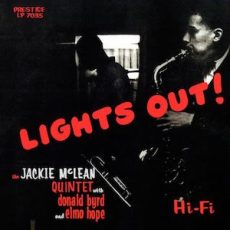
Lights Out! ~ The Jackie McLean Quintet | By Eddie Carter
The Jackie McLean Quintet steps into this morning’s spotlight with a 1956 release, Lights Out! (Prestige PRLP 7035/PRST 7757). It was the alto saxophonist’s label debut, and a superb supporting cast joins him on this date, Donald Byrd on trumpet, Elmo Hope on piano, Doug Watkins on bass, and Art Taylor on drums. My copy is the 2022 Analogue Productions Mono Audiophile reissue sharing the original catalog number. Side One opens with Jackie McLean’s Lights Out, a slow blues that comes to life in the rhythm section’s introduction, with a short statement by Elmo segueing into Jackie’s easy-going theme and opening solo. Donald compliments him leisurely using a mute, and Hope does his thing in the following reading. Both horns engage in an exchange of thoughts before the climax.
Up, also by the saxophonist, soars from the front line’s introduction into a rapid-fire melody. Byrd is up first and back on the open horn for a brisk reading. McLean romps through the second interpretation; next, Hope keeps up the energetic pace in a speedy performance. Taylor displays his talents in a brief finale followed by the horn’s return for a quick reprise. Lorraine, by Donald Byrd, begins with the trumpeter’s lovingly tender theme. He adds a personal touch to the first interpretation, matched by the rhythm section’s gorgeous groundwork. Jackie follows with a beautiful reading that’s a sultry treat for the ears, then Donald returns for a second statement that takes us away into a pretty ending by the front line.
A Foggy Day by George and Ira Gershwin kicks off Side Two. The song premiered in the 1937 musical comedy, A Damsel In Distress. McLean begins the melody with a happy, medium beat that extends to his lead solo. Byrd is back on the mute and flows with a gentle swing before passing it on to Hope. The pianist gives a charming closing statement leading to the ending theme that dissolves into emptiness. Donald Byrd’s Kerplunk gets underway with a carefree opening statement by Elmo that Donald maintains on the second interpretation with a relaxed groove. Jackie enters next and delivers a very efficient solo that proceeds to the front line blending their ideas into a satisfying conclusion ahead of the quintet’s exit.
Jackie McLean’s Inding starts with the trio’s introduction ahead of Byrd’s lively opening statement. Hope succeeds him with a lively presentation that shapes up nicely. McLean has the final say and brings the song home with a cheerful reading preceding the climax. Bob Weinstock supervised Lights Out!, and Rudy Van Gelder recorded it. Kevin Gray remastered this reissue, and the sound quality is outstanding. The record is on two-hundred grams of audiophile vinyl, and the album jacket has a high gloss. If you don’t already own an original pressing or early reissue, I highly recommend this Analogue Productions reissue for a spot in your library. It’s an excellent album by Jackie McLean that’s nearly forty-six minutes of pure bliss and can be enjoyed during the day, evening, or with the Lights Out!
~ A Foggy Day – Source: JazzStandards.com ~ © 2022 by Edward Thomas Carter

More Posts: choice,classic,collectible,collector,history,instrumental,jazz,music,saxophone
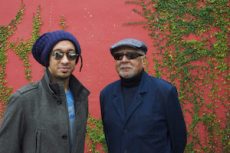
CHARLES LLOYD~GERALD CLAYTON DUO
NEA Jazz Master Charles Lloyd, celebrating his 85th year, has never sounded better. The depth of his sound reflects a lifetime of experience. A Memphis Music Hall of Fame inductee, and recipient of the prestigious Chevalier des Arts et Lettres from the French Minister of Culture, Lloyd has a legendary history in the music world.
His concerts and recordings are events of pristine beauty and elegance, full of intensely felt emotion and passion that touches deep inside the heart. This is not entertainment, but the powerful uncorrupted expression of beauty through music. When music vibrates, the soul vibrates and touches the spirit within.
Lloyd is joined by six-time GRAMMY®-nominated pianist Gerald Clayton, a supremely gifted improviser hailed as one of the finest pianists of his generation. Charles Lloyd and Gerald Clayton have performed together since 2013, sharing incredible chemistry.
THE 222 is a small intimate venue. All seats are very good and have a clear view of the stage.
Seating for this concert is club style with round tables that seat four people. Seating will be assigned by the date of purchase, so the sooner you buy your tickets the closer you will be within the ticket level you purchase from.
GOLD SEATING – FRONT MIDDLE TABLES
SILVER SEATING – SURROUNDING FRONT TABLES
GENERAL SEATING – REMAINDER
More Posts: adventure,album,club,festival,genius,jazz,museum,music,piano,preserving,restaurant,saxophone,travel
The Jazz Voyager
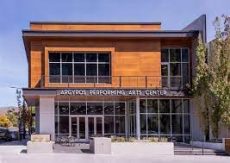
The Jazz Voyager is taking his next flight out to the great northwest to Idaho to pay a visit to a performing arts center called The Argyros. That is where the jazz vocalist Curtis Stigers will be performing for one night only. Besides his vocal talents he is also a songwriter, and plays the saxophone and guitar.
An intimate evening of songs and stories by this Emmy-nominated musician is something to anticipate. He has redefined the constitution of contemporary jazz singing, bringing new tunes to the Great American Songbook.
This is another first time discovery of the city and venue but I am excited to see what part of the country has to offer. Will definitely be dressed properly for the cold weather and hope any storms hold off. As always each flight I take has me masked as a preventative measure as these strains are continuing to mutate.
The center is located at 120 Main Street South, Ketchum 83340. The center’s number is 208-726-7872. For more information visit https://notoriousjazz.com/event/curtis-stigers.

More Posts: adventure,album,club,festival,genius,guitar,jazz,museum,music,preserving,restaurant,saxophone,travel,vocal
Daily Dose Of Jazz…
Theodore Guy Buckner was born on December 14, 1913 in St. Louis, Missouri but was raised in Detroit, Michigan where he played very early in his career before joining McKinney’s Cotton Pickers.
He became a member of the Jimmie Lunceford Orchestra, remaining from 1937 to 1943. After working with Lunceford, Buckner primarily played locally in Detroit, where he worked well into the 1970s. He played in small jazz combos, worked in the Motown studios, and co-led a big band with Jimmy Wilkins, Ernie Wilkins’s brother.
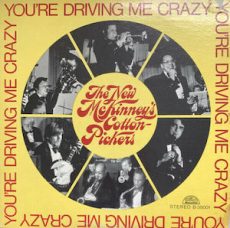
He toured Europe in 1975, and also appeared in the New McKinney’s Cotton Pickers that decade. Saxophonist Ted Buckner, who was the older brother of pianist Milt Buckner, transitioned on April 12, 1976 in Detroit.

More Posts: bandleader,history,instrumental,jazz,music,saxophone