

Daily Dose Of Jazz…
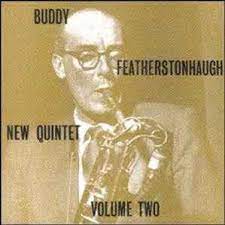
Buddy Featherstonhaugh was born Rupert Edward Lee Featherstonhaugh on October 4, 1909 in Paris, France. After the family moved to England he studied in Sussex, and had his first professional gig with Pat O’Malley in 1927. He went on to play with Spike Hughes from 1930 to 1932, and toured England in Billy Mason’s band behind Louis Armstrong that same year and in 1933 recorded with a group called The Cosmopolitans. which included Fletcher Allen. In 1935 he recorded with Valaida Snow and two years later with Benny Carter.
During World War II, he led a Royal Air Force band which included in its ranks Vic Lewis, Don McAffer, and Jack Parnell. They went on to record as The BBC Radio Rhythm Club Sextet during 1943-45. After the war Buddy toured Iceland in 1946, and then left the jazz scene, taking up work as a car salesman.
1956 saw his return to playing and recording in a quintet with trumpeter Leon Calvert, Roy Sidewell, Kenny Wheeler, and Bobby Wellins. He also appeared with the band at Butlin’s Holiday Camps in the mid-1950s. He toured the Middle East in 1957, after which he retired.
Saxophonist and clarinetist Buddy Featherstonhaugh, who was an occasional racing car driver who won the 1934 Albi Grand Prix, transitioned on July 12, 1976.

More Posts: bandleader,clarinet,history,instrumental,jazz,music,saxophone
Daily Dose Of Jazz…
Edgar “Puddinghead” Battle was born on October 3, 1907 into a musical family in Atlanta, Georgia. In 1921 while a student at Morris Brown University he started playing trumpet and formed his own band, the Dixie Serenaders. A few years later the group changed their name to Dixie Ramblers.
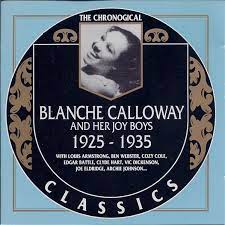
Battle played with Eddie Heywood Sr., and toured with the 101 Ranch Boys traveling show. During the 1920s he worked with Gene Coy, Andy Kirk, Blanche Calloway, Ira Coffey, and Willie Bryant. A move to New York City in the early Thirties saw him doing short stints with Benny Carter and Sam Wooding before joining George White’s ensemble on Broadway.
Over time, he began doing more work as a studio musician and arranger, writing charts for Cab Calloway, Paul Whiteman, Fats Waller, Earl Hines, Rudy Vallee, and Count Basie. During World War II, Edgar held a position as an electrician in a shipyard, while simultaneously running a big band with Shirley Clay.
In the 1950s, he founded Cosmopolitan Records and continued to play in big bands part-time through the 1960s. Among his numerous jazz compositions are the pieces Topsy, co-composed with Eddie Durham and Doggin’ Around with Herschel Evans.
Trumpeter, trombonist, saxophonist and pianist Edgar “Puddinghead” Battle, who was also a composer and arranger, transitioned in New York City on February 6, 1977, at the age of 69.
More Posts: bandleader,history,instrumental,jazz,music,piano,saxophone,trombone,trumpet
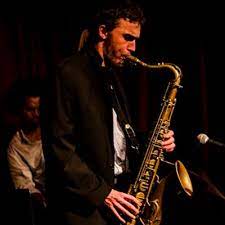
BEN SOLOMON QUARTET
Tenor saxophonist Ben Solomon returns to Smalls
Sets:
Walk-in music charge is $25 | Reserve tickets are $35 Sunday through Thursdays and $40 on Friday and Saturday.
More Posts: adventure,album,club,festival,genius,jazz,museum,music,preserving,restaurant,saxophone,travel
ADAM NIEWOOD & FRIENDS
Walk-in music charge is $25 | Reserve tickets are $35 Sunday through Thursdays and $40 on Friday and Saturday.
More Posts: adventure,album,club,festival,genius,jazz,museum,music,preserving,restaurant,saxophone,travel
Daily Dose Of Jazz…
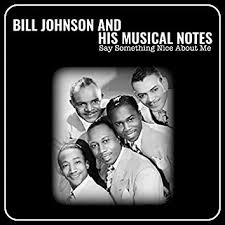
William Luther Johnson was born on September 30, 1912 in Jacksonville, Florida and studied piano as a child and began playing the alto saxophone at the age of 16. After working with lesser-known bands he studied in conservatories in Wisconsin and Illinois before attending Marquette University.
While in Milwaukee, Wisconsin he played with Jabbo Smith and others. He worked with Baron Lee and Tiny Bradshaw, and in 1936 joined Erskine Hawkins, with whom he performed into the early 1940s, recording with him from 1939 to 1942. He composed Tuxedo Junction with Hawkins and appeared with the band in the short film Deviled Hams in 1937.
Around mid-1946 he recorded under Bill Johnson and Orchestra, with several of the members becoming the Musical Notes. Bill Johnson and the Musical Notes recorded for Harlem, RCA, King, Regal, Tru-Blue.He recorded for Ronnex as the Bill Johnson Quartet, and the Bill Johnson Quintet for Baton. Over the years, there were many personnel changes, but Bill and Gus Gordon were on all the recordings.
In the Fifties failing health caused the breakup of the group, although he re-formed it on a couple of occasions. Alto saxophonist, clarinetist, and arranger Bill Johnson, who was diagnosed with lung cancer in 1957, transitioned on July 5, 1960 at 47 years old in New York City.

More Posts: arranger,bandleader,clarinet,history,instrumental,jazz,music,saxophone