

Daily Dose Of Jazz…
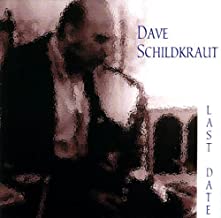
Dave Schildkraut was born on January 7, 1925 in New York, New York and started playing professionally in 1941, first with Louis Prima. He followed this five year residency with Buddy Rich and Anita O’Day through the end of the decade and into the Fifties.
He moved on to hone his craft further by working with Stan Kenton, Pete Rugolo, Oscar Pettiford, Miles Davis, George Handy, Tony Aless, Ralph Burns, Tito Puente, Johnny Richards, and Kenton again in 1959. During the 1960s, Dave freelanced around New York City, appearing regularly with Eddie Bert at the West End Cafe. Later in his life he went into semi-retirement.
His playing was fluid and brilliant in pure bebop style but Schildkraut only recorded one album as a leader, in 1979. However, the album wasn’t released until 2000 by Endgame Records as Last Date. As a sideman he recorded sixteen albums.
Alto saxophonist Dave Schildkraut, whose style mimicked Charlie Parker but later showed influences of John Coltrane, Warne Marsh and Lee Konitz, transitioned on January 1, 1998 in Darien, Connecticut.
More Posts: bandleader,history,instrumental,jazz,music,saxophone
The Quarantined Jazz Voyager
Life is full of choices and the choice not to protect yourself should only impact you. As another surge is underway it is your responsibility to protect others from your irresponsible choices. For those of us who remain vigilant I say well done. So with that in mind, I feel I am selecting the right choice to open up this 2022 year.
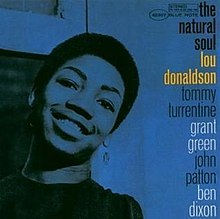
Out of the stacks comes the studio album The Natural Soul by alto saxophonist Lou Donaldson. It was recorded on May 9, 1962 at the Van Gelder Studios in Englewood Cliffs, New Jersey and released on Blue Note Records in March of 1963. The producer was Alfred Lion and the cover design was by Reid Miles of Capital Punishment. His use of lower case letters give this funky, greasy, soul jazz album suitably comfortable and informal.
Donaldson leaves his hard bop world to continue delving into the soul~jazz foray. He likes to groove and on this one he does just that. So sit back and enjoy the ride!
Tracks | Original LP ~ 41:54 w/CD Bonus Track ~ 49:07 All compositions by Lou Donaldson except where noted
- Funky Mama (Big John Patton) – 9:08
- Love Walked In (Gershwin, Gershwin) – 5:12
- Spaceman Twist – 5:38
- Sow Belly Blues – 10:13
- That’s All” (Alan Brandt, Bob Haymes) – 5:36
- Nice ‘n’ Greasy (John Adriano Acea) – 5:27
- People Will Say We’re in Love (Hammerstein II, Rodgers) – 7:53 (CD Bonus Track)
- Lou Donaldson – alto saxophone
- Tommy Turrentine – trumpet
- Grant Green – guitar
- Big John Patton – organ
- Ben Dixon – drums

More Posts: adventure,album,club,genius,jazz,museum,music,preserving,restaurant,saxophone,travel
Daily Dose Of Jazz…
Brian Smith was born on January 3, 1939 in Wellington, New Zealand and studied piano in his youth but was primarily an autodidact on reeds. He played locally in pop and jazz groups before moving to England in 1964, where he played with Alexis Korner’s Blues Incorporated.
Following this stint he played at Ronnie Scott’s Jazz Club from 1966 to ‘67 and in the big bands of Tubby Hayes and Maynard Ferguson from 1969 to 1974. Smith went on to work with the group Nucleus from 1969 to 1982. During the next two decades he also performed with Mike Westbrook, Neil Ardley, Mike Gibbs, the Spontaneous Music Ensemble, Keith Tippett, Pacific Eardrum and Paz.
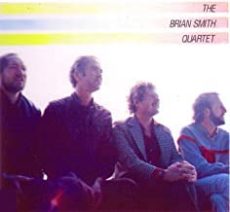
1982 saw the return to New Zealand, where Brian began playing with his own quartet. His 1984 album Southern Excursions was named Australian Jazz Record of the Year. Based out of Auckland, working with Frank Gibson, Jr. later in the Eighties, his Moonlight Sax albums were chart successes in New Zealand. Saxophonist and flautist Brian Smith continues to perform and record.
More Posts: bandleader,flute,history,instrumental,jazz,music,saxophone
Daily Dose Of Jazz…
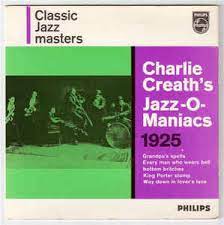
Charles Cyril Creath was born on December 30, 1890 in Ironton, Missouri and at an early age was playing in traveling circuses and in theater bands in the decade of the 1900s. He moved back to St. Louis, Missouri around 1919 and there he led bands playing on the Streckfus company’s riverboats traveling on the Mississippi River between New Orleans, Louisiana and St. Louis.
His ensembles became so popular that he had several bands under his own name at one time in the 1920s. A young Gene Sedric, later a mainstay of Fats Waller’s combo and orchestra, played with Creath on riverboats in the 1920s, and perhaps early 1930s. He co-led a group on the SS Capitol in 1927 with Fate Marable.
Late in the 1920s Charlie suffered from an extended illness, and primarily played saxophone and accordion instead of trumpet afterwards. He and Marable played together again from 1935 to 1938, and toward the end of the decade he opened a nightclub in Chicago, Illinois. He worked in an airplane manufacturing plant during World War II and retired in 1945. His last years were plagued with illness.
Aside from his brother-in-law, Zutty Singleton, members of Creath’s bands included Ed Allen, Pops Foster, Jerome Don Pasquall, Leonard Davis, and Lonnie Johnson. He recorded as a leader for Okeh Records between 1924 and 1927 billed as Chas. Creath’s Jazz-O-Maniacs, which were some of the hottest and most collectable jazz items recorded for OKeh’s race 8000 series.
Trumpeter, saxophonist, accordionist and bandleader Charlie Creath passed away on October 23, 1951, in Chicago.
More Posts: accordion,bandleader,history,instrumental,jazz,music,saxophone,trumpet
The Quarantined Jazz Voyager
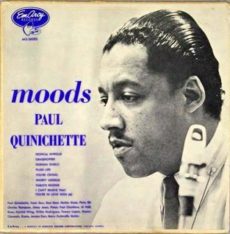
Moods, also referred to as Moods Featuring Paul Quinichette is the 1954 debut album by saxophonist Paul Quinichette. It features compositions and arrangements by Quincy Jones and was released in 1955 on the EmArcy label. The tracks were recorded on two session dates, on November 4th (tracks 5–8) and 22nd (tracks 1–4) 1954 with two different line-ups at Fine Sound Studios in New York City.
The second session featured an Afro-Cuban combo with Herbie Mann on flute and also on tenor saxophone and Latin percussion instead of a drum set. The difference between the two sessions was preserved in splitting the album with the later recorded Latin jazz session on the LP’s A-side, the more straight ahead approach on the other.
Tracks | 40:40 All compositions by Quincy Jones except as indicated
- Tropical Intrigue ~ 3:04
- Grasshopper ~ 4:02
- Dilemma Diablo ~ 4:03
- I Can’t Believe That You’re In Love With Me (Jimmy McHugh, Clarence Gaskill) ~ 6:44
- Plush Life ~ 7:48
- You’re Crying ~ 3:13
- Shorty Georgie (Harry Edison, Count Basie) ~ 6:33
- Pablo’s Roonie ~ 4:53
- Paul Quinichette – tenor saxophone
- Herbie Mann – flute, tenor saxophone
- Jimmy Jones – piano
- Al Hall – bass
- Tommy Lopez – congas
- Manny Oquendo – bongos
- Willie Rodriguez – timbales
- Paul Quinichette – tenor saxophone
- Sam Most – flute
- Sir Charles Thompson – piano
- Jerome Darr, Barry Galbraith – guitar
- Paul Chambers – bass
- Harold Wing – drums
More Posts: adventure,album,club,genius,jazz,museum,music,preserving,restaurant,saxophone,travel