

Daily Dose Of Jazz…
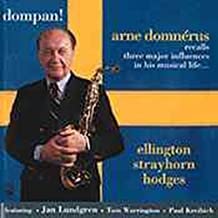
Sven Arne Domnérus was born on December 20, 1924 in Stockholm, Sweden and began to play the clarinet at the age of 11. By the time he left school he had taken up the saxophone and turned professional. In 1949 he performed at the Paris Jazz Festival and with Charlie Parker when he was on tour in Sweden in 1950.
A few years later Arne recorded with Clifford Brown, Art Farmer, and James Moody. From the middle 1950s to the middle 1960s he was a featured soloist in the Swedish Radio Big Band. With Bengt-Arne Wallin, Rolf Ericson, and Åke Persson (the latter two were former members of Duke Ellington’s Orchestra), he participated in the Jazz Workshops organised for the Ruhrfest in Recklinghausen by Hans Gertberg from the Hamburg radio station.
He recorded several times with Quincy Jones in Sweden and is featured throughout The Midnight Sun Never Sets, composed and arranged by Jones and recorded under Jones’ direction by Harry Arnold’s orchestra in 1958. Domnérus’ playing in his early career was typical of the cool, sophisticated, technically accomplished and lyrical style of Swedish modern jazz during the 1950s.
As a leader Domnerus recorded forty~four albums and another 104 as a sideman with Alice Babs, Lars Gullin, Bengt Hallberg, Dizzy Gillespie, Thad Jones, George Russell, Toots Thielemans, Red Rodney, James Moody, Leonard Feather and Monica Zetterlund, among others too numerous to mention.
Saxophonist, clarinetist and composer Arne Domnerus, who wrote for film and television, and retired from playing due to his declining health, passed away on September 2, 2008 in his hometown.

More Posts: bandleader,clarinet,composer,history,instrumental,jazz,music,saxophone
Daily Dose Of Jazz…
John Lurie was born on December 14, 1952 in Minneapolis, Minnesota and was raised with his brother and sister in New Orleans, Louisiana and Worcester, Massachusetts.
In high school, he played basketball and harmonica and jammed with Mississippi Fred McDowell and Canned Heat in 1968. He briefly played the harmonica in a band from Boston, Massachusetts but soon switched to the guitar and eventually the saxophone.
After high school, he hitchhiked across the country to Berkeley, California. Moving to New York City in 1974, he briefly visited London, England where he performed his first saxophone solo at the Acme Gallery.
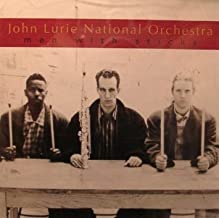
In 1978 John formed the Lounge Lizards with his brother Evan Lurie on piano. The two of them were the only constant members in the band through numerous lineup changes. In the early 1990s he formed a smaller group, the John Lurie National Orchestra and their work was heavily improvised.
By the early Nineties he was composing the theme to Late Night with Conan O’Brien with Howard Shore, which was also used when O’Brien hosted on The Tonight Show. He has written scores for over 20 movies, including Get Shorty, for which he received a Grammy Award nomination. As an actor he has starred, acted or made cameos in nineteen films and numerous television shows.
Saxophonist, painter, actor, director, and producer John Lurie has suffered debilitating ill health since 2000 with initially baffling neurological symptoms, and from symptoms attributed to chronic Lyme disease. The illness prevents him from acting or performing music, so he spends his time painting. His art has been shown in galleries and museums around the world. His 1980s NYC memoir, The History of Bones, was published by Penguin Random House in 2021.
More Posts: bandleader,history,instrumental,jazz,music,saxophone
Requisites
Nancy Wilson/Cannonball Adderley | By Eddie Carter
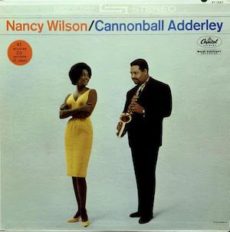
I’ve been a fan of Nancy Wilson and Cannonball Adderley since I was a kid, and the album up for discussion to begin December is one of my absolute favorites. It features one of the most beautiful voices in jazz coupled with a dynamic quintet that was becoming one of the best small ensembles and very popular with the public. This morning’s choice from the library is a 1961 album, Nancy Wilson/Cannonball Adderley (Capitol Records T-1657/ST-1657). Backing the duo are Nat Adderley on cornet, Joe Zawinul on piano, Sam Jones on bass, and Louis Hayes on drums. My copy used in this report is the 1962 US Stereo reissue (the Capitol Records logo is at the noon position on the label). This record holds a special place in my heart because it was the first album, I ever owned that was autographed by everyone in the group.
The quintet came to Leo’s Casino (Cleveland Ohio’s premier jazz club for many years) for a weekend performance, and my uncle Ben went to see them. After their first set had concluded and during the break, he let Cannonball know I was a big fan of his album, Somethin’ Else (1958). As a result, everyone signed it and he gave it to me for Christmas; once I opened the package, I forgot all about the toys. When Nancy came to the club a year later, he got her to sign it also. I had that autographed copy from 1962 to 1996 and it was my most prized possession until a fire destroyed my Mom’s home. Though a devastating loss, her and my Stepdad’s lives were spared, and that became a significant blessing to both my sister and me. Also, the memory is still a treasured one that always makes me smile whenever I play my current copy. That’s enough about me, gang, let’s get to the report.
Side One starts with Save Your Love For Me by Buddy Johnson. The rhythm section introduces the song delicately, then Nancy entices the listener with a seductive opening chorus tastefully trailed by Nat on muted cornet. Cannonball comes in on the next verse with a perfect example of soft and silken tenderness. The rhythm section’s reflective accompaniment is quite beautiful behind Nancy’s vocals leading to a gentle ending. Teaneck by Nat Adderley was initially known as A Little Taste and first heard on Portrait of Cannonball (1958). The ensemble takes off at a fast gallop on the spirited introduction and theme. Cannonball is a bundle of energy on the lead solo. Nat is as resourceful on the second reading with radiant intensity and Zawinul says plenty on an assertive, hard-driving solo preceding the group’s vigorous exit.
Never Will I Marry by Frank Loesser made its debut in the Broadway musical fantasy, Greenwillow (1960). Nancy and the quintet present a lighthearted rendition with her voice as an additional horn to the agile beat of the front line. In between her blissful vocals on the opening and closing chorus, Cannonball makes quick work of a concise, lively contribution in an equally effective fashion. I Can’t Get Started by Ira Gershwin and Vernon Duke first appeared in the musical, Ziegfeld Follies of 1936. This jazz standard is one of the most beautiful songs from The Great American Songbook. Adderley unfolds the attractive melody slowly, accompanied by the trio’s soft support, then continues with a daintily polite opening statement. Zawinul responds with a delicately pretty touch on the finale ahead of the altoist’s elegant reprise and ending.
The Old Country by Nat Adderley and Curtis Lewis is the story of a sad, lonely individual in the twilight of his life. Nancy is the narrator whose lyrics recall all he had and lost because of his choice to remain isolated and alone. This tune begins at midtempo by Nancy and Nat who equals her lyrics with meticulous skill on the muted cornet. Cannonball kicks off the solos with a chorus of uncluttered swinging. Joe adds a concise performance that flows smoothly into the climax. One Man’s Dream by Charles Wright and Joe Zawinul begins at a brisk pace with a zesty melody in unison. Cannonball is out of the gate first with an invigorating opening statement, succeeded by Nat who delivers the second solo with sheer vitality. Zawinul takes a short reading, then the front line shares a final conversation ahead of the reprise and ending.
Happy Talk by Richard Rodgers and Oscar Hammerstein II comes from South Pacific (1949). It starts Side Two with an upbeat treatment by Nancy and the ensemble. Nat’s muted cornet leads the quartet on the introduction into her jubilant lyrics. Cannonball also shines on a short comment. Never Say Yes by Nat Adderley starts with a muted introduction and opening solo that’s handled with finesse. Cannonball comes next with a lively presentation that adds to the exhilaration. Zawinul wraps up the conversation with youthful exuberance, ahead of Nat’s graceful finale. Nancy sings one of the prettiest jazz standards next, The Masquerade Is Over by Herbert Magidson and Allie Wrubel. She’s the dominant presence here and presides with an intimate sincerity in a tender expression of love lost. Zawinul, Jones, and Hayes follow her into a soft summation.
Sam Jones’ Unit 7 became the closing theme for Cannonball’s groups during their live performances, and the bassist recorded another version on Down Home (1962). The quintet opens with a bluesy beat by both horns leading the group on the theme. Cannonball builds the first solo with melodic inventiveness. Nat follows with a sweet tone and impeccable intonation. Joe struts through the closing statement with a joyfulness that’s extremely revealing. The finale is A Sleepin’ Bee by Harold Arlen and Truman Capote. It premiered in the musical House of Flowers (1954) and starts innocently with a brief piano introduction by Zawinul. Nancy shares the spotlight with Jones for the first verse before the ensemble joins in for the melody. Nancy’s voice is in superb form on this midtempo gem and Cannonball turns in a brief solo of incredible emotion and feeling. She closes the song as she began, in a duet with Jones that ends softly.
Nancy Wilson/Cannonball Adderley is exactly as stated on the cover; forty-one minutes, and fifty-nine seconds of some of the best jazz you’ll hear. It was produced by Andy Wiswell and Tom Morgan who were the men behind many great Capitol albums during the sixties. This reissue has an excellent soundstage that still stands up well sixty years later. Nancy’s vocals are splendidly interpreted, and she holds your attention on every song. She made thirty-seven albums over a two-decade career at Capitol Records. Cannonball also flourished at Capitol after leaving Riverside, recording seventeen albums from 1964 to 1970. Here, they demonstrate their vibrant improvising in a swinging, straight-ahead set that’s right on target. If you’re a fan of Hard-Bop and great vocals, Nancy Wilson/Cannonball Adderley is a happy session that’s sure to thrill old and young fans and one of the best things you can do for your turntable!
~ Down Home (Riverside RLP 432/RLP 9432), Portrait of Cannonball (Riverside RLP 12-269), Somethin’ Else (Blue Note BLP 1595/BST 81595) – Source: Discogs.com ~ A Sleeping Bee, Happy Talk, I Can’t Get Started, Never Will I Marry – Source: Wikipedia.org © 2021 by Edward Thomas Carter

More Posts: choice,classic,collectible,collector,history,instrumental,jazz,music,saxophone,vocal
The Quarantined Jazz Voyager
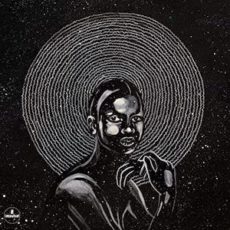
We Are Sent Here By History is an acclaimed studio album by Shabaka Hutchings, a British-Barbadian musician, under his band Shabaka and the Ancestors, composed of South African musicians. It was released on March 13, 2020 on Impulse! Records.
We Are Sent Here by History has charted in Germany, Scotland, U.S. and UK and reached number 3 on the latter. The album was recorded at Milestone Studio and Sumo Sounds Studio in Johannesburg, mixed at The Crush in London, produced by Shabaka Hutchings and Dilip Harris, the creative director was Josh Cheuse, and the illustration was by Daniela Yohannes.
Track Listing | 63:58 All songs were composed by Shabaka Hutchings with lyrics by Siyabonga Mthembu- They Who Must Die ~ 10:10
- You’ve Been Called ~ 6:29
- Go My Heart, Go To Heaven ~ 6:41
- Behold, The Deceiver ~ 6:01
- Run, The Darkness Will Pass
- The Coming Of The Strange Ones ~ 6:28
- Beast Too Spoke Of Suffering ~ 2:58
- We Will Work (On Redefining Manhood) ~ 5:24
- ‘Til The Freedom Comes Home ~ 7:06
- Finally, The Man Cried ~ 5:48
- Teach Me How To Be Vulnerable ~ 2:45
- Tenor Saxophone, Clarinet ~ Shabaka Hutchings
- Alto Saxophone ~ Mthunzi Mvubu
- Double Bass ~ Ariel Zamonsky
- Drums – Tumi Mogorosi
- Electric Piano, Fender Rhodes ~ Nduduzo Makhathini (track: 2, 4)
- Percussion ~ Gontse Makhene
- Piano ~ Thandi Ntuli (track: 2, 11)
- Trumpet ~ Mandla Mlangeni (track: 7)
- Voice ~ Siyabonga Mthembu
More Posts: adventure,album,club,genius,jazz,museum,music,preserving,restaurant,saxophone,travel

Daily Dose Of Jazz…
Born in Boggs, Oklahoma on December 7, 1906, George James began his career late in the 1920s, in the bands of Charlie Creath and Johnny Neal. Moving to Chicago, Illinois in 1928, he played with Jimmie Noone, Sammy Stewart, Ida Marples, Jabbo Smith, and Bert Hall.
In 1931 on into 1932 he toured with Louis Armstrong, then remained in New York City at the end of the tour. He went on to join the Savoy Bearcats and, later, Charlie Turner’s Arcadians. Fats Waller assumed leadership of the Arcadians in the middle of the decade, and James played under him until 1937.
Finishing the Thirties decade playing in the Blackbirds Revue, in the early 1940s George worked with James P. Johnson, Benny Carter, Teddy Wilson, and Lucky Millinder. He led his own band in 1943-44 and later in the decade he played with Claude Hopkins and Noble Sissle.
He was active both as a leader and a sideman into the 1970s, playing with Clyde Bernhardt and the Harlem Blues and Jazz Band in that decade. Saxophonist, clarinetist, and flautist George James passed away on January 30, 1995 in Columbus, Ohio.
More Posts: bandleader,clarinet,history,instrumental,jazz,music,saxophone