

Daily Dose Of Jazz…
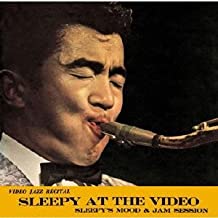
Hidehiko “Sleepy” Matsumoto (松本英彦) was born on October 12, 1926 in Okayama, Japan. He attended Fuchu High School where he learned the saxophone followed by matriculation through the University of Electro-Communications.
In the late 1940s he played bebop in Japan with the group CB Nine, then joined The Six Josés and The Big Four, a group which included George Kawaguchi, Hachidai Nakamura, and Mitsuru Ono.
In 1959 he became a member of Hideo Shiraki’s small ensemble, and played with Gerald Wilson at the 1963 Monterey Jazz Festival and Toshiko Akiyoshi in 1964. Starting in 1964 Hidehiko led his own ensembles, which included sidemen Takeshi Inomata, Akira Miyazawa, George Otsuka, and Isao Suzuki.
On July 22 and 24, 1966, he played with the John Coltrane quintet in Tokyo, Japan while the group toured Japan. Tenor saxophonist and bandleader Hidehiko “Sleepy” Matsumoto passed away on February 29, 2000 in Tokyo, Japan.

More Posts: bandleader,history,instrumental,jazz,music,saxophone
Requisites
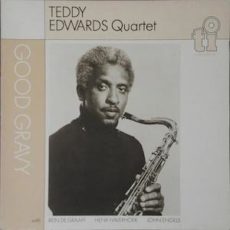
Good Gravy ~ Teddy Edwards Quartet | By Eddie Carter
I’ve been a fan of Teddy Edwards for many years, and he’s become one of my favorite tenor saxophonists. This morning’s choice from the library is a recent acquisition taking us to The Bimhuis Concert Hall in Amsterdam for a live performance to enjoy some Good Gravy (Timeless SJP 139) by The Teddy Edwards Quartet. Teddy was born in Jackson, Mississippi, and began playing the alto sax and clarinet at an early age, before taking up the tenor sax. He first played with trombonist Ernie Fields, and his first recording was a 1947 date with Dexter Gordon. Teddy also played and recorded with some of the greatest musicians in jazz, resulting in an extensive discography as a leader and sideman. The supporting cast is a marvelous Dutch trio, Rein De Graaff on piano, Henk Haverhoek on bass, and John Engels on drums. My copy used in this report is the 1984 Netherlands Stereo album.
Lady Be Good aka Oh, Lady Be Good by George and Ira Gershwin is from the Broadway musical of the same name. The trio opens Side One with a pleasant introduction, segueing into a collective bluesy theme that swings soulfully. Teddy takes the first spot at an easy speed then turns the tempo up for some down-home country cooking. Rein heightens the excitement on the second reading with cat-like precision. Teddy makes a few final comments before the group’s closing theme and enthusiastic ovation from the crowd. Oleo by Sonny Rollins begins with a brief dialogue between the tenor sax and piano, then accelerates quickly into the ensemble’s melody. Edwards takes flight first with an aggressive lead solo. De Graaff dispenses an elevated level of energy next, and Engels shares a vigorous exchange with Edwards before having a moment in the spotlight.
Georgia aka Georgia on My Mind is a classic standard by Hoagy Carmichael and Stuart Gorrell. It became the official state song after Ray Charles’ indelible rendition. A brief trio introduction opens the way for Teddy’s delicately gentle melody. He then delivers a beautiful opening solo that’s warm, full-toned, and sensuous. Rein speaks softly and reflectively on the next statement, then Teddy restates the melody with a touch of romantic lyricism into the smartly executed ending. Good Gravy, a mid tempo blues by Edwards was first heard on his 1961 album, and the ensemble starts the opening chorus leisurely. Edwards kicks off the first interpretation cheerfully. De Graaff steps into the second statement with a relaxing reading. Haverhoek makes a profound impression on his first solo ahead of the reprise, introductions of the group, and a few humorous announcements by Edwards.
Good Gravy was produced by Timeless Records founder, Wim Wigt, and recorded by Henk Elzinga. I was extremely impressed with the sound quality of this live recording. It has an exquisite soundstage that’s clear as fine crystal, and this record is silent until the music starts. You’re not just listening to the musicians playing, you’re in the Bimhuis audience watching the quartet’s performance, and they swing on all the cuts. If you’re a fan of Teddy Edwards, I invite you to check out Good Gravy on your next hunt for vinyl treasure. It’s an enjoyable live session that knocks it out of the park and deserves to be better known!
~ Good Gravy (Contemporary Records M 3592/S 7592); The Foremost! (Onyx #201) – Source: Discogs.com >~ Oh, Lady Be Good, Oleo, Georgia on My Mind – Source: JazzStandards.com © 2021 by Edward Thomas Carter

More Posts: choice,classic,collectible,collector,history,instrumental,jazz,music,saxophone
The Quarantined Jazz Voyager
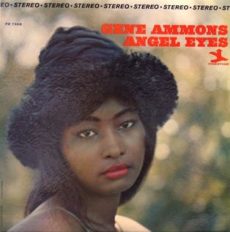
As I go about my city travels I notice how lax people are with masking and social distancing, having their self-centered need to rush to the lives they knew before the pandemic hit. This week I am selecting an album that has been a classic and one of my favorites since the day I first put on the turntable. It’s the 1965 studio recording Angel Eyes by saxophonist Gene Ammons released on the Prestige label.
The album was recorded at Van Gelder Studio in Englewood Cliffs, New Jersey. Two separate sessions compiled the album, tracks 1, 2, 4 & 5 were recorded on June 17, 1960 and tracks 3 & 6 on September 5, 1962. The September session was one of Ammons’ final ones before serving a long drug-related prison sentence.
Track List | 36:25
- Gettin’ Around (Gene Ammons) ~ 6:46
- Blue Room (Lorenz Hart, Richard Rodgers) ~ 5:34
- You Go to My Head (J. Fred Coots, Haven Gillespie) ~ 5:55
- Angel Eyes (Earl Brent, Matt Dennis) ~ 8:45
- Water Jug (Frank Wess) ~ 5:10
- It’s the Talk of the Town (Jerry Livingston, Al J. Neiburg, Marty Symes) ~ 4:15
- Gene Ammons ~ tenor saxophone
- Frank Wess ~ flute (tracks 1, 2 and 4), tenor saxophone (track 5)
- Johnny “Hammond” Smith ~ organ (tracks 1, 2, 4 & 5)
- Mal Waldron (tracks 3 & 6) ~ piano
- Doug Watkins (tracks 1, 2, 4 & 5), Wendell Marshall (tracks 3 & 6) ~ bass
- Art Taylor (tracks 1, 2, 4 & 5), Ed Thigpen (tracks 3 & 6) ~ drums

More Posts: adventure,album,club,genius,jazz,museum,music,preserving,restaurant,saxophone,travel
The Quarantined Jazz Voyager
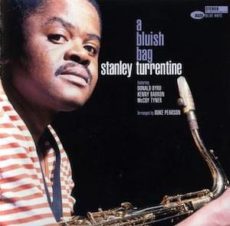
For those of us who are still practicing our social distancing and wearing our masks, this week’s selection of the shelves is A Bluish Bag. It is an album by saxophonist Stanley Turrentine consisting of two sessions recorded for the Blue Note label in 1967. and arranged by Duke Pearson, the first featuring Donald Byrd and the second McCoy Tyner, among others.
The album recording consisting of two sessions, the first February 17th, (#1-7) and June 9th, (#8-12). It was produced by Alfred Lion, arranged by Duke Pearson and engineered by Rudy Van Gelder at Van Gelder Studio, Englewood Cliffs, New Jersey. Though recorded in 1967, it was not released until June 5, 2007, forty years later.
Tracks | 62:41
- Blues For Del (Stanley Turrentine) ~ 4:14
- She’s A Carioca ( Vinicius de Moraes, Ray Gilbert, Antônio Carlos Jobim) ~ 6:31
- Manhã de Carnaval (Luiz Bonfá, Antônio Maria) ~ 5:53
- Here’s That Rainy Day (Jimmy Van Heusen, Johnny Burke) ~ 5:32
- What Now My Love (Gilbert Bécaud, Pierre Delanoë, Carl Sigman) ~ 4:38
- Samba do Avião (Antônio Carlos Jobim) ~ 5:12
- Night Song (Lee Adams, Charles Strouse) ~ 6:33
- Days of Wine and Roses (Henry Mancini, Johnny Mercer) ~ 6:05
- Come Back to Me (Burton Lane, Alan Jay Lerner) ~ 5:55
- Silver Tears (Henry Mancini) ~ 5:07
- A Bluish Bag (Henry Mancini) ~ 7:17
- With This Ring (Luther Dixon, Anthony Hester, Richard “Popcorn” Wylie) ~ 5:49
Players
Tracks 1-7
- Stanley Turrentine ~ tenor saxophone
- Donald Byrd ~ trumpet
- Julian Priester ~ trombone
- Jerry Dodgion – alto saxophone, flute, alto flute
- Joe Farrell – tenor saxophone, flute
- Pepper Adams – baritone saxophone, clarinet
- Kenny Barron – piano
- Bucky Pizzarelli – guitar
- Ron Carter – bass
- Mickey Roker – drums
Tracks 8-12
- Stanley Turrentine ~ tenor saxophone
- Blue Mitchell, Tommy Turrentine ~ trumpet
- Julian Priester ~ trombone
- Jerry Dodgion ~ alto saxophone, flute
- Al Gibbons ~ bass clarinet, tenor saxophone
- Pepper Adams ~ baritone saxophone, clarinet
- McCoy Tyner ~ piano
- Walter Booker ~ bass
- Mickey Roker ~ drums
More Posts: adventure,album,club,genius,jazz,museum,music,preserving,restaurant,saxophone,travel
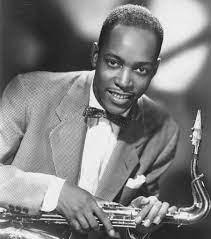
Three Wishes
Sonny Stitt replied to the inquiry made by Nica as to his three wishes:
-
- “Peace among men.”
- “To play my music, and please everyone.”
- “And I want happiness. And nothing bad to happen to anyone – that’s my fourth and dearest wish.”

More Posts: baroness,history,instrumental,jazz,music,pannonica,saxophone,three,wishes