

Daily Dose Of Jazz…
William McLeish Smith was born on November 25, 1910 in Charleston, South Carolina, and raised in Cleveland, Ohio. His first instrument was the clarinet and his education was in chemistry, receiving his degree from Fisk University, an HBCU.
In 1929 Smith became an alto saxophonist for Jimmie Lunceford’s band, becoming one of the main stars in the group. 1940 had him leading his own quintet as a side project. His success with Lunceford had lost its charms by 1942 as he now wanted more pay and less travel. Moving to the Charlie Spivak Orchestra for a year and was in the navy for another year. He then switched to Harry James’s orchestra, where he made more money and stayed with him for seven years.
His next move was to work with Duke Ellington and Billy May. He was also part of the Gene Krupa Trio and can be heard on the 1952 live Verve album The Drum Battle, part of the Jazz at the Philharmonic series. In 1954 he returned to Harry James’s band.
He recorded some three dozen albums as a sideman with Stan Getz, Dizzy Gillespie, Lionel Hampton, Billie Holiday, Barney Kessel, Jimmie Lunceford, Billy May, Rose Murphy, Red Norvo, Andre Previn, Googie René, and Kay Starr among others.
Alto saxophonist Willie Smith, who has been described as one of the triumvirates of great jazz alto saxophonists with Johnny Hodges and Benny Carter before Charlie Parker arrived, passed away of cancer on March 7, 1967 in Los Angeles, California, at the age of 56.

More Posts: history,instrumental,jazz,music,saxophone
Requisites
A Tribute To Cannonball – Don Byas and Bud Powell | By Eddie Carter
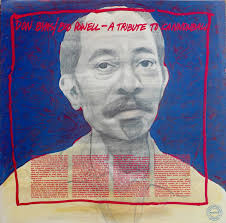
This next album from the library was recorded in 1961 but remained shelved until its release in 1979, four years after the death of the musician it honors. A Tribute To Cannonball (Columbia Contemporary Master Series JC 35755) brings together Don Byas on tenor sax and Bud Powell on piano for a program of standards and two original tunes. Completing the ensemble are Idrees Sulieman (tracks: A5, B1, B2, B4) on trumpet, Pierre Michelot on bass, and Kenny Clarke on drums. My copy used in this report is the 1979 US Stereo album.
The quartet begins Side One with the Cole Porter classic, Just One of Those Things that made its debut in the 1935 musical comedy, Jubilee. The trio opens with a scintillating conversation in the opening chorus. Don adds some fierce dialogue on the second verse, then continues traveling at breakneck speed on the first solo. Bud’s nimble fingers fly over the keys at a brisk pace on the finale towards the quartet’s enthusiastic ending.
Jackie My Little Cat is a pretty ballad by Pierre Michelot that slows the tone to a softer tempo. From the first phrase of the elegantly tranquil theme, the quartet creates a warmly affectionate atmosphere for Byas who infuses the lead statement with tasteful subtlety. Powell also produces a reading of extraordinary tenderness that compliments the rhythm section’s graceful groundwork into a sensuous finale. Cherokee, also known as Indian Love Song, was written in 1938 by Ray Noble as the first movement of his five-part Indian Suite. It became a hit for bandleader Charlie Barnet in 1939 and a jazz standard after Charlie Parker’s blistering rendition in 1941 with The Kansas City Band. The song begins with a brisk duet by Don and Pierre on the introduction, then proceeds with a lightning-fast melody. Byas begins his first solo with a sizzling performance, then Powell flexes his muscles with incredible virility. The saxophonist is completely energized on the closer with fiery intensity before the out-chorus.
I Remember Clifford by Benny Golson is a 1957 jazz standard honoring Clifford Brown who perished in an auto accident the year before with pianist Richie Powell and his wife Nancy. It became a huge hit for Golson after appearing on the albums, Jazz Lab and Lee Morgan, Volume 3 (1957), and Jon Hendricks wrote lyrics for it the same year. The quartet is beautifully disciplined on the melody, and Don taps a well of serenity, bringing out the most intimate feelings in every note of the lead solo. Bud closes with a warmly affectionate reading leading to a tender finale. Good Bait is by Tadd Dameron and Count Basie and was written in 1944. It became a significant part of Basie’s repertoire and Idrees Sulieman makes his first appearance. Kenny’s drums make the introduction, and the front line leads the quintet to establish the melody. Don starts the solos with long, flowing tenor phrases. Idrees follows with a fierce flow of notes from his trumpet. Bud comes next with a deliciously spry statement. Pierre makes a brief reading with an unrestrained flow of bass lines in between a few final remarks by both horns.
Side Two starts with the 1960 jazz standard, Jeannine by Duke Pearson. A brief workout by Clarke introduces the tune, segueing into the ensemble’s medium-fast melody. Don digs into the lead statement with a smoldering groove of vibrant verses. Idrees’ sentimental choruses on the second solo are tightly voiced and executed smoothly. Bud flies high on the third reading with a muscular drive. Kenny delivers a satisfying finale before the horns return to drive Jeannine home. All The Things You Are by Jerome Kern and Oscar Hammerstein II was originally written in 1939 for the unsuccessful Broadway musical Very Warm For May that year. The song survived, becoming one of Kern’s most cherished and recorded compositions. Byas and Sulieman exchange a peppy dialogue with the trio on the melody. Idrees says something special with a firm tone on the first solo. Don delivers the next message confidently in an authoritative manner. Bud also displays his virtuosity in an invigorating reading. Both horns split the next few choruses and Clarke provides a passionate showcase on a brief statement ahead of the coda.
Let me stop for a moment to describe this next tune. On the Side Two label, track three is listed as Jackie by pianist Hampton Hawes. It isn’t Hawes’ tune at all, it’s actually an alternate take of Pierre Michelot’s Jackie My Little Cat. Like the song on Side One, it’s a quartet piece with Byas and Powell as the featured soloists. After a beautiful theme statement, Don delivers an absolutely gorgeous opening solo. Bud follows with a haunting melodic interpretation ahead of the compassionate climax. The album ends with the second original by bassist Michelot, Myth is a cheery little tune full of fun and good spirits as evident by the sprightly introduction by the trio, ahead of the front line’s opening chorus. Byas starts the solos with a compelling performance that holds your attention from start to finish. Sulieman follows with a beautifully articulated presentation. Powell swings with exhilarating verses on the closing statement that bounces happily to the superb foundation by Michelot and Clarke.
A Tribute To Cannonball was produced by Cannonball Adderley and the engineer was Russ Payne who worked on many other Columbia LP’s. The music is excellent, and the sound quality is superb with the musicians surrounding your sweet spot providing some amazing jazz. The only issue I have with this album has nothing to do with the music, but the cover design. To read the liner notes by Gary Giddins, you need a high wattage light bulb or a well-lighted room because the words are small and dark blue on a red background. This is particularly notable on the back cover where the picture of Bud Powell is. Whoever thought this was a good idea, I hope they’ve never been allowed to design another record cover. That issue aside, I hope you’ll seek out A Tribute To Cannonball by Don Byas & Bud Powell on your next vinyl hunt. If you’re a fan of Hard-Bop, it’s an overlooked jewel that’s worthy of your consideration for a spot on your shelf!
~ Jazz Lab (Columbia CL 988); Lee Morgan, Volume 3 (Blue Note BLP 1557) – Source: Discogs.com
~ Cherokee, Indian Love Song, I Remember Clifford, All The Things You Are – Source: JazzStandards.com
~ Just One of Those Things – https://www.youtube.com/watch?v=9Gg0Md1geMw ~ Jackie My Little Cat – https://www.youtube.com/watch?v=9JmZCGKjrc0 © 2020 by Edward Thomas Carter
More Posts: choice,classic,collectible,collector,history,instrumental,jazz,music,piano,saxophone

Daily Dose Of Jazz…
Paul D. “Polo” Barnes was born on November 22, 1901 in New Orleans, Louisiana, the brother of Emile Barnes. He attended St. Paul Lutheran College and began playing alto saxophone in 1919. He and Lawrence Marrero formed the Original Diamond Band, later known as the Young Tuxedo Band.
In 1922 he was with Kid Rena, then the Maple Leaf Orchestra in 1923, and Papa Celestin’s Original Tuxedo Band. Later that year; Celestin’s group recorded his composition My Josephine, which became quite popular. He went on to play with Chick Webb in 1927 and with King Oliver three times between 1927 and 1935. He toured with Jelly Roll Morton in 1928-29.
In 1932-33 he led his own band then through that decade he played with Chester Zardis and Kid Howard. He played in Algiers, Louisiana in a Navy band during World War II, then returned to work with Celestin from 1946 to 1951. The Fifties saw him moving to California and left music, however, upon his return to New Orleans in 1959, he played with Paul Barbarin in 1960. but from 1962-65 joined the Young Men from New Orleans band that played on a riverboat at Disneyland.
Returning once again to New Orleans in 1964 he played at Preservation Hall and Dixieland Hall. While touring Europe in 1973-74, poor health ended his career in 1977. Clarinetist and saxophonist Polo Barnes, a mainstay of the New Orleans jazz scene of the 1920s and 1930s, passed away on April 3, 1981 in his hometown.
More Posts: clarinet,hitory,instrumental,jazz,music,saxophone

Requisites
Tenor and Flute ~ Bobby Jaspar | By Eddie Carter
Bobby Jaspar steps into the spotlight for this morning’s discussion with his 1957 album, Tenor and Flute (Riverside RLP 12-240). I first heard him on two records he made with Herbie Mann, Flute Flight, and Flute Soufflé (1957). Bobby was born in Liège, Belgium, and began playing the piano at eleven and the clarinet at sixteen. He later switched to the flute and tenor saxophone, and in 1950 began working with French pianists Henri Renaud and Bernard Peiffer. Jaspar was also a member of the Bop Shops band and played and recorded with Toshiko Akiyoshi, Chet Baker, Kenny Burrell, Donald Byrd, John Coltrane, Miles Davis, Milt Jackson, J.J. Johnson, Hank Jones, John Rae, and Wynton Kelly. He was married to jazz pianist and singer Blossom Dearie. His supporting cast is Idrees Sulieman on trumpet (tracks: A1, B1, B2), George Wallington on piano, Wilbur Little on bass, and Elvin Jones on drums. My copy used in this report is the 1976 Japanese Mono reissue (Riverside SMJ-6156M).
The opener, Seven Up is Bobby’s easy blowing vehicle beginning with everyone laid-back on the melody. Idrees starts the song in a nice happy mood on the first interpretation, then Bobby takes over for an outstanding solo as solid as the Rock of Gibraltar. George follows with some carefree cruising that’s a treat for the ears and Wilbur is rhythmically infectious on a short statement ahead of the ensemble’s breezy climax.
Jaspar changes to flute for My Old Flame, written in 1934 by Arthur Johnston and Sam Coslow. It appeared in the film, Belle of The Nineties that year. He embraces the jazz standard lovingly on the melody and paints a compassionate portrait on the opening statement. The second presentation by Wallington is tenderly expressed, then the leader gives a second performance that’s delicately pretty and Jones offers some beautifully shaped brushwork on the closer ahead of a tranquil ending.
Bobby returns to tenor sax for a spirited quartet rendition of All of You, Cole Porter’s 1954 jazz standard that first appeared in the 1955 Broadway musical, and 1957 film, Silk Stockings. The quartet gives a lift to this timeless classic with a briskly paced theme treatment. The saxophonist displays a lively intensity on the lead solo, then George adds a bouncy effervescence to the second reading. Wilbur and Elvin split the third statement for a short, incisive comment, followed by Bobby and Elvin who guide us into the reprise with an expressive exchange. Idrees Sulieman’s Doublemint is an energetic companion to his blues, Juicy Fruit, heard on The Hawk Flies High (1957). It opens Side Two with a collective infectious melody. Jaspar cooks vivaciously on the first statement, then Sulieman breaks into a robust reading. Wallington moves in next for a scintillating solo and Jones finds something good to say on the closing chorus sharing notes with the front line.
George Wallington wrote the final two tunes on Tenor and Flute beginning with his tenderly passionate ballad, Before Dawn. It starts slowly with a breathtakingly beautiful theme by Bobby and the rhythm section. Jaspar then creates a mood of ecstasy on the first performance, then Idrees delivers a fine solo punctuated with delicate lyricism. George follows, sharing a brief moment of intimacy before Bobby adds a few additional affectionate remarks preceding the ensemble’s sultry coda.
Jaspar and the rhythm section take Sweet Blanche for a brisk ride on the finale with the leader back on flute. The quartet opens with a cheerfully pleasant theme and Jaspar excels with vigorous flair on the first interpretation. Wallington heads into the second reading expressing considerable delight, then Jaspar and Jones take us home sparring with each other into a satisfying climax. Tenor and Flute was produced by Orrin Keepnews, and the man behind the dials was Jack Higgins.
I was pleasantly surprised with the sound quality, the instruments produce an exceptional soundstage across the highs, midrange, and low end that’s right on the money. The analog Mono transfer by Victor Musical Industries from the original tapes has been gorgeously remastered and transports the listener to the studio alongside the musicians during the session. During 1961 & 1962, Jaspar formed a quintet with guitarist René Thomas and performed in a series of concerts and several recordings including appearing on Chet Is Back (1962). He passed away from a heart attack at age thirty-seven on February 28, 1963. I’ve enjoyed listening to this album and am happy to have it in my library. If you aren’t familiar with Bobby Jaspar, are a fan of Hard-Bop or tenor sax, I hope you’ll seek Tenor and Flute out during your next vinyl hunt. It’s a perfect album to get into jazz and the music is sure to make you tap your foot!
~ Chet Is Back (RCA Victor PML-10307); Flute Flight (Prestige PRLP 7124); Flute Soufflé (Prestige PRLP 7101); The Hawk Flies High (Riverside RLP 12-233) – Source: Discogs.com
~ My Old Flame ~ Source: JazzStandards.com ~ All of You, Bobby Jaspar ~ Source: Wikipedia.org © 2020 by Edward Thomas Carter
More Posts: choice,classic,collectible,collector,flute,history,instrumental,jazz,music,saxophone

Daily Dose Of Jazz…
Achille Joseph Baquet was born on November 15, 1885 in New Orleans, Louisiana into a musical family whose patriarch, Théogène, led the Excelsior Brass Band. He learned the clarinet from Luis “Papa” Tio and was thought to have been a member of the Whiteway Jazz Band.
Moving to New York City in 1918, then ragtime pianist, vocalist, and leader Jimmy Durante, the only member not from New Orleans, hired him to play with the Original Dixieland Jazz Band that was founded by Johnny Stein. He would go on to work with Papa Jack Laine’s Reliance Brass Band and was part of the clarinet section of the Happy Schilling Dance Orchestra.
Baquet’s credits as a composer include Why Cry Blues, written with Jimmy Durante. According to Papa Jack Laine, he co-wrote Livery Stable Blues with Acide “Yellow” Nunez.
Clarinetist and saxophonist Achille Baquet, who was a light-skinned black man able to pass for white, passed away on November 20, 1956 in his hometown.
More Posts: clarinet,history,instrumental,jazz,music,saxophone