

The Quarantined Jazz Voyager
POWER TO THE PEOPLE 11.12.20
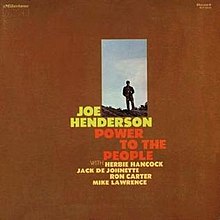
As I sit socially distanced from the rest of the world ever vigilant of this pandemic, the next choice from the library is Power To The People by jazz saxophonist Joe Henderson. The album was recorded on May 23 and May 29, 1969 at Plaza Sound Studios in New York City and released on Milestone Records the same year.
Produced by Orrin Keepnews, all songs are written by Henderson except Opus One-Point-Five and Lazy Afternoon. It was his first to feature an electric instrument with Hancock playing the electric piano. This Quarantined Jazz Voyager is looking forward to listening to this lineup of talented musicians.
Track Listing | 42:27- Black Narcissus ~ 4:50
- Afro-Centric ~ 7:00
- Opus One-Point-Five (Ron Carter) ~ 4:56
- Isotope ~ 4:53
- Power to the People ~ 8:42
- Lazy Afternoon (Moross, Latouche) ~ 4:33
- Foresight and Afterthought (An Impromptu Suite in Three Movements) ~ 7:33
- Joe Henderson — tenor saxophone
- Mike Lawrence — trumpet (2, 5)
- Herbie Hancock — piano (3, 4, 6), electric piano (1, 2, 5)
- Ron Carter — bass
- Jack DeJohnette — drums
As you listen I hope you enjoy this great addition to the jazz catalog. Continue your social distancing, wear your masks and stay healthy. During this sabbatical from flying and investigating jazz around the globe, enjoy the listen and know that the world and I will be back.

More Posts: adventure,club,genius,jazz,museum,music,preserving,restaurant,saxophone,travel,voyager

Daily Dose Of Jazz…
Charlie Mariano was born Carmine Ugo Mariano on November 12, 1923 in Boston, Massachusetts, the son of Italian immigrants. Growing up in the Hyde Park neighborhood of Boston, after high school, he enlisted in the Army Air Corps during World War II. After his discharge, he attended Schillinger House of Music, now Berklee College of Music. He was among the faculty at Berklee from 1965–1971.
Moving to Europe in 1971, he eventually settled in Köln, Germany, with his third wife, Dorothee Zippel. He played with one of the Stan Kenton big bands, Toshiko Akiyoshi, his second wife, Charles Mingus, Eberhard Weber, the United Jazz and Rock Ensemble, Embryo and numerous other notable bands and musicians.
He was known for his use of the nadaswaram, a classical wind instrument from Tamil Nadu. He recorded thirteen albums as a leader and another sixty records as a sideman, working with Shelly Manne, Eberhard Weber, Manny Albam, Max Bennett, Chet Baker, Philip Catherine, Serge Chaloff, Peggy Connelly, Herb Ellis, Maynard Ferguson, Michael Gibbs, John Graas, George Gruntz, Chico Hamilton, Bill Harris, Bill Holman, Jackie and Roy, Elvin Jones, Quincy Jones, Mel Lewis, Arif Mardin, Toshiko Mariano, Vince Mendoza, Modern Jazz Quartet, Mike Nock, Nat Pierce, Herb Pomeroy, Irene Reid, Johnny Richards, Jimmy Ricks, Shorty Rogers, Frank Rosolino, Sal Salvador, Fredy Studer, Harvie Swartz, McCoy Tyner, Sadao Watanabe, Stu Williamson.
Alto and soprano saxophonist Carmine Mariano passed away from cancer on June 16, 2009

More Posts: bandleader,composer,history,instrumental,jazz,saxophone
Daily Dose Of Jazz…
Edgar Melvin Sampson, born October 31, 1907 in New York City, he started playing violin at the age of six and picked up the saxophone in high school. He started his professional career in 1924 with a violin-piano duo with Joe Colman and through the rest of the 1920s and early ’30s, he played with many bands, including those of Charlie “Fess” Johnson, Duke Ellington, Rex Stewart and Fletcher Henderson.
1933 saw him joining Chick Webb’s band. It was during his tenure with Webb that he created his most enduring work as a composer, writing Stompin’ at the Savoy and “Don’t Be That Way“. Leaving the Webb band in 1936 with a reputation as a composer and arranger, he was able to freelance with Benny Goodman, Artie Shaw, Red Norvo, Teddy Hill, Teddy Wilson, and Chick Webb.
Becoming a student of the Schillinger System in the early 1940s, Edgar continued to play saxophone through the late ’40s and led his own band from 1949 to 1951. Through the Fifties, he worked as an arranger for Latin performers Marcelino Guerra, Tito Rodríguez and Tito Puente.
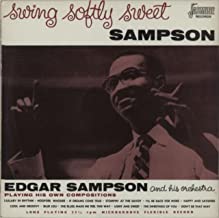
He recorded one album under his own name, Swing Softly Sweet Sampson, in 1956. Due to illness, he stopped working by the late 1960s. Saxophonist, violinist, composer, arranger Edgar Sampson passed away on January 16, 1973 at the age of 65 in Englewood, New Jersey.

More Posts: arranger,composer,history,instrumental,jazz,music,saxophone,violin
Daily Dose Of Jazz…
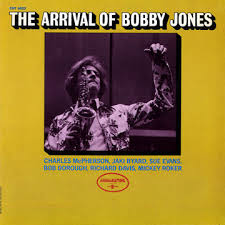
Bobby Jones was born on October 30, 1928 in Louisville, Kentucky and played drums as a child, starting on clarinet at age 8. His father encouraged him to explore jazz and
From 1949 into the mid-1950s he played with Ray McKinley, and then with Hal McIntyre before rejoining McKinley later in the decade. During a stint in the Army, he met Nat and Cannonball Adderley as well as Junior Mance. After getting his discharge, he played country music and rock & roll as a studio musician and did time with Boots Randolph and Glenn Miller before returning again with McKinley from 1959 to 1963.
Briefly playing with Woody Herman and Jack Teagarden in 1963, after the latter’s death, Bobby retired to Louisville and started a local jazz council and taught at Kentucky State College. In 1969 he moved to New York City and from 1970 to 1972 played with Charles Mingus, touring Europe and Japan with him. He also recorded sessions under his own name in 1972 and 1974.
Late in life saw him moving to Munich, Germany, where he ceased performing due to emphysema. Over the course of his career, he only recorded two albums as a leader, 15 as a sideman ~ 8 with Mingus and seven with Bill Cosby, Glen Miller, Woody Herman, Jimmy Raney, Willie Thomas and Bunky Green. Saxophonist Bobby Jones passed away on March 6, 1980 in Munich, Germany.
More Posts: bandleader,history instrumental,jazz,music,saxophone

Three Wishes
Pannonica inquired of Marshal Royal what his three wishes would be if given and his response was:
- “Health.”
- “Life.”
- “Happiness.”
*Excerpt from Three Wishes: An Intimate Look at Jazz Greats ~ Compiled and Photographed by Pannonica de Koenigswarter

More Posts: baroness,history,instrumental,jazz,music,pannonica,saxophone,three,wishes