

Requisites
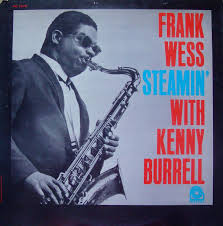
I begin this morning’s discussion with a 1963 reissue of an album originally released in 1957 titled After Hours (Prestige 7118), one of the label’s excellent jam session records. Steamin’ (Prestige PRST 7278) features an all-star group led by Frank Wess on flute, tenor sax, and Kenny Burrell on guitar. Joining them are Thad Jones on trumpet, Mal Waldron on piano, Paul Chambers on bass, and Art Taylor on drums. Waldron composed all four tunes on the album, and my copy used for this report is the 1963 Mono reissue (Prestige PRLP 7278).
Steamin’ begins Side One with a swinging introduction by Art. Both horns present the melody in unison with Thad on the muted trumpet. Frank opens with an aggressive performance, then Kenny takes over for a hard-swinging reading. Thad creates a volcanic eruption on the third interpretation, and Frank takes a second solo, this time on flute and at breakneck speed. Wess and Jones take a few spirited riffs before Walton zips through the next reading. Taylor punctuates the final statement with a stinging bite in a momentary spotlight before the ensemble takes the song out quickly.
Blue Jelly begins at a laid-back pace, gradually ascending to midtempo as the sextet states the opening chorus. Jones solos first, his ideas flowing freely to a slowly unfolding beat. Thad, Kenny, and Frank (on flute) exchange short riffs, then Burrell settles into a comfortable tempo for the second solo. The three instruments repeat, then Wess serves up a stylish dish of blues. Walton follows the next exchange with a very satisfying statement. Chambers speaks easily on the finale with great skill ahead of the close. Count One opens Side Two and the sextet gets right to work with a lightly swinging introduction by Cedar. Thad and Frank wail on the melody and everyone gets solo space except Art who keeps things in check with a driving backbeat. Frank begins the opening statement with skillful dexterity, and Thad soars on the second solo with a riveting presence. Kenny engages the ear delightfully on the next reading, then Cedar continues the bopping beat with an insistent swing. Paul accentuates the final interpretation with two short verses that are flawless.
The album closes with a trip down an Empty Street at a slow, easy tempo opening with a wistful introduction in unison. Jones leads the opening march on the muted trumpet, and the first solo by Burrell is superbly interpreted with a soothing timbre and sensitivity. Wess follows on flute with a thoughtfully pleasant reading that’s one of the most beautiful moments on the album. Jones sounds each note of the next performance tenderly and with the utmost clarity. Walton comes in next with a dreamlike, poignant presentation of sensual beauty, and Chambers wraps up the record with a rather beautiful and deeply moving interpretation before the sextet reassembles for the reprise and coda. Although, Steamin’ is credited to Frank Wess and Kenny Burrell, this album and its original title After Hours should have been released under Mal Waldron’s name in my opinion. His spirit pervades these four tunes with incredible passion and perfect pacing in his playing, complemented by the rhythmic energy and consummate musicianship of his bandmates.
That issue aside, Steamin’ serves as an excellent starting point for those who are just discovering the music of Mal Waldron or the other albums by the group who was also known as The Prestige All-Stars. The album has a brilliant soundstage across the highs, midrange, and low end that places you in the studio alongside the musicians as they’re playing. If you’re a fan of Hard-Bop and enjoy a good jam session, I invite you to audition Steamin’ by Frank Wess with Kenny Burrell or After Hours by The Prestige All-Stars. Either version should make a welcome addition to any fan’s library!
© 2020 by Edward Thomas Carter
More Posts: choice,classic,collectible,collector,flute,history,instrumental,jazz,music,saxophone
Daily Dose Of Jazz…
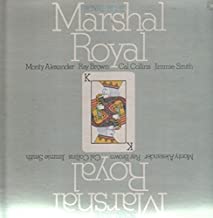
Marshal Walton Royal Jr. was born into a musical family on December 5, 1912 in Sapulpa, Oklahoma. His first professional gig was with Lawrence Brown’s band at Danceland in Los Angeles, California. In a very short time, he secured a regular gig at the Apex, working for Curtis Mosby in Mosby’s Blue Blowers, a 10-piece band. Following that gig, he began an eight-year stint from 1931–1939 with the Les Hite Orchestra at Sebastian’s Cotton Club in Los Angeles. He spent 1940 to 1942 with Lionel Hampton, until the war interrupted his career.
With his brother Ernie, he served in the U.S. Navy in the 45-piece regimental band that was attached to the Navy’s pre~flight training school for pilots at St. Mary’s College in Moraga, California. Two swing bands were organized from the larger regimental band, and they played for smokers and dances at USOs and officers clubs. Royal was the leader of the Bombardiers, one of those bands, which also included not only his brother Ernie, but Jackie Kelson (later known as Jackie Kelso), Buddy Collette, Jerome Richardson, and Vernon Alley.
When he left Basie in 1970, Royal settled permanently in Los Angeles, continuing to play and record, working with Bill Berry’s big band, Frank Capp and Nat Pierce, Earl Hines, and Duke Ellington. Royal recorded as a soloist with Dave Frishberg and Warren Vache. He co-led a band with Snooky Young in the 1970s and 1980s, recording with the band in 1978.
Alto saxophonist and clarinetist Marshal Royal, best known for his twenty years with Count Basie, passed away in Culver City, California, on May 9, 1995, aged 82.
More Posts: bandleader,clarinet,history,instrumental,jaz,music,saxophone
Daily Dose Of Jazz…
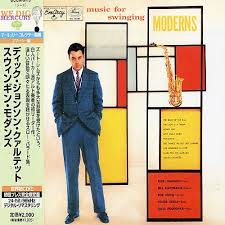
Dick Johnson was born Richard Brown Johnson on December 1, 1925 in Brockton, Massachusetts. His primary instrument was clarinet, however, he also played the alto saxophone and flute.
He began his professional career as a musician while serving in the U.S. Navy in 1944-1946 and played with the navy band on the USS Pasadena during World War II. He often credited his stint in the Navy for kicking off his career in jazz. After the war, Johnson toured with the big bands of Charlie Spivak and Buddy Morrow.
Eventually, after several years on the road, he settled in his hometown of Brockton, Mass. It was there in Brockton where he and his close friend, Lou Colombo formed a jazz sextet. The group lasted 10 years, but the friendship and musical kinship lasted for the rest of his life. In addition, Dick formed his septet, Swing Shift, which was a staple on the Boston music scene for many years.
Like Herb Pomeroy, Johnson managed a double career as a performer and an educator, teaching jazz at nearby Berklee School of Music, where he mentored many younger jazz musicians.
Between 1956 and 2006 he recorded ten albums as a leader. He worked with Frank Sinatra, the Swing Shift Orchestra, Dizzy Gillespie, and Tony Bennett.
Clarinetist, alto saxophonist, and flutist Dick Johnson, who also played in the free jazz genre, passed away on January 10, 2010 in Boston, Massachusetts after a short illness, aged 84.
</ahref=”http:>
More Posts: bandleader,clarinet,educator,flute,history,instrumental,jazz,music,saxophone
Daily Dose Of Jazz…
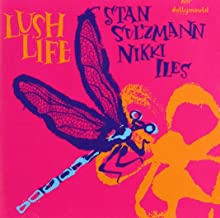
Stanley Ernest Sulzmann was born November 30, 1948 in London, England and began on saxophone at age 13, playing in Bill Ashton’s London Youth Jazz Orchestra, later the National Youth Jazz Orchestra. He studied at the Royal Academy of Music from 1969-1972.
In the 1970s he played with the Clarke-Boland Big Band, Mike Gibbs, John Taylor, Kenny Wheeler, Volker Kriegel, Eberhard Weber, Zbigniew Seifert, Phil Woods, Clark Terry, and Gordon Beck. The 1980s saw him working with Gil Evans, Paul McCartney, the European Jazz Ensemble, the James Last Orchestra, the Hilversum Radio Orchestra, the NDR Big Band, and the London Jazz Orchestra.
Collaborations in the 1990s include with Allan Botschinsky, David Murray, Paul Clarvis, and Bruno Castellucci. Television audiences around the world have heard him as the saxophone soloist in The Belgian Detective, the theme music to ITV’s Poirot, composed by Christopher Gunning.
Saxophonist Stan Sulzmann has held teaching positions at the Guildhall School of Music, the Royal Academy of Music, and Trinity College of Music, and continues to teach, perform and record.

More Posts: history,instrumental,jazz,music,saxophone
Requisites
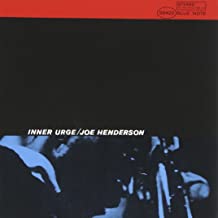
Inner Urge ~ Joe Henderson | By Eddie Carter
Superb artistry is the name of the game whenever one listens to the music of Joe Henderson. A proficiently skilled bandleader, composer, and tenor saxophonist who made some of his most important jazz contributions as a leader and sideman recording for Blue Note from 1963 to 1968. The subject of this morning’s discussion is his 1965 album, Inner Urge (BLP 4189/BST 84189). Here, he leads an outstanding quartet session with McCoy Tyner on piano, Bob Cranshaw on bass, and Elvin Jones on drums. My copy used in this report is the 2019 Music Matters Jazz SRX Stereo reissue (MMBST-84189).
The album opens with Inner Urge, a swiftly paced composition that cooks from the first notes of the melody. The walloping tones of Cranshaw’s bass start the soloing with an impressive presentation. The leader charges into the next reading enthusiastically. Tyner takes no prisoners as he slices through the third solo vigorously. Jones shows off his musical gifts with a breathless dash, then Henderson adds a few more soulful explorations preceding the song’s climax.
Isotope is a lightly swinging blues by the saxophonist paying a compliment to pianist Thelonious Monk and the humor in his music. The quartet begins with a distinctive angularity as Joe leads them on the theme. Henderson’s opening solo is excitingly direct and incisive. McCoy illustrates his ability to swing with lots of energy next, then Elvin puts together a remarkable performance for the finale, exchanging sprightly thoughts with Joe into the reprise and ending.
El Barrio, Henderson’s third original starts Side Two with the distinguished character of a Spanish influence due to him growing up in an international neighborhood in Lima, Ohio. Utilizing two chords, B major and C major 7 with a Flamenco flavor to build the melody, Joe makes one of his most adventurous, personal statements through a rich palette of colors and moods on the unaccompanied introduction and lead solo. McCoy draws the listener into the magical rapport of the trio on the next interpretation with a noteworthy performance capturing the breathtaking beauty of the tune with uncompromising honesty.
You Know I Care is a very pretty ballad by Duke Pearson. The composer recorded the song two years later on the album, Honeybuns. The quartet introduces the song elegantly. Joe begins the opening solo with a quiet fire exhibiting a great deal of passion. McCoy follows with a short solo that’s incisive, subtle, and very easy on the ear thanks to the tender warmth of Bob’s bass and Elvin’s delicate command of the brushes. The album ends on an upbeat note with Night and Day, the 1932 jazz standard by Cole Porter. It’s one of his most recorded songs and made its debut in the Broadway musical, Gay Divorce. The quartet’s brisk melody puts the listener in a happy frame of mind, riding down the highway on a warm sunny day with the top down and music rocking. Henderson steps up first with a scintillating solo of dynamic energy. Tyner follows, keeping things moving with a convincing workout on the piano. Joe wraps up the album with a few more sweet sounds into a swinging fadeout and fitting end to this very satisfying album.
The remastering of Rudy Van Gelder’s original analog tapes was done by Kevin Gray and Ron Rambach at Cohearant Audio, and the reissue was pressed at Record Technologies, Inc. Their work here is an amazing sit-down and listening experience with a wide soundstage that’s accurately recreated throughout the treble, midrange, and bass. If you’re a fan of Joe Henderson, Post-Bop or Modal Jazz, and don’t already own an original Mono or Stereo LP, or Liberty reissue, I submit for your consideration the SRX 33 1/3 LP of Inner Urge by Joe Henderson. It’s a delightful album of straight-ahead jazz at its best by one of the quintessential tenor men, and a title that would be a great addition to any LP library!
~ Honeybuns (Atlantic 3002/SD 3002) – Source: Discogs.com ~ Night and Day – JazzStandards.com, Wikipedia.org © 2020 by Edward Thomas Carter
More Posts: choice,classic,collectible,collector,history,instrumental,jazz,music,saxophone