

Daily Dose Of Jazz…
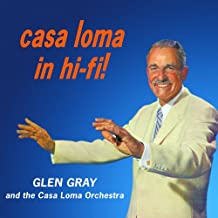
Glenn Gray Knoblauch was born on June 7, 1900 in Metamora, Illinois. Known professionally as Glen Gray, his father was a saloon keeper and railroad worker who died when he was two years of age. Along with an older sister, his widowed mother remarried a coal miner and moved her family to Roanoke. He went on to graduate from Roanoke High School, in 1917 where he played basketball and acquired his nickname, Spike.
Glen attended the American Conservatory of Music in 1921 but left during his first year to go to Peoria, Illinois, to play with George Haschert’s orchestra. From 1924 to 1929, he played with several orchestras in Detroit, Michigan.
In 1956, he went back into the studio to record the first of what became a series of LPs for Capitol Records, which recreated the sounds of the big band era in stereo. Casa Loma in Hi-Fi was the result, with 14 high-fidelity recordings.
Swing saxophonist Glen Gray passed away from lymphoma on August 23, 1963 in Plymouth, Massachusetts aged 63.

More Posts: bandleader,history,instrumental,jazz,saxophone
Daily Dose Of Jazz…
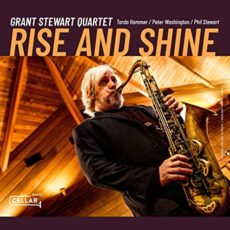
Grant Stewart was born in Toronto, Ontario, Canada on June 4, 1971. His father was a part-time jazz guitarist and at age ten, he played alto saxophone solos from saxophonists Charlie Parker, Coleman Hawkins, and Wardell Gray that had been transcribed by his father. In his early teens, he was gaining experience with such artists as Pat LaBarbera and Bob Mover. By 18 he was leading a quartet in Toronto and had a regular gig at C’est What café and pub.
A move to New York City when he was 19 saw Grant working with guitarist Peter Bernstein and saxophonist Jesse Davis. He then began playing at Smalls Jazz Club from when it opened in 1993. His younger brother, Philip, has been his drummer since 2005.
For his 2007 recording Young at Heart, Stewart chose some challenging compositions, including by Elmo Hope and Neal Hefti, as well as originals. On Around the Corner in 2010, Stewart also played soprano sax.
Saxophonist Grant Stewart continues to play steady swinging hard bop, with a current catalog of seventeen albums as a leader and has recorded with Ehud Asherie and John Swana.
More Posts: bandleader,history,instrumental,jazz,music,saxophone
Daily Dose Of Jazz…
Aubrey Frank was born on June 3, 1921 in London, England. He started playing alto saxophone at fourteen, then switched to tenor the following year. HIs first gig was with Jack Harris, then joined the RAF but continued playing with Ambrose, Johnny Claes, Geraldo, Lew Stone, and George Evans. He was in the first Ted Heath band and the RAF Fighter Command Band. During World War II he played with Sam Donahue and Glenn Miller.
Leaving the RAF, he continued to work with Ambrose until 1947, as well as the Skyrockets and the Squadronnaires. From 1949 to 1954 a member of Jack Nathan’s band alongside Ronnie Scott and Harry Klein. He freelanced and became a staple on early British bebop dates where his adaptability allowed him to play in any type of band, from Dixieland to modern jazz.
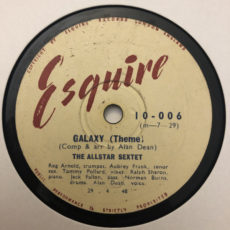
He recorded with the George Shearing Sextet, Harry Hayes, Alan Dean All-Star Sextet and had a long career regarded as a first-class session musician but was a jazzman at heart. With the advent of bop, his style changed little, leading the Aubrey Frank Modern Music Sextet consisting of Hank Shaw or Wyatt Forbes, Harry Klein, Andy Denits, Stan Wasser, and Douggie Cooper. Tenor saxophonist Aubrey Frank passed away on his seventy-second birthday in 1993.
More Posts: bandleader,history,instrumental,jazz,music,saxophone
Daily Dose Of Jazz…
Toby Hardwicke was born Otto James Hardwicke on May 31, 1904 in Washington, D.C., and started on string bass at the age of 14, then moved to C melody saxophone and finally settled on alto saxophone. A childhood friend of Duke Ellington, he joined Ellington’s first D.C. band in 1919. He also worked for banjoist Elmer Snowden at Murray’s Casino.
In 1923, Ellington, Hardwick, Snowden, trumpeter Arthur Whetsol, and drummer Sonny Greer had success as the Washingtonians in New York City. After a disagreement over money, Snowden was forced out of the band and Duke Ellington was elected as the new leader. Booked at a Times Square nightspot called the Kentucky Club for three years, they met Irving Mills, who produced and published Ellington’s music.
Otto left the Duke Ellington band in 1928 to visit Europe, where he played with Noble Sissle, Sidney Bechet and Nekka Shaw’s Orchestra, and led his own orchestra before returning to New York City in 1929. He went on to have a brief stint with Chick Webb that year, then led his own band at the Hot Feet Club, with Fats Waller leading the rhythm section in 1930. He led a group at Small’s before rejoining Duke Ellington in the spring of 1932, following a brief stint with Elmer Snowden.
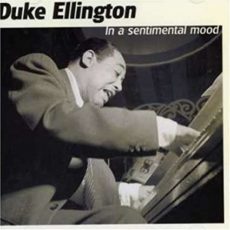
He played lead alto on most Ellington numbers from 1932 to 1946 and was a soloist on Black and Tan Fantasy, In a Sentimental Mood and Sophisticated Lady. Hardwick, with his creamy tone, was almost always the lead alto in the reed section of the Ellington orchestra except in some situations where Ellington required the more cutting tone of Johnny Hodges’ alto to set the tone of the ensemble. He left the band in 1946 over a disagreement with Ellington about his girlfriend, freelanced for a short time in the following year, and then retired from music.
>Occasionally doubling on violin and string bass in the Twenties, alto saxophonist Toby Hardwicke who also played clarinet and bass, baritone, and soprano saxes, passed away on August 5, 1970.

More Posts: bass,clarinet,history,instrumental,jazz,music,saxophone,violin
The Quarantined Jazz Voyager
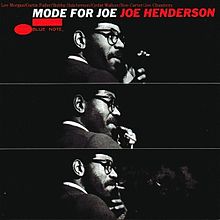
The Quarantined Jazz Voyager is placing Mode For Joe on the turntable and is another timeless classic that influenced my listening in the Eighties and has since been a part of my collection. Recorded and released in 1966 box tenor saxophonist Joe Henderson, it would be the last Blue Note album to feature Henderson as a leader in the classic era. The session was recorded by Rudy Van Gelder on January 27, 1966, and produced by Alfred Lion for Blue Note Records.
It is a concept album combining modal and hard bop modes aimed at creating an oceanic atmosphere. Many of the track titles refer to marine biology or the sea, and the musicians develop the concept through their use of space. The album was presented with the Grammy Hall of Fame Award in 1999.
A Shade of Jade, Mode for Joe, Black, Caribbean Fire Dance, Granted, and Free Wheelin’ are the six compositions that make up the hard-bop album. The personnel on the date are tenor saxophonist Joe Henderson, trumpeter Lee Morgan, trombonist Curtis Fuller, vibraphonist Bobby Hutcherson, bassist Ron Carter and drummer Joe Chambers.
So stay diligent my fellow voyagers in being healthy, continue to practice social distancing, and don’t be so anxious to rush back to the new normal. It has been said that music soothes the savage beast, so listen to great music. I share that music to give you a little insight into the choices this voyager has made over the years during this sabbatical from jet setting investigations of jazz around the globe.

More Posts: adventure,club,genius,jazz,museum,music,preserving,restaurant,saxophone,travel,voyager