

Daily Dose Of Jazz…
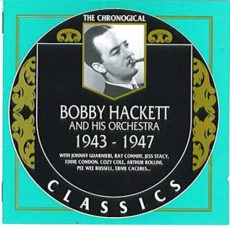
Arthur Francis Rollini was born February 13, 1912 in New York City into a musical family of Italian descent and grew up in Larchmont, New York with his multi-instrumentalist older brother Adrian. In 1929 he played in England for Fred Elizalde and worked for the California Ramblers and big band pioneer Paul Whiteman.
From 1934 to 1939 he was a member of the Benny Goodman Orchestra. The highlight of that period was a breakout performance for big band jazz at Carnegie Hall in 1938. He worked with Richard Himber and from 1941-1942 with Will Bradley. From 1943 to 1958 he worked as a studio musician for the American Broadcasting Company.
Rollini’s work can be found on recordings with the bands of Wingy Manone, Adrian Rollini, Benny Goodman, Joe Venuti, Bobby Hackett, Lionel Hampton, Harry James, Louis Armstrong and Brad Gowans. In 1939, he starred in an Allstar band of Goodman, Bunny Berigan and Jack Teagarden with Blue Lu.
In 1987, he published his autobiography Thirty Years With the Big Bands. Arthur Rollini, who played tenor saxophone and clarinet, and was nicknamed Schneeze, passed away on December 30, 1993 in Florida.
More Posts: clarinet,history,instrumental,jazz,music,saxophone
Requisites
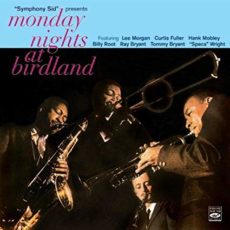
Monday Night at Birdland is a live album that was recorded on April 21, 1958 at Birdland in New York City and released by the Roulette label.
Track Listing | 46:00
- Introduction by Symphony Sid – 0:09
- Walkin’ (Richard Carpenter) – 12:26
- All the Things You Are (Jerome Kern, Oscar Hammerstein II) – 11:27
- Bag’s Groove (Milt Jackson) – 12:29
- There Will Never Be Another You (Harry Warren, Mack Gordon) – 9:29
- Hank Mobley, Billy Root – tenor saxophone
- Lee Morgan – trumpet
- Curtis Fuller – trombone
- Ray Bryant – piano
- Tommy Bryant – bass
- Specs Wright – drums
Monday Night at Birdland | by Eddie Carter
This morning’s subject of discussion takes us to the legendary jazz club Birdland where Monday nights were always special, especially during the fifties and sixties. Musicians and vocalists who were performing would be off that night and the stage would be given to up and coming jazz artists. Thankfully, Roulette Records was available to record the performance on April 21st to give jazz fans, Monday Night at Birdland (Roulette R–52015/SR–52015) to enjoy for all who couldn’t be there in person. The Master of Ceremonies for these weekly jam sessions is the legendary jazz disc jockey, “Symphony Syd” Torin of WBNX in the Bronx, New York; WHOM in Jersey City, New Jersey, and WWRL, WMCA and WJZ in New York City. Syd announces all the tunes on the album and has a brief comment after three of them conclude. The stars of this set are Lee Morgan on trumpet; Curtis Fuller on trombone; Hank Mobley, Billy Root on tenor sax; Ray Bryant on piano; Tommy Bryant on bass and “Specs” Wright on drums. My copy used in this report is the 1988 Spanish Mono reissue (FSR-631) by Fresh Sound Records.
Symphony Syd starts the first side with the song’s introduction; the septet then launches Walkin’ by Richard Carpenter. The trio opens the song evolving into the ensemble’s collective melody. Hank takes the spotlight first wailing enthusiastically followed by Lee who picks up the pace with a bright tone and feisty phrasing. Curtis takes the reins next with a considerable zest for a rousing performance, Ray solos with evident delight in the next reading. “Specs” takes the final scintillating statement in exchange with the front line for a robust finish into the closing chorus and climax. The septet eases the throttle back for the 1939 standard, All The Things You Are by Jerome Kern and Oscar Hammerstein II. Fuller cooks at an easy groove on the opening melody, then infuses the lead solo with a lively simplicity and splendor. Mobley makes his presence felt on a brisk interpretation next, then Morgan illustrates his assured mastery on the trumpet with an engaging performance. Root takes his first solo next, giving an exquisite statement that fits the ensemble’s artistic temperament with a superb reading. Bryant ends with a short solo that’s profoundly moving before the collective reprise and coda.
Side Two opens with Milt Jackson’s contemporary classic, Bags’ Groove; it was written in 1952 and made its debut on Wizard of The Vibes (Blue Note LP 5011), released that year. After a collective theme treatment, Lee is up first, combining lyricism and emotion for a charming lead solo. Curtis soars joyously on the next statement, then comes Hank who takes the next reading with a solid rock-steady rhythm from beginning to end. Billy steps up next for a captivating performance unleashing red-hot notes from his horn and Ray glows brilliantly on the final spot ahead of the out-chorus and ovation. The set ends with an invigorating finale, There Will Never Be Another You by Harry Warren and Mack Gordon, originally written in 1942 and appearing in the musical film, Iceland. The propulsive power of Wright’s drums brings the song to life leading to the speedy melody. Mobley accelerates to race car speed on the opening statement and never decelerates. Root’s tenor sax is an adrenaline rush on the next scintillating solo, followed by Morgan who also gives a spectacular exhibition. Fuller pulls no punches with a buoyant, effervescent interpretation next and Bryant shows he’s a fierce and fervid performer on the closer before the closing chorus and appreciative applause from the crowd.
Monday Night at Birdland was produced by Rudy Traylor, who’s also an arranger, jazz drummer, pianist, and vibraphonist. The sound quality of the album is quite good throughout, and Hank Mobley, Billy Root, Lee Morgan, Curtis Fuller, Ray Bryant, Tommy Bryant, and “Specs” Wright offer the listener the very essence of live jazz. In fact, there’s only one noticeable defect, on Symphony Syd’s introduction of Walkin’, his microphone has a little harshness. I don’t know if this appears on the original album or is exclusive to this LP. I’ll admit, I’m not that familiar with Fresh Sound Records, and don’t know if they’re in that group of European labels like DOL, Doxy, Jazz Wax, Jazz Workshop, Wax Time, etc. However, I’m pretty impressed with what I’ve heard on this particular reissue and the performances are worth the price of admission for me to invite you to seek a copy of Monday Night at Birdland to check out for yourselves and form your own opinion!
~ All The Things You Are, There Will Never Be Another You – Source: JazzStandards.com ~ Bags’ Groove – Source: Wikipedia.org ~ © 2020 by Edward Thomas Carter

More Posts: choice,classic,collectible,collector,history,instrumental,jazz,music,saxophone

Daily Dose Of Jazz…
Chris Biscoe was born on February 5, 1947, in Pensford, Somerset, England and in 1963 taught himself to play alto saxophone and then started playing tenor, soprano, baritone, and also comparatively rare alto clarinet. Before he became a notable presence on the UK Jazz scene, he was a computer programmer.
From 1970 to 1973 Biscoe played with National Youth Jazz Orchestra in London, doing gigs with various other London-based bands of that period, including Redbrass. He worked with several notable jazz musicians during the Seventies such as Harry Beckett, Ken Hyder, Didier Levallet, Chris McGregor, Andy Sheppard, Graham Collier, Danilo Terenzi, Pete Hurt, Tommy Chase, Pete Saberton, Barry Guy, Dave Holdsworth, and Pete Jacobsen.
In 1979, Chris had a long-term association with Mike Westbrook touring throughout Europe and playing international festivals in Australia, Singapore, Hong Kong, Canada and the USA. In the same year, he also formed a quartet featuring Peter Jacobsen, expanded to a quintet in 1980, a sextet in 1986, and reformed as a quartet in 1987. During the Eighties he also recorded two albums.
During the late 1980s and 1990s, Biscoe toured and recorded with George Russell, Andy Sheppard, Liam Noble, Gail Thompson’s Jazz Africa, Harry Beckett, and also played in France with Didier Levallet’s groups and the collective band called Zhivaro. In 1991, he released a second cassette, Modern Alarms, and also recorded in the Dedication Orchestra in the Spirits Rejoice project.
Between 1997 and 2000, he became the first English musician to join the Orchestre National de Jazz. Multi-instrumentalist Chris Biscoe plays the alto, soprano, tenor and baritone saxophone, the alto clarinet, piccolo, and flute and continues to play and record.
More Posts: bandleader,clarinet,flute,history,instrumental,jazz,music,piccolo,saxophone
Daily Dose Of Jazz…
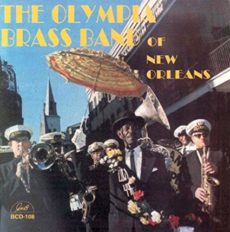
Duke Dejan was born Harold Andrew Dejan into a Creole family in New Orleans, Louisiana on February 4, 1909. He took clarinet lessons as a child before switching to the saxophone, and became a professional musician in his teens, joining the Olympia Serenaders and then the Holy Ghost Brass Band. He played regularly in Storyville, at Mahogany Hall, and on Mississippi riverboats.
During World War Two he played in Navy bands. Afterwards, Duke worked in the mail office of the Lykes Brothers Steamship Company for 23 years while maintaining a parallel musical career, leading his own band, Dejan’s Olympia Brass Band, from 1951. The band often appeared at Preservation Hall, recorded nine albums, and also toured internationally, making 30 concert tours of Europe and one of Africa. The band was featured in the James Bond movie Live and Let Die and in many television commercials.
Suffering a stroke in 1991 left him unable to play the saxophone but he continued as a bandleader and singer until shortly before his death on July 5, 2002 at the age of 93. Alto saxophonist and bandleader Harold Dejan best remembered as the leader of the Olympia Brass Band, including during the 1960s and 1970s when it was considered the top band in the city.
More Posts: bandleader,history,instrumental,jazz,music,saxophone
Daily Dose Of Jazz…
Charlie Holmes was born on January 27, 1910 near Boston, Massachusetts. He began playing alto saxophone at age 16 and emulated the style of his childhood friend, Johnny Hodges. He began playing professionally a week later and after moving to New York City he worked for a variety of groups, including Luis Russell in 1928.
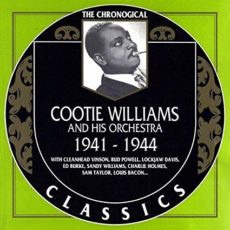
Between 1929 and 1930 he recorded with Red Allen and is best known for composing Sugar Hill Function. He would work with Russell again a few times and in 1932 joined the Mills Blue Rhythm Band. He was a member of John Kirby’s Sextet, Cootie Williams’ Orchestra, and Louis Armstrong’s band for much of the next two decades. He left music in 1951 and did not return for twenty years, only to work in Clyde Bernhardt’s Harlem Blues & Jazz Band and later played for the Swedish band Kustbandet.
Never taking on the role of a leader in any recording or group, swing era saxophonist Charlie Holmes, who also played clarinet and oboe for the Boston Civic Symphony Orchestra, passed away on September 19, 1985 in Stoughton, Massachusetts.

More Posts: bandleader,clarinet,history,instrumental,jazz,music,oboe,saxophone