

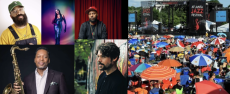
ATLANTA JAZZ FESTIVAL
The 48th annual Atlanta Jazz Festival will take place in Piedmont Park, Midtown Atlanta, on Memorial Day Weekend from May 24th ~ 26th. The festival is free and open to the public, offering a celebration of jazz music, culture, and art.
1:00pm ~ Kenny Banks Jr. | Piano
3:00pm ~ Jarrod Lawson | Vocal, Piano
5:00pm ~ Ravi Coltrane | Tenor & Soprano Saxophone, Clarinet
7:00pm ~ Andromeda Turre | Vocal
9:00pm ~ Russell Gunn & Blackhawk | Trumpet
More Posts: adventure,bandleader,genius,instrumental,jazz,music,piano,saxophone,travel,trumpet,vocal
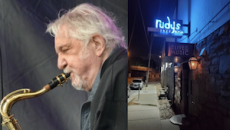
DON ALIQUO
Saxophonist Don Aliquo Presents Bebop Live and explores the various elements, depths and history of bebop jazz. In the early 1940’s when the younger generation of jazz musicians expanded the creative possibilities of jazz and bebop music first hit the jazz scene it wasn’t everyone’s cup of tea. It was rooted in swing but with fast paced tempos and experimental elements, adventurous improvisation, complex harmonies and chord progressions and a focus on individual virtuosity, and it was not very danceable. Rather than playing heavily arranged music as was common at the time, bebop was a shift from an entertainment focused music to a more cerebral and intellectual art form, with a heavy focus on sections where musicians would improvise over complex chord progressions. Some of the most influential and well known bebop musicians include Charlie Parker, Dexter Gordon, Sonny Rollins, Miles Davis, Dizzy Gillespie, Bud Powell, Thelonious Monk, Charlie Christian, Max Roach and Art Blakey.
Don Aliquo’s playing has been described as “smooth as silk…with an unfailing feel for breath and phrasing” while extremely supple in the addressing of his axe but always zeroed in on what he’s describing”.
“Growth” his newest release, explores new territory with intriguing compositions and ample solo space for Aliquo’s inspired improvisations. The eight originals are both complex and open, which shows him expanding his boundaries not only as an instrumentalist and improviser, but also as a composer. The music is an electrifying modern outing with one foot in the future and one in the tradition.
Aliquo has released six solo projects and has worked collaboratively or performed as a sideman on many others. His previous solo cd “Sun and Shield” features veteran jazz masters Rufus Reid, Jim McNeely, and the dynamic Obed Calvaire.
Cover: $14.00
More Posts: adventure,bandleader,club,genius,jazz,music,preserving,saxophone,travel
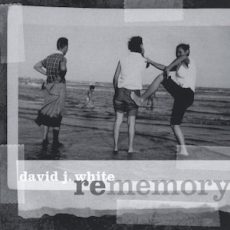
Daily Dose Of Jazz…
David J. White was born May 3, 1968 in Houston, Texas and became a saxophone student at age eight. His love for jazz was nurtured by musicians and educators Conrad O. Johnson, Craig Green, and Dr. Robert Morgan. By the time he was sixteen he was playing with local bands in clubs and other musical events. While in high school he appeared in Saxophone Journal and other jazz education periodicals and won several awards including a DB award from DownBeat Magazine.
Moving to Washington, D.C. he attended Howard University and contributed to the Jazz Ensemble’s yearly recordings both as a performer and composer/producer. 1992 saw David meeting internationally renowned film maker Haile Gerima and composed, produced and performed the soundtrack for the critically acclaimed film Sankofa.
He went on to score other films and released his sophomore album on his own label titled Where I Left Off. This project represents a more aggressive style of composition and performance than his first release. He has performed with Rich Matheson, Billy Harper, Randy Brecker & Eliane Elias, and Lou Marini.
Tenor saxophonist David White continues to compose, perform, tour, produce and record.

More Posts: bandleader,composer,history,instrumental,jazz,music,producer,saxophone
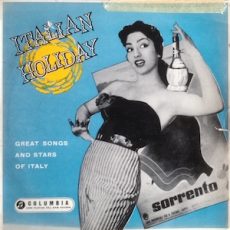
Daily Dose Of Jazz…
Andrea Ventriglia was born in Capua, Italy on April 29, 1953 and studied the saxophone with the masters Franco Florio in Salerno and Eraclio Sallustio at the GB Martini Conservatory in Bologna, Italy. He later studied the flute with Aldo Ferrantini.
His professional career began while he was still a music student around the end of the 1960s, following the rhythm & blues and soul of James Brown, Wilson Pickett, Aretha Franklin, Ray Charles and Joe Cocker in fashion at that time and still today. At a very young age he was part of the best and
As a soldier Andrea was part of the National Band of the Italian Army. He moved to Verona, Italy in the mid 1970s and began playing in small bands in night clubs. He was invited to join the Big Band Citta’ di Verona directed by Maestro Mario Pezzotta, in the first tenor saxophone. At the same time he performed in Fernando Brusco’s small orchestra as an arranger and saxophonist.
Moving to the United States he initially played in small bands that performed on cruise ships where he met among others Count Basie, Mercer Ellington, Sarah Vaughan, Harry James and Bob Crosby. Settling first in San Francisco, then in Los Angeles, California he played on the road with small bands collaborating with Harry James and Bob Crosby in the latter city.
Back in Italy he gained membership into Franco Rosselli’s orchestra and did the night club circuit in Florence, San Remo and Riviera Romagnola. Leaving Roselli he toured with Bobby Solo throughout Italy. His passion for jazz and big band led him to the Luciano Fineschi Orchestra, again sitting in the first tenor saxophone and flute chair.
After the orchestra disbanded Ventriglia went on to play in other big bands, duos, artistic partnerships, and guest appearances. For a decade he was a professor of saxophone at the Giuseppe Martucci Music High School in his hometown. He trained musicians currently working with famous artists or with their own groups and some of whom practice the profession of musician in the USA.
By the Eighties the public became more sensitive towards jazz, so Andrea led quartets performing in various Italian jazz clubs. that sprung up a bit everywhere in Italy. During his career and for professional reasons, saxophonist and flutist Andrea Ventriglia has performed on nearly every continent and continues to perform, tour and record.
More Posts: bandleader,flute,history,instrumental,jazz,music,saxophone
Daily Dose Of Jazz…
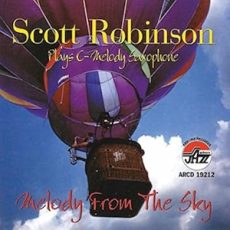
Scott Robinson was born on April 27, 1959 in Pompton Plains, New Jersey and was the son of a piano teacher and National Geographic book editor. Graduating from the Berklee College of Music in 1981, the following year he joined the college’s staff, becoming its youngest faculty member.
Robinson has appeared on more than 275 LP and CD releases, including twenty under his leadership, with musicians Frank Wess, Roscoe Mitchell, Ruby Braff, Joe Lovano, Ron Carter, Paquito D’Rivera, David Bowie, Maria Schneider, Rufus Reid, Buck Clayton, and the Orchestra of St. Luke’s. Four of these recordings won a Grammy Award. He has received four fellowships from the National Endowment for the Arts.
In 2000, the U.S. State Department named him a jazz ambassador for the year 2001, funding a tour of West Africa in which he played the early works of Louis Armstrong. Material from these appearances was released on the album Jazz Ambassador: Scott Robinson Plays the Compositions of Louis Armstrong by Arbors Records.
Throughout his career, Scott has worked to keep unusual and obscure instruments in the public view. His main instrument is a C-melody saxophone, however he has recorded with the ophicleide, and the rare contrabass saxophone.
Saxophonist Scott Robinson has operated his record label, ScienSonic Laboratories since 2009, in addition to his performing and recording.
More Posts: bandleader,history,instrumental,jazz,music,ophicleide,saxophone