

The Jazz Voyager
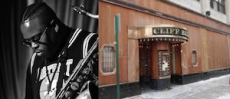
The Jazz Voyager is flying east for another visit to the Motor City and some atmosphere and jazz at Cliff Bell’s. Starting out as a pub, turned speakeasy during Prohibition, it has become one of the premier jazz venues in the Midwest. I’m going to stop by Hitsville U.S.A. and take a nostalgic walk down the soul music memory lane before hitting the club.
I will be checking out a musician I have never heard before but is one who is keeping the tradition alive. He is a Grammy nominated saxophonist who goes by the name of De’Sean Jones and he brings his trio with him for the night. I’ll be catching the second set, as usual, just in case he decides to give anything extra.
The cover charge is $25.00 and Cliff Bell’s is located at 2030 Park Avenue, Detroit, Michigan 48226. For more information visit cliffbells.com.

More Posts: adventure,club,genius,jazz,music,piano,preserving,saxophone,travel

Daily Dose Of Jazz…
Werner Dies was born on January 15, 1928 in Frankfurt, Germany. An autodidact on guitar and saxophone, he studied clarinet and composition starting in 1947. From 1947 to 1955 he played guitar in the dance band of Willy Berking, and was a member of the bands Hotclub Combo and Two Beat Stompers.
He led his own ensemble, went on a tour of Yugoslavia in 1955 and from 1955 to 1965 he was a member of Hazy Osterwald’s sextet, and also worked as a session musician and arranger. He toured with Joe Turner and, in 1968, Charly Antolini.
He had a hit in Germany in 1954 with Schuster bleib bei deinen Leisten (The Little Shoemaker) that spent eight weeks at #1 on the German hit parade starting in October 1954. He later worked for Howard Carpendale, Adam & Eve, Graham Bonney, and other singers, and produced easy listening music with his own ensemble, the Werner Dies Sax Band.
He wrote a treatise on clarinet improvisation that was published in 1967. He produced the group Bläck Fööss from 1973 to 2003. Tenor saxophonist, clarinetist, guitarist, composer, and arranger Werner Dies died on February 5, 2003.

More Posts: arranger,bandleader,clarinet,composer,guitar,history,instrumental,jazz,music,saxophone

Daily Dose Of Jazz…
Sonya Jason was born on January 10, 1963 in Wayne, Nebraska. By the age of four, she began playing piano and took classical piano lessons for nine years. Joining the school band at age ten she took up the saxophone. At thirteen she joined her first jazz band where she learned the rudiments of swing, the basic ability that all jazz musicians must possess.
Her family’s move to the Southwest enabled Sonya to join the Apollo High School band in Phoenix, Arizona, then voted Arizona’s leading jazz band. It was here that she first heard the passionate recordings of Latin saxophonist Gato Barbieri, and began studying the bebop stylings of Charlie Parker, gaining further inspiration from the saxophone work of Phil Woods and David Sanborn.
She won the Phil Woods Scholarship offered by Berklee College of Music in Boston, Massachusetts. Two years of liberal arts study at Mills College in Oakland California and private lessons with bebopper Hal Stein led to her move to Boston. While at Berklee she studied privately with saxophonists Joe Viola, Jimmy Mosher, George Garzone and Herman Johnson. She honed her arranging skills with Herb Pomeroy and Grammy award-winning arranger Robert Freedman. After graduating summa cum laude from Berklee in 1985, Sonya returned to Arizona to begin her professional career.
Gigging all over Arizona she gained versatility working with bands of varied styles, jazz, latin, top 40, reggae, rock, classical, big band swing, and show bands. In 1987 she formed a quartet that performed as opening act for Natalie Cole, Richard Marx, Chuck Berry, Ramsey Lewis, Janis Siegel, Smokey Robinson, Spyro Gyra, Lionel Hampton, Mose Allison and the Stanley Clarke/George Duke Project, to name a few..
In 1988 she released her debut recording Secret Lover on her Saja Productions label. in December 1988. In 1991 she moved to Los Angeles, California and signed with Warner Music Discovery and two years later her second release Tigress.
In addition, Sonya appeared in the Showtime movie, Lush Life, starring Jeff Goldblum and Forest Whitaker, and was featured in two cable music specials, Music and the Biz and Hurry Up and Wait.
Relocating to the San Francisco, California Bay Area in 1999. Since moving she has recorded a few albums, served as musical director and arranger for theCoastal Theatre Conservatory’s presentation of Cinderella with over a hundred youth of all ages, and was band director and orchestrator of This Side Of The Hill Players.
First-call saxophonist Sonya Jason carries on a thriving music teaching studio, continues to perform as a soloist for several bands and orchestras, tour and record.
More Posts: bandleader,history,instrumental,jazz,music,saxophone
THE HEADHUNTERS
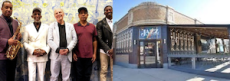
The Headhunters, the legendary jazz-funk ensemble co-led by percussionist Bill Summers and drummer Mike Clark with NEA Jazz Master Donald Harrison on alto saxophone, celebrated the band’s 50th anniversary in 2023, having formed around Herbie Hancock’s classic recordings, Head Hunters, in 1973, Thrust in 1974 and Man-Child in 1975. The band continued without Mr. Hancock and has released 8 albums under the Headhunters name starting with Survival of the Fittest in 1975 and on Straight from the Gate in 1977 (featuring the smash hit “God Make Me Funky” sampled on over 350 hip hop and pop songs), and most recently Speakers In the House in 2022 and Live From Brooklyn Bowl in 2023. The band’s new album The Stunt Man comes out October 11th, 2024 on Ropeadope recorded at the legendary Hyde Street Studios.
Few bands can boast a history as fortuitous and storied as The Headhunters. What each member brings to the table forged a history that most bands can only dream of. Their blend of jazz with funk and rock would go on to sell over a million albums worldwide, while the band’s legacy would inspire musicians of every genre for years to come, be sampled by hundreds of hip-hop artists throughout the ’80s and ’90s, and influence countless musicians’ playing today. The Headhunters’ impact remains a global phenomenon, and their time with Hancock proved to be a life changing experience.
Bill Summers – percussion
Mike Clark – drums
Donald Harrison – saxophone
Chris Severin – bass
Kyle Roussel – piano
Cover Chaege: $25.00 – $50.00 + $3.50 fee
More Posts: adventure,bandleader,bass,club,drums,genius,instrumental,jazz,music,percussion,piano,preserving,saxophone,travel
DE’SEAN JONES TRIO
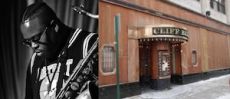
De’Sean Jones is a Detroit based saxophonist, billboard charting recording artist and grammy nominated arranger. Over the past 20 years De’Sean has toured the world recording or performing with music Icons like Stevie Wonder, Faith Evans, along with a host of Detroit Legends; Marcus Belgrave, The Clark Sisters, Kierra Sheard and techno pioneer Mad Mike Banks of Underground Resistance.
As a bandleader & producer Jones has curated an eclectic approach that is widely viewed as progressive and undeniably rooted in the rich history of black culture. De’Sean actively pushes the boundaries of social consciousness through music in ways that are authentic, emotionally dynamic and intellectually stimulating.
Tickets: $25.00
More Posts: adventure,bandleader,club,genius,instrumental,jazz,music,preserving,saxophone,travel