

Daily Dose Of Jazz…
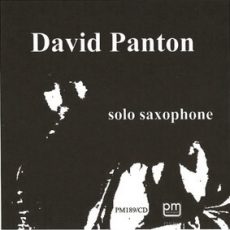
David Panton was born on October 20, 1946 in the Midlands, England where his formative musical experience revolved around singing in the local church choir and later with a mixed voice choir and an amateur operatic society. He began teaching himself classical piano from the age of twelve and by fifteen had begun to compose by improvising at the keyboard. At seventeen he joined the army as a bandsman, taking up the oboe and being posted for a year in 1964 to Kneller Hall, the Military School of Music. He later attended Birmingham School of Music for piano tuition under the late William Fellowes for a year from 1966. His composing took on a more modern direction which was largely unintelligible to his military colleagues.
After four years as bandsman he resigned to pursue a musical career back in civilization, taking up the alto saxophone as a result of hearing some of the American and British free jazz players of the time such as Ornette Coleman and Mike Osborne. He formed several groups and gave solo performances at the Birmingham Arts Lab, Midlands Arts Centre, Birmingham and Midlands Institue as well as numerous pubs. He made contact with London based musicians John Stevens, Evan Parker, Derek Bailey and Maggie Nichols which led to occasional appearances around the city.
He ventured into folk music with the group Forest, followed by the experimental theatre group Chameleon Laboratory Theatre. In 1979 he received an Arts Council jazz bursary, allegedly the first provincal based musician to do so, with a second following in 1981. By 1989 he abandoned music and started up an audio cassette duplication business. When the demise of the audio cassette undermined business viability, David opted to take up a civil service post in the late Nineties from which he retired in 2006.
In 2009 he was awarded the MA in Music from the Open University and has continued to pursue music activities in academia.

More Posts: bandleader,history,instrumental,jazz,music,piano,saxophone
Requisites
The Modern Touch ~ Benny Golson Sextet | By Eddie Carter
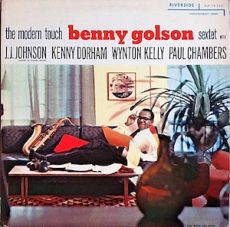
The jazz world mourned the loss of an icon when Benny Golson passed away on September 21, 2024. His departure left a void that can never be filled. Benny was an excellent musician, arranger and composer. He co-founded the Jazztet with Art Farmer. His extensive discography as a leader and his collaborations with elite jazz musicians as a sideman are a testament to his unique talent. My mother was a fan of his, and her love for his music inspired this morning’s discussion. The Modern Touch (Riverside RLP 12-256), released in 1958, is his second album as a leader and first for the label. He’s joined by Kenny Dorham on trumpet, J.J. Johnson on trombone, Wynton Kelly on piano, Paul Chambers on bass, and Max Roach on drums. My copy is the 1974 Victor Musical Industries Japanese Mono reissue (Riverside SMJ-6070M).
Out of The Past by Benny Golson opens the album with the sextet’s leisurely melody, setting the mood for the saxophonist’s relaxing opening solo. Kenny steps into the spotlight next. He is followed by J.J., who expresses his thoughts in the following statement. Wynton gives a captivating interpretation; then Paul walks with a steady beat. Max adds the finishing touches with a short solo ahead of the reprise. Reunion by Gigi Gryce begins with the front line’s introduction to the ensemble’s upbeat melody. Golson gets right to work first and wails. Johnson takes over and is especially impressive in an inspired interpretation. Dorham follows with a superb solo, ahead of a brief comment by Roach that gives way to Chambers telling a fascinating story. Kelly sustains the excitement in the following reading, and the drummer has an exchange with the front line into the closing chorus that slowly dissolves into nothingness.
Venetian Breeze by Benny Golson takes us on a musical journey inspired by the saxophonist’s travels over the Venetian Causeway from Miami to Miami Beach. The tempo shifts to mid-tempo for the three horns in unison to drive the sextet’s theme. J.J. takes the first solo and moves with ease into a fine groove. Kenny takes over like a refreshing drink on a hot day to give a relaxing performance. Benny swings straight from the heart next, and then Wynton holds our attention leading to the theme’s restatement. Hymn To The Orient by Gigi Gryce is a happy-blowing vehicle. It starts the second side with the sextet’s upbeat theme. Kelly takes the opening chorus and gives an energetic reading. Golson is at his most effective on the subsequent interpretation. Johnson has an outstanding solo next; then Roach gives his drums a short workout before the song’s conclusion.
The pace slows down for a beautiful rendition of Namely You by Gene DePaul and Johnny Mercer. The group sets the mood with a lovely introduction, segueing into Benny’s gentle, deeply emotional melody. In the solo showcase, the saxophonist applies a little tenderness and romantic beauty before the sextet reappears for a soft summation. Blues on Down by Benny Golson is a blues affording everyone a solo opportunity. It brings the album to a close, beginning with the sextet’s leisurely melody. Dorham begins the blowing with an easy-going solo. Golson continues to communicate a laid-back feeling in the following reading. Johnson steps into the spotlight next with a breezy interpretation; then Kelly offers a mellow flow of ideas in the fourth statement. Chambers gets the nod and takes a soulful walk, and Roach takes us home in the finale, ahead of the theme.
>Orrin Keepnews produced The Modern Touch, and Jack Higgins was the recording engineer behind the dials. The album has an excellent sound and is beautifully engineered. The listener will feel like the musicians are playing for them in their listening room. Benny Golson was one of the significant contributors to hard bop jazz as an arranger, composer and musician. I had the pleasure of seeing him perform live and meeting him during the nineties when he was the leader and musical director of The Jazz Messengers during a concert in Cleveland, Ohio. He couldn’t have been more gracious and down to earth. We talked for quite a while after the group’s performance, and I consider it a highlight of my life. His career lasted just over seven decades; he was ninety-five when he died.
Anyone who’s already a fan of Benny Golson and in the mood for an excellent hard-bop album should consider The Modern Touch on your next record-shopping trip. It’s a terrific release that offers a glimpse into one of the best multi-talented jazz musicians, and a record I happily recommend for a spot in your library!
Postscript: The Modern Touch was reissued in 1962 as Reunion on Jazzland (AM 85/AS 985).
© 2024 by Edward Thomas Carter

More Posts: choice,classic,collectible,collector,history,instrumental,jazz,music,saxophone

Daily Dose Of Jazz…
Pharoah Sanders was born Ferrell Lee Sanders on October 13, 1940 in Little Rock, Arkansas, an only child. He began his musical career accompanying church hymns on clarinet but his initial artistic accomplishments were in the visual arts. When he was at Scipio Jones High School in North Little Rock, he began playing the tenor saxophone.
After graduating from high school in 1959, Sanders moved to Oakland, California, where he lived with relatives. He briefly studied art and music at Oakland City College. He earned a Bachelor of Fine Arts from an unknown art institution.
He began his professional career playing tenor saxophone in Oakland, then moved to New York City in 1962. The following year he was playing with Billy Higgins and Don Cherry and caught the attention of Eric Dolphy and John Coltrane. In 1965, he became a member of Coltrane’s band, as the latter gravitated towards the avant-garde jazz of Albert Ayler, Sun Ra, and Cecil Taylor.
Sanders first recorded with Coltrane on Ascension, followed by their dual-tenor album Meditations, then joined Coltrane’s final quintet. Pharoah released his debut album as a leader, Pharoah’s First, was not what he expected. In 1966 he signed with Impulse! and the years Sanders spent with the label were both a commercial and critical success.
The 1970s had Sanders continuing to produce his own recordings including the 30-minute wave-on-wave of free jazz, The Creator Has A Master Plan from the album Karma, featuring vocalist Leon Thomas and to work with Alice Coltrane on her Journey in Satchidananda album. Although supported by African-American radio, Sanders’ brand of brave free jazz became less popular.
His major-label return came in 1995 when Verve Records released Message from Home, followed by Save Our Children (1998). But again, Sanders’s disgust with the recording business prompted him to leave the label. In the 2000s, a resurgence of interest in jazz kept Sanders playing festivals and was awarded a NEA Jazz Masters Fellowship for 2016 and was honored at a tribute concert in Washington DC on April 4, 2016.
In 2020 he recorded the album Promises, with the English electronic music producer Floating Points and the London Symphony Orchestra. It was widely acclaimed as a clear late-career masterpiece.
Saxophonist Pharoah Sanders, known for his overblowing, harmonic, and multiphonic techniques, died on September 24, 2022 at his home in Los Angeles at the age of 81.
More Posts: bandleader,history,instrumental,jazz,music,saxophone
Daily Dose Of Jazz…
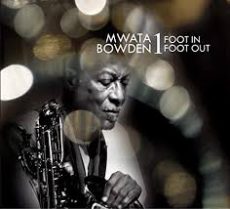
Mwata Bowden was born on October 11, 1947 in Memphis, Tennessee. He is part of a group known as 8 Bold Souls and frequently engages in collaborations with Tatsu Aoki. He helped establish the Miyumi Project which was a blend of music with different ethnic backgrounds, highlighting contributions from Japanese taiko drumming in the framework of jazz music.
As part of his regular repertoire, Bowden plays a range of saxophones and clarinets, including the E-flat clarinet, B-flat clarinet, bass clarinet, contra-alto clarinet, and contrabass clarinet, as well as flute, zamada, and didgeridoo.
As an instructor in improvisational jazz at the University of Chicago teaches young aspiring musicians in the Chicago area. Saxophonist, clarinetist and flutist Mwata Bowden, who is a part of the Association for the Advancement of Creative Musicians, continues to perform.
More Posts: bandleader,clarinet,didgeridoo,flute,history,instrumental,jazz,music,saxophone,zamada

Daily Dose Of Jazz…
Dieter Antritter was born in Pforzheim, Germany on October 6, 1929. After the end of World War II he started first to learn guitar, then later he switched to soprano saxophone. A move to Stuttgart, Germany gave him the opportunity to connect with the local jazz-scene.
On holiday in Paris, France in 1949, he unsuccessfully attempted to meet Sidney Bechet. However, Dieter eventually met Charles Delaunay, who opened him to the possibility of jamming with contemporary jazz greats living in Paris that time. Improving his playing, he built up a network with a few well-known jazz musicians.
Returning to Stuttgart in 1952 he founded the Latin Jazz Band. He used his concerts as a platform for guest musicians from his Paris connection to perform. From this band the Quartier Latin Jazz Band emerged, which existed until at least 2009. During those years this band accompanied numerous guest soloists such as Michel Attenoux, Peanuts Holland, Mezz Mezzrow, Benny Waters and Nelson “Cadillac” Williams.
In 1960, this led to several recordings for Deutscher Schallplattenclub, all recorded in Stuttgart venues. Antritter was one of the world’s longest-serving bandleaders, who led his band for 63 years, from 1952 until his death in 2015.
Bandleader, soprano and alto saxophonist Dieter Antritter died on August 5, 2015 in Königsbach-Stein, Germany.
More Posts: bandleader,history,instrumental,jazz,music,saxophone