

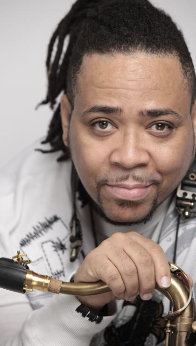
EDDIE BACCUS JR.
As a touring member of Pieces of a Dream for a decade and a half he had the opportunity to perform with and alongside a virtual who’s who in the traditional jazz, urban jazz and R&B worlds: Luther Vandross, Jeffrey Osborne, George Duke, War, Candy Dulfer, Rick Braun, Grover Washington Jr, Bobby Watson, Greg Abate, Lester Bowie, EWF(Earth, Wind and Fire), Regina Carter, Dianne Reeves, Vesta Williams, Norman Conners, India Arie, George Benson, Miki Howard, Jean Carne, David Sanborn, Brian McKnight, Will Downing, Phil Perry, Najee, Gerald Albright, Kirk Whalum, Marcus Belgrave, Benny Golson, Russell Ferrante, Bobby Lyle, Jeff Lorber, Ricky Lawson, Aaron Graves (Piano “Little Jimmy Scott”), Lenny Castro, Rachelle Ferrelle, Lil’ John Roberts, Phil Davis, Chris Coleman, Andre Gouche’, Giovanni Hildago, Eric Marienthal, James Carter, Curtis Fuller, Regina Belle, Miki Howard, Allyson Williams, Norman Connors, Atlantic Starr, Ronny Jordan, Rhonda Smith (Prince’s Bass Player), Gerald Veasley, Average White Band, Stevie Wonder, Peter White, Walter Beasley and more recently Four80East, Brian Simpson, Lindsey Webster, Cameo, Brother 2 Brother, Glenn Jones, Cabo Frio, Groove Frequencies, Christian De Mesones, Bene Music, Utopian Dreams and Joe Lovano.
Cover: $48.25
More Posts: adventure,bandleader,club,genius,instrumental,jazz,music,preserving,saxophone,travel
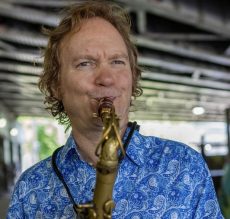
PAT MALLINGER QUARTET
Pat Mallinger was born and raised in St. Paul, Minnesota and began playing the saxophone at 11 years of age. He received his Jazz Studies degree from North Texas State University on a “One O’clock Lab Band” Scholarship.
He lived and performed in Los Angeles, Dallas, Boston, and Japan, before establishing Chicago as his home in 1990. He is a co-leader of Sabertooth, which has been the mainstay band at the Green Mill Lounge each Saturday night from 1992 to 2018.
Since 2018 until the pandemic shutdown, Pat continued to lead the Saturday night band at the Green Mill as Pat Mallinger’s Late Night Jazz Party featuring 2 different musicians from Chicago and around the country. Pat is often heard around Chicago performing with the Bobby Lewis Quintet, Model Citizens Big Band, and his own quartet to name a few.
Cover: $20.00
More Posts: adventure,bandleader,club,genius,instrumental,jazz,music,preserving,saxophone,travel

Daily Dose Of Jazz…
Christopher Burnett was born in Olathe, Kansas on November 2, 1955 and grew up in a military family that moved often before settling in the Kansas City area. He was exposed to music growing up as his mother introduced him to the piano and he was a member of the youth choir at his church. He took up saxophone and clarinet in his school band. After high school, he enlisted in the U.S. Army Music Program where he performed and pursued higher education, studying at the Armed Forces School of Music, Webster University, Missouri’s Columbia College, Berklee College of Music, and American University.
Spending 22 years in the military, Chris rose to the rank of 1st Sergeant in the position of Enlisted Bandleader, staff and faculty assignment at the Armed Forces School of Music, and the leading Chief Petty Officer of the NATO Band in Naples, Italy. He served as NATO Ceremonial Band Conductor, directed the jazz band, played the lead alto saxophone chair with the West Point Military Academy Band’s Jazz Knights, and a featured soloist with the Hof Symphony Orchestra in Germany.
After leaving the military Burnett continued to teach, holding the position of director of the jazz ensemble program and adjunct lecturer at Missouri University of Science and Technology, formerly University of Missouri-Rolla, where he worked as an Adjunct Lecturer for a decade.
He has performed with artists like Bobby Watson, Will Matthews, Marcus Hampton, Ahmed Alaadeen, and many more. Burnett is the Founder and Artistic Director of KC Area Youth Jazz and along with colleagues Erica Lindsay and Sumi Tonooka is a co-founder of the large independent recording label, Artists Recording Collective.
He has held residencies at the historic Drum Room and the Black Dolphin in Kansas City, and appeared as a guest artist and clinician for the Northwest Missouri State Jazz Festival. He released his debut album as a leader, Time Flies in 2013, Firebird in 2014, in 2021 The Standards, Vol. 1, and Live at The Drum Room in Kansas City in 2022.

More Posts: bandleader,educator,history,instrumental,jazz,music,saxophone
Daily Dose Of Jazz…
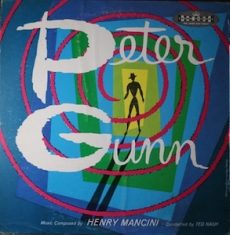
Theodore Malcolm Nash Sr. was born on October 31, 1922 in the Boston suburb of Somerville, Massachusetts. His goal was to become a classical flutist until he began playing saxophone in his early teens. He started playing professionally when he went on the road with a succession of dance bands. In 1944, he became tenor saxophonist for the Les Brown big band.
The late 1940s had him married and settling in Los Angeles, California where he became an active session musician in the Hollywood movie and television studios. In 1956, he recorded with Paul Weston’s orchestra the album Day by Day, with vocals by his former colleague and close friend, Doris Day.
He was the featured soloist on The Music from Peter Gunn soundtrack, performing the alto saxophone solo on the theme and on the second bridge of Dreamsville. Through the 1950s and 1960s, he worked as a sideman for June Christy, Nat King Cole, Bing Crosby, Billy Eckstine, Ella Fitzgerald, Frank Sinatra, and Nancy Wilson. During the 1970s, he worked with Judy Collins and Quincy Jones.
Retiring in the 1980s, saxophonist, flutist and clarinetist Ted Nash Sr. died on May 12, 2011.

More Posts: clarinet,flute,history,instrumental,jazz,music,saxophone
Requisites
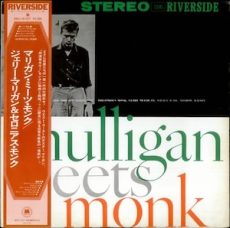
Mulligan Meets Monk ~ Thelonious Monk and Gerry Mulligan | By Eddie Carter
This morning’s record from the library, Mulligan Meets Monk (Riverside RLP 12-247/RLP 1106), is an excellent quartet date that brings together two giants, Gerry Mulligan and Thelonious Monk, for their only collaborative album. Their influence on bop and cool jazz is immeasurable. It hit the stores in 1957, and the personnel are Gerry Mulligan on baritone sax, Thelonious Monk on piano, Wilbur Ware on bass and Shadow Wilson on drums. My copy is the 1975 Victor Musical Industries Japanese Stereo reissue (Riverside SMJ-6107).
‘Round Midnight by Thelonious Monk, Cootie Williams, and Bennie Hanighen is one of The Great American Songbook’s most beautiful and recorded jazz tunes. It opens the first side with the quartet’s elegantly tender theme. Gerry delivers a mesmerizing first solo. Thelonious is next and gives a beautifully constructed reading ahead of the theme’s reprise and climax. Thelonious Monk’s Rhythm-a-ning picks up the pace with a lively introduction by Wilson segueing into the foursome’s spirited melody. Mulligan is up first with a statement of dynamic energy; then Monk speaks assertively in the second reading. Gerry returns with an excellent improvisation ahead of the theme’s restatement.
The group’s unique and refreshing approach to Sweet and Lovely by Gus Arnheim, Jules LeMare, and Harry Tobias starts with Gerry and Thelonious’ delicately graceful theme. Monk shows a considerable amount of respect in the opening solo. Mulligan’s exquisite softness in the closer precedes a gorgeous conclusion. Decidedly by Gerry Mulligan begins Side Two with a two-instrument dialogue between Gerry and Shadow, extending into the quartet’s brisk theme. Mulligan functions most effectively in the opening statement. Monk unwraps a pleasant surprise next. Wilbur takes a short, impressive walk, Gerry takes over briefly, and Shadow wraps things up before the close.
Straight, No Chaser is one of Thelonious Monk’s perfectly structured originals. The foursome’s bluesy theme sets up Gerry’s inspired opening statement. Wilbur’s bass goes to work next in a short reading, and then the pianist sums everything up nicely before the closing chorus and finale. I Mean You by Thelonious Monk and Coleman Hawkins begins with the pianist’s introduction, leading to the ensemble’s opening chorus. Monk steps into the spotlight first, cruising comfortably, and then Mulligan puts together a few good ideas in the second solo. Ware rounds out things with a breezy walk before the group reassembles to take the song out.
Mulligan Meets Monk was produced by Orrin Keepnews and recorded by Jack Higgins. The album’s sound quality is top-notch, with a superb soundstage that makes it feel like the quartet is performing right before you. Whether you’re a bop or cool jazz fan or new to the music of Gerry Mulligan and Thelonious Monk, Mulligan Meets Monk is a must-listen on your next record-shopping trip. It’s a delightful addition to both musicians’ discographies, showcasing their talents in a way that might make it a favorite in your library!
~ ‘Round Midnight, Straight, No Chaser, Sweet and Lovely – Source: JazzStandards.com
© 2024 by Edward Thomas Carter
More Posts: choice,classic,collectible,collector,history,instrumental,jazz,music,piano,saxophone