


Daily Dose Of Jazz…
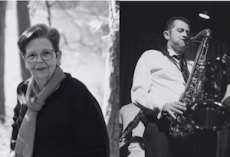
Diego Maroto was born in Mexico City, Mexico on May 9, 1968. He started taking private saxophone lessons in 1985 from teachers Larry Roussell and Alfonso Martínez. Two years later he studied art history at the Universidad Iberoamericana and in 1988 he joined the jazz worksop at the Escuela Superior de Música (INBA), where he learned improvisation, arrangement and composition by Francisco Tellez. His continuing education took him to private lessons from Danny Matusack and Darryl Winsman.
In 1991, Diego became an active member of the International Association of Jazz Educators (IAJE). During this period he participated in worksops and courses with David Liebman, Ernie Watts, Arturo Sandoval, Brian Bromberg, David Baker, Jerry Bergonzi, Ran Blake, Mike Campbell, Bill Dobbins, Andy Laverne, Don Sickler and Chris Vandala.
He has recorded and performed on projects with some of Mexico’s top jazz musicians like Eugenio Toussaint, Agustin Bernal, Enrique Neri, Fernando Toussaint, Cristobal López, Chilo Moran, Miguel Salas, Francisco Téllez, Iraida Noriega, and Big Band Arte 01, to name a few. In 2004, Maroto recorded his debut solo album Mundo Paralelo. He has performed at Dizzy’s in New York, and has shared stages with Antonio Sanchez, George Duke and Stanley Clarke. He has since formed the Diego Moaroto Asian Trio, and recorded a live album in Kuala Lumpur, Malaysia at the No Black Tie jazz club.
As an educator, Diego has given lessons, clinics and seminars in important schools and institutions in Mexico. Tenor saxophonist Diego Maroto continues to perform, record, tour and teach.

More Posts: bandleader,history,instrumental,jazz,music,saxophone
Daily Dose Of Jazz…
Matt Bauder was born and raised in Ann Arbor, Michigan on May 3, 1976 and attended the University of North Texas in Denton, Texas and earned a bachelor of fine arts in jazz and contemporary improvisation at the University of Michigan in Ann Arbor.
From 1999 to 2001 he lived in Chicago, Illinois where he was a part of the city’s modern jazz and improvised music scene. Matt attended graduate school at Wesleyan University in Middletown, Connecticut studying under Anthony Braxton and received a master’s degree in composition. He lived in Berlin, Germany for a year, then moved to New York City in 2005.
In 2003, Bauder released his debut album, Weary Already of the Way, on 482 Music. His sophomore album in 2007 was the first album from his long-form improvisational jazz trio Memorize the Sky, featuring Bauder on saxophone, clarinet, bass clarinet and percussion, Zach Wallace on bass, vibraphone and percussion, and Aaron Siegel on drums and percussion. The band released two more albums in 2008 and 2010.
His next trio, Hearing Things, had the saxophonist leading JP Schlegelmilch on organ and Vinnie Sperrazza on drums. Never limiting himself to one genre, Bauder’s next venture formed the doo-wop jazz group White Blue Yellow & Clouds, covering songs by the Beach Boys, The Flaminogos and The Mystics.
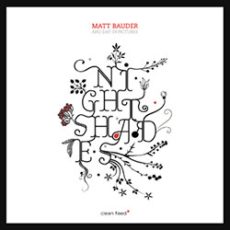
His Brooklyn-based jazz quintet Day in Pictures released two albums on Clean Feed Records, in which heplayed tenor saxophone and composed the songs on both albums. Matt has since performed as part of the Arcade Fire’s touring lineup, played saxophone and clarinet on Will Butler’s debut album Policy, and has played in the Broadway production of Fela!
Ever busy, saxophonist Matt Bauder continues to perform, compose and collaborate on numerous projects across genres.
More Posts: bandleader,clarinet,drums,guitar,history,instrumental,jazz,music,saxophone,vocal
Daily Dose Of Jazz…
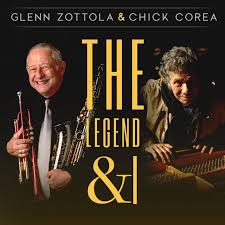
Glenn Paul Zottola was born in Port Chester, New York on April 28, 1947. He started playing jazz professionally in 1960.
Glenn is known for his work with Lionel Hampton, Benny Goodman, and Bob Wilber, and has accompanied a broad range of vocalists, including Mel Tormé, Frank Sinatra, Peggy Lee, Ella Fitzgerald, and Joe Williams.
He has recorded over 50 albums with Butch Miles, Bob Wilber, Mousey Alexander, Steve Allen, Phil Bodner, George Kelly, Peggy Lee, George Masso, George Masso, and Maxine Sullivan, among numerous others.
In 1988, was a featured soloist at the 50th anniversary of Benny Goodman’s Carnegie Hall Concert. In 1995, Zottola was bandleader on the Suzanne Somers daytime TV talk show at Universal Studios.
Trumpeter and saxophonist Glenn Zottola, who has recorded twenty-two albums as a leader, continues to perform and record.
More Posts: bandleader,history,instrumental,jazz,music,saxophone,trumpet
Requisites
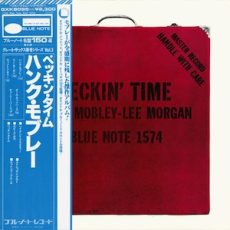
Peckin’ Time ~ Hank Mobley and Lee Morgan | By Eddie Carter
This morning’s record from the library is a perfect description of the term “two heads are better than one.” During the fifties and sixties, tenor saxophonist Hank Mobley and trumpeter Lee Morgan collaborated on several jazz albums. Peckin’ Time (Blue Note BLP 1574/BST 81574) is a 1959 release and one of their earliest dates together. Hank composed four of the five tunes on this album. They are joined by a fabulous rhythm section: Wynton Kelly on piano, Paul Chambers on bass, and Charlie Persip on drums. My copy is the 1978 King Record Company Japanese Mono reissue (Blue Note BLP 1574 – GXK 8095).
Side One takes off with the quintet’s brisk melody to High and Flighty. Hank starts right out of the gate quickly. Lee gets into a robust reading next, and then Wynton gives an enthusiastic statement. Charlie shares the closing solo with both horns in a vigorous conversation until the ensemble’s lively climax. The album’s only standard, Speak Low by Kurt Weill and Ogden Nash comes to life with the rhythm section’s Latin introduction to Lee beginning the theme and Hank completing the melody. Mobley opens with a warm tone in a delicate statement. Wynton enters next with a fine flow of ideas, then Lee eases into the finale before the theme’s restatement and finish.
Peckin’ Time is a catchy original beginning in a medium groove for the quintet’s melody. Wynton breaks the ice with a joyous and carefree solo. Hank approaches the following reading with confidence; then, Lee cooks in the third statement. Paul takes a short walk toward the front line’s final exchange into the closing chorus. Stretchin’ Out raises the temperature to begin Side Two with the ensemble’s fleet theme. Morgan takes flight first with a festive solo. Kelly fuels the second statement with energy, and then Mobley heats things up further before exchanging a few riffs with Persip. The drummer has a short workout until Morgan and Mobley add a few last thoughts to the ending.
Git Go Blues begins with the trio’s introduction leading to the quintet’s easygoing theme, giving way to Hank’s cheery opening statement. Lee continues the good feelings in the following solo. Wynton follows them both with a relaxing performance. Paul adds a concise comment next; then Hank ties it all together until the quintet takes it out after the theme reprise. Alfred Lion produced Peckin’ Time, and Rudy Van Gelder recorded the session. The album’s sound quality is excellent with a superb soundstage in the highs, midrange, and low end that’s sure to stand out on any good mid-fi or high-end audio system.
Hank Mobley and Lee Morgan always worked well together, and they consistently complimented each other’s playing. Lee appeared on seven additional Blue Note LPs with Mobley. Hank appeared on three records with Morgan. If you’re a fan of either musician and in the mood for excellent hard-bop jazz, I highly recommend and offer for your consideration, Peckin’ Time by Hank Mobley and Lee Morgan, the next time you’re out record shopping. It’s an enjoyable and entertaining album that’s sure to please any jazz lover and demonstrates why “two heads are better than one” fits this duo perfectly!
A Caddy For Daddy (Blue Note BLP 4230/BST 84230), A Slice of The Top (Blue Note LT-995), Charisma (Blue Note BST 84312), Cornbread (Blue Note BLP 4222/BST 84222), Dippin’ (Blue Note BLP 4209/BST 84209), Hank Mobley Sextet (Blue Note BLP 1540/BST 81540), No Room For Squares (Blue Note BLP 4149/BST 84149), Straight No Filter (Blue Note BST 84435), The Rajah (Blue Note BST 84426), Third Season (Blue Note LT-1081) – Source: Discogs.com
~ Speak Low – Source: JazzStandards.com © 2024 by Edward Thomas Carter
More Posts: choice,classic,collectible,collector,history,instrumental,jazz,music,saxophone,trumpet