

Daily Dose Of Jazz…
Eugene Porter was born in Pocahontas, Mississippi on June 7, 1910 and began on cornet, but when his instrument was stolen he picked up saxophone and clarinet, studying the latter under Omer Simeon. His family moved to Chicago while still in high school, but left school early to start a career in music
Moving to New Orleans, Louisiana in the Thirties he worked in and around town as well as on riverboats, with Papa Celestin, Joe Robichaux, and Sidney Desvigne. He was with the Jeter-Pillars Orchestra from 1935 to 1937, then played with Don Redman briefly before returning to Jeter-Pillars until 1942. Following this Gene worked with Jimmie Lunceford and then with Benny Carter until 1944, working as assistant bandleader under him. He appeared in several films, including with Fats Waller.
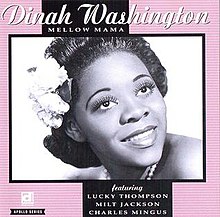
Porterer was in the Army in 1944-45 as a member of an Army band, then played with Carter again and recorded with Dinah Washington during this period. For the next two years he performed with Charles Mingus and Lloyd Glenn.
After moving to San Diego, California in 1948 he played with Walter Fuller until 1960. Gene led his own ensemble at the Bronze Room in La Mesa, California beginning in 1967.
Saxophonist and clarinetist Gene Porter, who was named a member of the St. Louis Jazz Hall of Fame in the 1980s, died in San Diego County, California, on February 24, 1993.

More Posts: bandleader,clarinet,history,instrumental,jazz,music,saxophone

Daily Dose Of Jazz…
Alan Branscombe was born on June 4, 1936 in Wallasey, Cheshire, England into a family of musicians. His father and grandfather were professional musicians and began on alto sax at age six. As a child he played drums with Victor Feldman in a talent show as a child.
During his time in the Army he played with Jeff Clyne in 1954–56. He toured and recorded with Vic Ash in 1958, recorded with Tony Kinsey the following year, and toured Japan with Stanley Black at the turn of the new decade. Alan worked with John Dankworth as pianist and vibraphonist intermittently between 1960 and 1972, including in the 1963 film The Servant.
Joining Harry South’s band at Ronnie Scott’s club in the mid-1960s, Branscombe went on to play as a sideman with Tubby Hayes, Stan Tracey, and Paul Gonsalves through the decade. He played with Ben Webster in 1965 and again in 1970, and in the Seventies he was with Albert Nicholas, toured in Europe with Stan Getz, and played with the Lamb-Premru group around 1971.
As a leader Branscombe recorded with Tony Kinsey and Tony Coe as sidemen on the album The Day I Met the Blues in 1977. As a session musician, he played tenor saxophone on The Beatles song Got To Get You Into My Life.
Pianist, vibraphonist, and alto saxophonist Alan Branscombe died on October 27, 1986.
More Posts: bandleader,history,instrumental,jazz,music,piano,saxophone,vibraphone
Daily Dose Of Jazz…
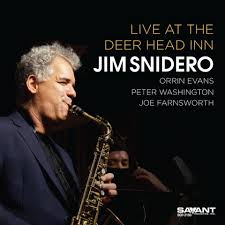
James J. Snidero was born in Redwood City, California on May 29, 1958 and grew up in the Washington, D.C. suburb of Camp Springs, Maryland. He then attended the University of North Texas, performed in the One O’clock Lab band and then moved to New York City in 1981. Once there he recorded and toured with Jack McDuff from 1981 to 1982, then joined Toshiko Akiyoshi’s Jazz Orchestra in 1983 after she moved to New York.
Snidero was a working member of Frank Sinatra’s band from 1991 to 1995 and Eddie Palmieri’s band beginning 1994. He performed with the Frank Wess Sextet, the Mingus Big Band, and Walt Weiskopf. He has worked as a sideman for David Hazeltine, David Murray, Mike LeDonne, Joe Magnarelli, Maria Schneider, Mel Lewis, Jim Rotondi, Brian Lynch, Conrad Herwig, and Tom Varner.
He recorded and performed with his own quintet and over time had various musicians including trumpeters Brian Lynch, Tom Harrell and Tim Hagans; pianists Benny Green and Mulgrew Miller; double bassists Peter Washington and Dennis Irwin; and the drummers Billy Hart and Louis Hayes, Gene Jackson, and Adam Nussbaum.
As an educator Jim has held professor positions at the New School University, Indiana University and Princeton University. He has written five series of jazz etude books and produced courses in jazz improvisation and performance for The Jazz Conception Company.
Saxophonist Jim Snidero Snidero, who has recorded 27 albums as a leader and thirty-three as a sideman, continues to perform throughout the United States, Europe, and Japan.

More Posts: bandleader,educator,history,instrumental,jazz,music,saxophone
Daily Dose Of Jazz…
John Barnes was born in Manchester, England on May 15, 1932. He started out his career as a flügelhorn player in the early 1950s, and adapted his playing skills to the clarinet, an instrument he favored. He played traditional jazz with Alan Elsdon, The Mike Daniels’ Delta Jazzmen and also The Zenith Six.
In May 1964, after a bad car crash Barnes was replaced by Al Gay, until his full rehabilitation as a member of Alex Welsh band. He continued and extended his career musically from 1967 with the Scottish dixieland jazz trumpet and cornet player Alex Welsh and his Jazz Band, which lasted ten years until 1977.
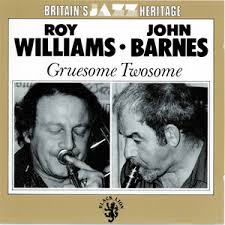
He began playing alto, baritone, soprano saxophone and the flute. During this period he rose to fame in the jazz arena appearing at the Newport Jazz Festival aged 37 in 1969. His skills on baritone saxophone earned him a huge jazz fan base, some suggesting he was the best they had seen in Europe. After leaving Welsh, Barnes worked as co-leader, with trombonist Roy Williams of the Midnite Follies Orchestra, which included many American jazz artists.
John worked with Janet Jackson, Leo Sayer, Humphrey Lyttelton, Gerry Mulligan, Spike Robinson, Bobby Wellins and Keith Nichols. He considered Coleman Hawkins and Johnny Hodges to be his two main saxophone influences throughout his career.
In 2011, while on holiday in Greece, Barnes suffered a stroke. As a result of his stroke, a benefit concert was held for him the following year at the 100 Club in Oxford Street, London.
Saxophonist, clarinetist and flutist John Barnes died on April 18, 2022 at the age of 89.
More Posts: bandleader,clarinet,flute,history,instrumental,jazz,music,saxophone
Requisites
My Favorite Things ~ John Coltrane
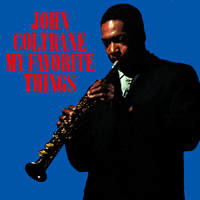
My Favorite Things was the seventh studio album by jazz musician John Coltrane, recorded on October 21, 24, 26, 1960. Released in 1961 on Atlantic Records, it was the first album to feature him playing soprano saxophone, a gift from Miles Davis while they were on tour in Europe. An edited version of the title track became a hit single that gained popularity in 1961 via radio airplay, thus helping the record become a major commercial success. In 1998, the album received the Grammy Hall of Fame award. Fifty-eight years after its release, in 2018 the album attained gold record status, having sold 500,000 copies.
The title track is a modal rendition of the Rodgers and Hammerstein song My Favorite Things from The Sound of Music. The melody is heard numerous times throughout, but instead of playing solos over the written chord changes, both Tyner and Coltrane take extended solos over vamps of the two tonic chords, E minor and E major played in waltz time. This use of modal jazz is evident throughout the album.
The album consists of four songs with Cole Porter’s Ev’rytime We Say Goodbye following the title track on Side 1, then two from the brothers Gershwin, George and Ira, with Summertime and But Not For Me on Side 2. The length of the album is a mere 40:25 but is well worth the listen and a valued addition to any music library that one desires to build.
In the documentary The World According to John Coltrane, narrator Ed Wheeler remarks on the impact that this song’s popularity had on Coltrane’s career: The recording was a hit and became Coltrane’s most requested tune, and a bridge to his broad public acceptance.
The band features John Coltrane playing soprano saxophone on Side 1 and tenor on Side 2, McCoy Tyner on piano, Steve Davis on the double bass, and rounding out the quartet is drummer Elvin Jones.
The production team was Nesuhi Ertegün ~ producer, Tom Dowd, Phil Iehle ~ engineers, Lee Friedlander ~ photography, Loring Eutemey ~ cover design and Bill Coss wrote the liner notes.
More Posts: choice,classic,collectible,collector,history,instrumental,jazz,music,saxophone