


GARY HARRIS
An Atlanta native, Gary has been playing saxophone for over 20 years. In that time he has opened for artist like Gerald Albright and Will Downing,performed with legends William Bell and Jean Carne and can be heard and seen on projects with Outkast and Ann Nesby.
He plays smooth jazz with a funky edge and nice easy to remember melodies. Although Gary has been compared to artist like Gerald Albright and Wilton Felder,he has his own style that is easy to recognize and equally loved.
More Posts: adventure,club,genius,jazz,music,preserving,saxophone,travel
Daily Dose Of Jazz…
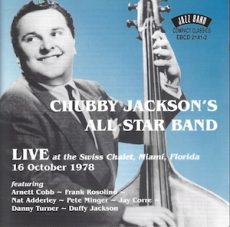
Jay Corre was born on Nov 30, 1924 and grew up in Atlantic City, New Jersey. His interest in music began at five years old, when he started to experiment with various instruments, including the harmonica, violin and clarinet. He picked up the saxophone at age 14 and showed a natural ability for this instrument.
By the time he was sixteen he was playing dates at various clubs that made the shore area a virtual hot bed of fine jazz entertainment. Completing his music studies at the Atlantic City High School he played with the Alex Bartha Orchestra on the Steel Pier. After a stint in the US Navy Band, his discharge favored the opportunity to join the Raymond Scott Orchestra, featuring Dorothy Collins.
He joined the Buddy Rich Big Band before performing with Harry James, Benny Goodman, Dizzy Gillespie, Ella Fitzgerald, The Duke Ellington Band under Mercer Ellington, Ella Fitzgerald, Oscar Peterson, Frank Sinatra, Mel Torme, Tony Bennett, Sammy Davis Jr. and many more.
Tenor saxophonist, composer, arranger and jazz educator Jay Corre, whose influences were Coleman Hawkins, Lester Young and Charlie Parker, transitioned on Oct 26, 2014 in Stuart, Florida.

More Posts: arranger,composer,educator,history,instrumental,jazz,music,saxophone
Requisites
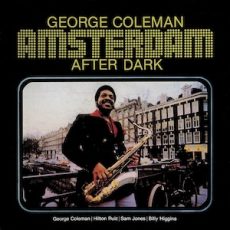
Amsterdam After Dark ~ George Coleman | By Eddie Carter
George Coleman enters this morning’s spotlight with an excellent 1979 quartet album, Amsterdam After Dark (Timeless SJP 129). I first heard him playing alto on Houseparty and The Sermon. I later discovered he also played tenor and enjoyed his work on Eastern Rebellion, ‘Four’ and More, Maiden Voyage, Miles Davis In Europe, My Funny Valentine and Seven Steps To Heaven. This morning’s album from the library was his debut as a leader, and he composed four of the tunes. He’s joined on this date by The Hilton Ruiz Trio. Hilton Ruiz on piano and Eastern Rebellion colleagues Sam Jones on bass and Billy Higgins on drums. My copy is the original Netherlands Stereo release.
Side One opens with the trio’s introduction to the title tune, Amsterdam After Dark. George takes over and starts the fire burning on the song’s infectious melody and opening solo. Hilton sinks his teeth into the second reading, and then Sam speaks confidently, preceding the tenor’s joyful vitality in the closing chorus. Hilton Ruiz’s New Arrival picks up the quartet’s pace in an engaging opening chorus. Coleman takes flight first and builds a perfectly crafted interpretation effectively. Ruiz comes on next and is shown to great advantage in the closing statement ahead of the theme’s reprise and fadeout.
Lo-Joe is a feisty original that opens with an airy statement of the theme. George gets things going with a passionate first solo, followed by Hilton, who suggests a happy mood in the second statement. Billy’s brushwork in the closing statement swings very nicely into the foursome’s ending theme and exit. Autumn In New York by Vernon Duke is the album’s only standard. The quartet dresses up this old favorite with an intimately tender introduction and melody. Coleman’s opening statement is reflective and quite beautiful. Ruiz takes a moment for an elegantly exquisite comment leading to the leader’s delicately pretty ending.
Apache Dance is an impressive tune from the opening notes of the two-instrument conversation with tenor sax and drums, leading to a quick run of the ensemble’s theme. George unravels a lot of twists and turns in the first solo. Hilton comes right behind him, keeping his foot on the gas. Billy delivers the song’s final solo until the group reappears to take it out. Blondie’s Waltz begins with the quartet establishing an optimistic melody. Coleman starts things off with a beautifully phrased statement. Ruiz jumps in next to move things along in a lively interpretation. Higgins adds to the fun with a short spot until Coleman’s reappearance for the finale.
Wim Wigt produced Amsterdam After Dark. Bob De Caro and Jim McCurdy were the recording engineers. The album has an exceptional soundstage that comes through your speakers convincingly. If you close your eyes, it’s like the musicians are playing right in front of you. George Coleman is on fire throughout each selection, and the trio compliments him efficiently. At 88 years old, he’s showing no signs of slowing down and is still performing for jazz fans. I’ve caught a few of his performances at Smalls via their nightly streams. If you only have albums with George Coleman as a sideman, I invite you to take a trip to visit Amsterdam After Dark. It’s worth every penny for a spot in your library and is an excellent trip you can take without leaving the comfort of your chair!
~ Eastern Rebellion (Timeless SJP 101), ‘Four’ and More (Columbia CL 2453/CS 9253), Houseparty (Blue Note BLP 4002/BST 84002), Maiden Voyage (Blue Note BLP 4195/BST 84195), Miles Davis In Europe (Columbia CL 2183/CS 8983), My Funny Valentine (Columbia CL 2306/CS 9106), Seven Steps To Heaven (Columbia CL 2051/CS 8851), The Sermon (Blue Note BLP 4011/BST 84011) – Source: Discogs.com ~ Autumn In New York – Source: JazzStandards.com © 2023 by Edward Thomas Carter
More Posts: choice,classic,collectible,collector,history,instrumental,jazz,music,saxophone
Daily Dose Of Jazz…
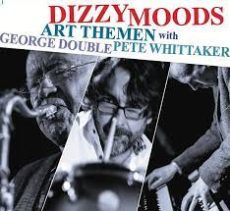
Arthur Edward George Themen was born November 26, 1939 in Manchester, England, where he was involved with the traditional jazz scene in the late 1950s as a self-taught musician, having started playing clarinet as a schoolboy at Manchester Grammar School.
In 1958 he began his medical studies at the University of Cambridge. While there he started playing jazz with the Cambridge University Jazz Band bandmates including Lionel Grigson, Dave Gelly, Jonathan Lynn, and John Hart. Under pianist Grigson’s leadership they achieved near professional standard with a swinging hard-bop style that swept the board in the fiercely contested Inter-University Jazz Band Competitions.
By 1964 he was an orthopaedic consultant playing blues with Jack Bruce and Alexis Korner and was a member of Alexis Korner’s Blues Incorporated. In 1965, Themen played with the Peter Stuyvesant Jazz Orchestra in Zürich, Switzerland going on to play with Michael Garrick, Ian Carr, and Graham Collier’s Music.
The Seventies saw him playing with Stan Tracey, touring with him all over the world as well as around the UK. Art has played and toured with visiting US musicians Charlie Rouse, Nat Adderley, Red Rodney, George Coleman, and Al Haig.
In 1995 he formed a quartet with pianist John Critchinson. Themen’s style originally owed much to the influence of Dexter Gordon and Sonny Rollins, but later influences included such disparate saxophonists as Coleman Hawkins, Evan Parker and John Coltrane. He was inspired to play saxophone after he attended a gig by the Dankworth Seven, at the local Palais, at the age of 16, with a female cousin and his future was set.
Following his retirement as a consultant orthopaedic surgery consultant, saxophonist Art Themen has focused on his jazz career.
More Posts: bandleader,history,instrumental,jazz,music,saxophone

Daily Dose Of Jazz…
Hubert Fol was born in Paris, France on November 11, 1925 and learned piano from an early age through lessons from his mother. He also took lessons in violin and clarinet in his teens and early twenties.
As a saxophonist, Hubert worked with Claude Abadie and Boris Vian and co-founded the Be Bop Minstrels with his brother in 1947. In 1949~1950, he toured Europe and recorded with Coleman Hawkins, then worked with Kenny Clarke and Django Reinhardt before embarking on another European tour with Dizzy Gillespie and Rex Stewart.
In the 1960s his health deteriorated, leading to his playing far less frequently.Saxophonist and bandleader Hubert Fol transitioned on January 19, 1995 in Paris.
More Posts: bandleader,history,instrumental,jazz,music,saxophone