

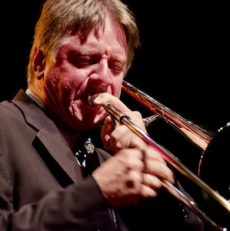
CONRAD HERWIG & THE LATIN SIDE ALL~STARS
The Django is proud to welcome acclaimed trombonist Conrad Herwig and his Latin Side All-Stars to our stage for a weekly Tuesday residency. In this special engagement, He brings an ace septet to the Django stage, playing Latin versions of Miles, Mingus, Hancock, Coltrane and more!
Herwig has recorded 26 albums as a leader, receiving four GRAMMY®-nominations for his own projects. His latest CD release is The Latin Side of Mingus (Savant; 2022) . This is a follow-up project to The “Latin Side of …” tributes to Horace Silver (Savant; 2020), Joe Henderson (Half Note; 2014), Herbie Hancock (Half Note; 2010) Wayne Shorter (Half Note; 2008), Miles Davis (Half Note; 2004), and John Coltrane (Astor Place; 1996). These exciting and individualized projects feature an array of special guests including Randy Brecker, Ruben Blades, Michel Camilo, Joe Lovano, Eddie Palmieri, Paquito D’Rivera, Dave Valentin and many of the hottest players on the international scene.
Equally facile in a non-Latin arena, Conrad has been voted #1 Jazz Trombonist in DownBeat Magazine “Jazz Critic’s Poll” and nominated for “Trombonist of the Year” by the Jazz Journalists Association on numerous occasions. In constant demand as a sideman, heg has performed with Joe Henderson, Horace Silver, McCoy Tyner, and Joe Lovano (featured as a soloist on Lovano’s GRAMMY® Award winning 52nd St. Themes CD). In the Afro-Caribbean genre he has toured with legends such as Eddie Palmieri, Tito Puente, Paquito D’Rivera, and Michel Camilo. He is a longtime member of the the Mingus Big Band (where he has served as musical director and arranger including on the 2011 GRAMMY- winning “Live at the Jazz Standard”). In other big band settings Herwig has also performed and recorded with Clark Terry, Buddy Rich, Frank Sinatra, Miles Davis & Quincy Jones, and the Gil Evans Orchestra. All told Herwig has appeared on more than 200+ albums in what is now a 40 year career.
In 2006 Herwig received the Paul Acket Award (formerly the “Bird Award”). The prize, presented at the North Sea Jazz Festival, is intended for an artist who, according to the international jury, deserves the attention of a broader audience. Herwig is also a recipient of performance and teaching grants from the National Endowment for the Arts. Conrad was elected to the Board of Advisors of the International Trombone Association and has taught at Mason Gross School of the Arts in the prestigious jazz program at Rutgers University in New Brunswick, N.J. where he currently serves as Artistic Director and Chair of Jazz Studies.
Showtimes: 7:30p,m ~9:00pm | 9:30pm ~ 11:00pm
Cover + 2 Drink Minimum
More Posts: adventure,album,club,festival,genius,jazz,museum,music,preserving,restaurant,travel,trombone
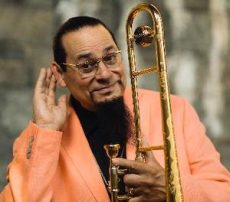
STEVE TURRE
Jazz innovator Steve Turre, composer, arranger, trombonist, and conch shell player, has consistently won both the readers’ and critics’ polls in JazzTimes, Down Beat, and Jazziz for Best Trombone and for Best Miscellaneous Instrumentalist (shells). He grew up in the San Francisco Bay area where he absorbed daily doses of mariachi, blues and jazz. While attending Sacramento State University, he joined the Escovedo Brothers salsa band, which began his career-long involvement with that music genre. In 1972 his career gained momentum when Ray Charles hired him to go on tour. A year later, Mr. Turre’s mentor, Woody Shaw, brought him into Art Blakey’s Jazz Messengers. After his tenure with Blakey, Steve went on to work with a diverse list of jazz, Latin, and pop musicians, including: Dizzy Gillespie, McCoy Tyner, J.J. Johnson, Herbie Hancock, Lester Bowie, Tito Puente, Mongo Santamaria, Van Morrison, Pharoah Sanders, Horace Silver, Max Roach, and Rahsaan Roland Kirk. The latter introduced hum to the seashell as an instrument. Since his tour through Mexico City with Woody Shaw, he has incorporated seashells into his diverse musical style. In addition he has been performing as a member of the Saturday Night Live Band since 1984,
Showtimes ~ 7:00pm | 9:00pm
More Posts: adventure,album,club,festival,genius,jazz,museum,music,preserving,restaurant,shells,travel,trombone
Daily Dose Of Jazz…
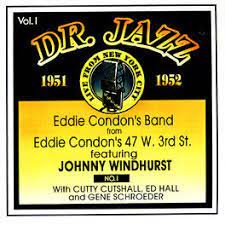
Cutty Cutshall was born Robert Dewees Cutshall on December 29, 1911 in Huntingdon County, Pennsylvania. Early in his career he played in Pittsburgh, Pennsylvania, making his first major tour in 1934 with Charley Dornberger. He joined Jan Savitt’s orchestra in 1938, then played with Benny Goodman in the early 1940s.
Later in the decade he worked frequently with Billy Butterfield and did some freelance work in New York City. He started working with Eddie Condon in 1949, an association which lasted over a decade. Cutshall’s credits include work with Peanuts Hucko, Bob Crosby, Ella Fitzgerald, and Louis Armstrong.
While touring with Condon in Toronto, trombonist Cutty Cutshall suffered a heart attack in his hotel room and transitioned on August 16, 1968.

More Posts: history,instrumental,jazz,music,trombone
Daily Dose Of Jazz…
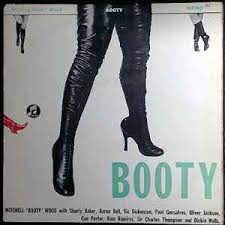
Booty Wood was born Mitchell W. Wood on December 27, 1919 in Dayton, Ohio. He began playing professionally on trombone in the late 1930s. The following decade he worked with Tiny Bradshaw and Lionel Hampton before joining the Navy during World War II. While there he played in a band with Clark Terry, Willie Smith, and Gerald Wilson.
After his service ended he returned to play with Hampton, then worked with Arnett Cobb, Erskine Hawkins and Count Basie. After spending a few years outside music, Booty returned to play with Duke Ellington in 1959-60 and again in 1963. He returned once more early in the 1970s.
Wood once again played with the Count Basie Orchestra from 1979 into the middle of the following decade. Trombonist Booty Wood transitioned on June 10, 1987 in Dayton.
More Posts: history,instrumental,jazz,music,trombone

Daily Dose Of Jazz…
Merritt Brunies was born on December 25, 1895 into a well-known musical family in New Orleans, Louisiana. Among its members were trombonist George Brunies and cornetist Albert Brunies.
Merritt led his own band, The Original New Orleans Jazz Band, from 1916 to 1918. Though this ensemble never recorded, it existed before both Jimmy Durante’s New Orleans Jazz Band and the Original Dixieland Jazz Band. Following this, he formed another group which played at Friar’s Inn in Chicago, Illinois directly after the stint by the New Orleans Rhythm Kings.
He played regularly in New Orleans in the 1930s, however, by 1946 he moved to Mississippi. There he played with his brothers in a Dixieland jazz band until his retirement. Trombonist and cornetist Merritt Brunies transitioned on February 5, 1973 in Biloxi, Mississippi.
More Posts: bandleader,cornet,history,instrumental,jazz,music,trombone