

Daily Dose Of Jazz…
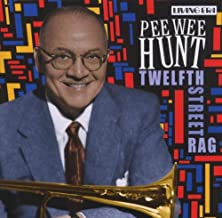
Pee Wee Hunt was born Walter Gerhardt Hunt on May 10, 1907 in Mount Healthy, Ohio. He developed a musical interest at an early age, as his mother played the banjo and his father played violin. As a teenager he was a banjoist with a local band while he was attending college at Ohio State University where he majored in electrical engineering. During his college years he switched from banjo to trombone, and graduated from the Cincinnati Conservatory of Music. He joined Jean Goldkette’s Orchestra in 1928.
Hunt was the co-founder and featured trombonist with the Casa Loma Orchestra, but he left the group in 1943 to work as a Hollywood radio disc jockey before joining the Merchant Marine near the end of World War II. Returning to the West Coast music scene in 1946, his Twelfth Street Rag was a three million-selling, number one hit in 1948. His second million-selling disc was Oh! in 1953. He was satirized as Pee Wee Runt and his All-Flea Dixieland Band in Tex Avery’s animated MGM cartoon Dixieland Droopy in 1954.
Trombonist, vocalist and bandleader Pee Wee Hunt passed away on June 22, 1979 at age 72 after a long illness in Plymouth, Massachusetts

More Posts: bandleader,history,instrumental,jazz,music,trombone,vocal
Daily Dose Of Jazz…
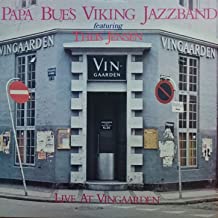
Arne Bue Jensen, known as Papa Bue, was born May 8, 1930 in Copenhagen, Denmark and at an early age became fascinated with jazz, prompted by a pile of records from his brother. The collection included Harry James, Artie Shaw, Tommy Dorsey, Glenn Miller, Bert Ambrose. Bunk Johnson and George Lewis made a strong impression.
After World War II, Jensen became a sailor, visiting ports around the world. It was around this time that he started to play jazz, buying a slide trombone with money he borrowed. Learning the basics from a musician from the Royal Danish Orchestra, he was mostly self-taught, he went on to play in clubs around Copenhagen with other young musicians and bands, including the Royal Jazzman, Henrik Johansen’s Jazz Band, and the Saint Peter Street Stompers, participating as a sideman in several recordings.
In the 1950s, Papa Bue worked with the Bonanza Jazz Band, Chris Barber, Adrian Bentzon, and Henrik Johansen. During the decade In the mid 1950s, he was part of the entertainment district in Nyhavn. With six musicians he founded the New Orleans Jazz Band in 1956, after a jam session at Cap Horn. Since Jensen was the eldest, he became the bandleader and as the only band member who was a father, was given the nickname Papa Bue.
By late 1957 he renamed the ensemble the Viking Jazz Band. The name came from American journalist and vocalist Shel Silverstein, who attended one of their concerts at Cap Horn during a stay in Copenhagen. He subsequently wrote an article about them, calling them the Danish Vikings, and adopting the new name, they released their first album as the Viking Jazz Band in 1958. In 1960 their Schlafe Mein Prinzchen sold over one million copies, and was awarded a gold disc.
At a time when many jazz musicians worked in the Bebop idiom, Bue’s style remained based on the Dixieland tradition but also with influences from early swing music. He is considered one of the most significant proponents of his genre.
The group remained active into the 1990s, and recorded with musicians such as George Lewis, Champion Jack Dupree, Art Hodes, Wild Bill Davison, Wingy Manone, Edmond Hall, Albert Nicholas. Earl Hines, Stuff Smith, and Ben Webster. In 1969, Papa Bue’s Viking Jazz Band was the only non-American band to participate in the New Orleans Jazz Festival.
While in New Orleans, he was honored with the Golden Keys to the City. In 1989 he received the Ben Webster’s Prize of Honour. Trombonist and bandleader Papa Bue, chiefly associated with the Dixieland jazz revival style, passed away on November 2, 2011 at the age of 81.
More Posts: bandleader,history,instrumental,jazz,music,trombone
Daily Dose Of Jazz…
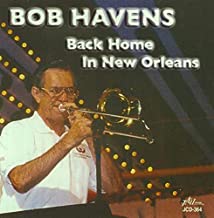
Robert Havens was born May 3, 1930 to a musical family in Quincy, Illinois and began studying violin and trombone at age seven and played both instruments throughout his school years. Landing his first professional job with a local dance band at age 12, by 16 his talent as a trombonist was recognized earning him a scholarship from the Interlochen Music Camp in Michigan and he held the first trombone chair in the school’s 250 piece concert band. He later held the first trombone chair in the Quincy Symphony while also playing in many popular dance groups in Illinois.
Leaving Quincy in 1955 after serving in the Illinois National Guard as a bandsman during the Korean War, Bob toured with the Ralph Flanagan Orchestra. In 1956, he joined George Girard’s Dixieland Band at the Famous Door in New Orleans, Louisiana where he met his idol, Jack Teagarden.
In 1957, Bob joined Al Hirt at Dan’s Pier 600 on Bourbon Street when Hirt formed his very first band. The front line consisted of Hirt, Havens and Pete Fountain. During his time in New Orleans, he recorded albums for Good Times Jazz and Vic labels with the Girard band, and on Verve and Audio Fidelity with Hirt. He also recorded about a dozen albums for the Southland label with many other New Orleans musicians.
Bob stayed with this group until 1960 when he was persuaded to move to the West Coast and join the Lawrence Welk Orchestra as a featured soloist on their weekly TV series. His tenure with this show lasted for 23 years until the show ended in 1982.
Following Welk, he continued as a freelance professional, working often with the Bob Crosby Bob Cats and the Benny Goodman Orchestra, then led by clarinetist Peanuts Hucko. From 1985 to 1995, Havens played with the Great Pacific Jazz Band along with Bob Ringwald (lead vocals/piano), Don Nelson (saxophone), and Zeke Zarchy (trumpet).
In 2005, he performed with the North Carolina Pops Orchestra at Campbell University with fellow Welk star Ava Barber in a benefit concert raising money for victims of Hurricane Katrina. Trombonist Bob Havens returned home to Quincy, and continued to record and appear at jazz festivals and concerts throughout the world.
More Posts: bandleader,history,instrumental,jazz,music,trombone
Three Wishes
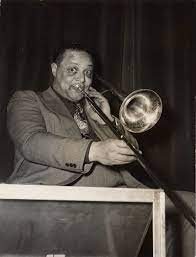
When asked Quentin “Butter” Jackson told the Baroness his three wishes were:
- “Peace, happiness, and contentment.”
- “To play some kind of music as long as I live.”
- “That all people of the world would learn to live peaceably among one another, so that there would be nothing but love on the planet.”
*Excerpt from Three Wishes: An Intimate Look at Jazz Greats ~ Compiled and Photographed by Pannonica de Koenigswarter

More Posts: baroness,history,instrumental,jazz,music,pannonica,three,trombone,wishes
Daily Dose Of Jazz…
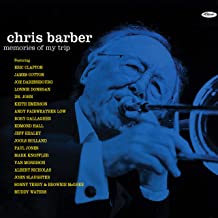
Chris Barber was born Donald Christopher Barber in Welwyn Garden City, Hertfordshire, England on April 17, 1930. He started learning the violin when he was seven years old, got his education at Hanley Castle Grammar School, Malvern, Worcestershire, to the age of 15, where he started to develop an interest in jazz. After the end of World War II, he attended St Paul’s School in London, and began visiting clubs to hear jazz groups. He then spent three years at the Guildhall School of Music, and started playing music with friends.
The 1950s saw Barber forming the New Orleans Jazz Band, with him on double bass, playing both trad jazz and blues tunes. By 1952 he became a professional musician. With clarinetist Monty Sunshine they formed a band in later that year, and began playing in London clubs, accepting an offer to play in Denmark in early 1953, making its debut in Copenhagen. The bands played Dixieland jazz, and later ragtime, swing, blues and R&B and the band became The Chris Barber Band.
In the late 1950s and early 1960s, Barber was mainly responsible for arranging the first UK tours of blues artists which would spark the British invasion of the U.S. charts in the 1960s. Stunning traditionalists in 1964, he introduced blues guitarist John Slaughter into the line up. This eleven-man “Big Chris Barber Band” offered a broader range of music including Duke Ellington, while reserving a spot in the programme for the traditional six-man New Orleans line-up.
He published his autobiography Jazz Me Blues in 2014, with co-author Alyn Shipton. He retired in 2019 after some 70 years of performing, with an OBE to his credit for services to music, an honorary doctorate from Durham University, and awarded the Blues Louis for his services to popularizing the blues in Europe, and the German Jazz Trophy.
Trombonist Chris Barber, who suffered from dementia in the period before his death, passed away on March 2, 2021 at 90.
More Posts: bandleader,history,instrumental,jazz,music,trombone