

Daily Dose Of Jazz…
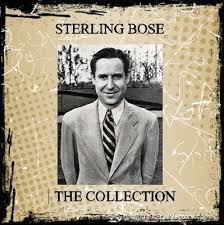
Sterling Belmont “Bozo” Bose was born on September 23, 1906 in Florence, Alabama and his style was heavily influenced by Bix Beiderbecke and changed little over the course of his life.
His early experience came with Dixieland jazz bands in his native Alabama before moving to St. Louis, Missouri in 1923. He played with the Crescent City Jazzers, the Arcadian Serenaders, and the Jean Goldkette’s Orchestra in 1927-28 after the departure of Beiderbecke. Following this he worked in the house band at radio station WGN in Chicago, Illinois before joining Ben Pollack from 1930 to 1933. He also worked with Eddie Sheasby in Chicago.
Moving to New York City in 1933, Bose had many gigs in the city during the 1930s to the mid 1940s, including time with Joe Haymes, Tommy Dorsey, Ray Noble, Benny Goodman, Lana Webster, Glenn Miller, Bob Crosby, Bobby Hackett, Bob Zurke, Jack Teagarden, Bud Freeman, George Brunies, Bobby Sherwood, Miff Mole, Art Hodes, Horace Heidt, and ending with Tiny Hill in 1946.
Following this period he did some further freelancing for the next two years in Chicago and New York, and finally moved to Florida in 1948, setting up his own bands there. Suffering from an extended period of illness in the 1950s, trumpeter and cornetist Sterling Bose, whose nickname was Bozo, eventually committed suicide in June of 1958. in St. Petersburg, Florida.

More Posts: bandleader,cornet,history,instrumental,jazz,music,trumpet
Daily Dose Of Jazz…
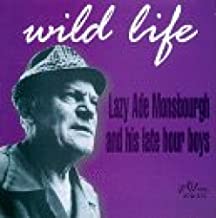
Ade Monsbourgh was born on Febrauary 17, 1917 in Melbourne, Victoria, Australia. He studied piano first before taking up reeds, valve trombone, trumpet and even recorder. He met pianist Graeme Bell early on and was part of his band regularly during 1944 to 1952. During his tenure with the band he recorded several times with Bell’s freewheeling band and toured Europe and Czechoslovakia.
He had occasional opportunities to lead his own dates, in addition to playing with groups led by Roger Bell, Dave Dallwitz, Len Barnard and Frank Traynor. His band, the Late Hour Boys, recorded prolifically for Swaggie through 1971.
During the 1992 Australia Day Honours, Monsbourgh was made an Officer of the Order of Australia (AO) for service to music, particularly jazz as a performer and composer.
Retiring from fulltime playing in the 1970’s, clarinetist Ade Monsbourgh, known as Lazy Ade or Father Ade, and who also played alto and tenor saxophone, trumpet, trombone and recorder, passed away on July 19, 2006 in Nathalia, Victoria, Australia.
More Posts: bandleader,history,instrumental,jazz,music,recorder,saxophone,trombone,trumpet
Daily Dose Of Jazz…
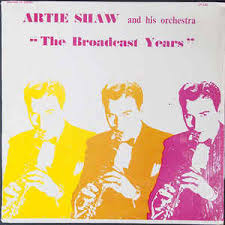
Bernard Privin was born of Jewish ancestry on February 12, 1919 in New York City. An autodidact on trumpet, he played professionally while in his teens. When he was 13, he bought a trumpet the day after he heard Louis Armstrong perform.
In 1937 Berniee became a member of Harry Reser’s band, and in the same year also worked with Bunny Berigan and Tommy Dorsey. The following year, he joined the Artie Shaw Orchestra, and then worked with Charlie Barnet, Mal Hallett, and Benny Goodman. Drafted in 1943 Bernie played from 1943 to 1946 with the Glenn Miller Army Air Force Band in Europe.
Returning to the United States, he worked with Goodman once more, then became a staff musician for radio and television, working with NBC and then CBS, the latter well into the 1960s. Concomitantly he played as a session musician, especially with Goodman throughout the 1950s, as well as for musicians such as Sy Oliver and Al Caiola.
Privin played frequently in Europe from the Sixties onward, playing in Sweden multiple times in the decade, and was a member of the Tommy Dorsey Orchestra, under the direction of Warren Covington and Pee Wee Erwin, for tours of Europe in the mid-1970s. He was a member of the New York Jazz Repertory Company when it toured the Soviet Union in 1975.
Trumpeter Bernie Privin passed away on October 8, 1999 in the city of his birth.
More Posts: history,instrumental,jazz,music,trumpet
Daily Dose Of Jazz…
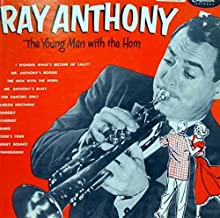
Ray Anthony was born Raymond Antonini on January 20, 1922 into an Italian family in Bentleyville, Pennsylvania but moved with his family to Cleveland, Ohio, where he studied the trumpet. From 1940~1941 he played in Glenn Miller’s band and appeared in the Glenn Miller movie Sun Valley Serenade before joining the U.S. Navy during World War II. After the war he formed his own group and the Ray Anthony Orchestra became popular in the early 1950s with The Bunny Hop, Hokey Pokey, and the theme from Dragnet. He had a No. 2 chart hit with a remake of the Glenn Miller tune At Last in 1952, the highest charting pop version of the song in the United States.
The following year his orchestra was featured when Helen O’Connell and Bob Eberly headlined a summer replacement program for Perry Como’s CBS television show. From 1953–1954 Ray was musical director of the television series TV’s Top Tunes.
After appearing as himself in the 1955 film Daddy Long Legs and starring in a short-lived television variety show, The Ray Anthony Show. Anthony he revved up his acting appearing in films during the late 1950s. In 1957, Anthony and his orchestra recorded the music score for the film This Could Be The Night, with vocals performed by Julie Wilson.
After his marriage to Mamie van Doren ende so did his brief film career. He continued his musical career and had another hit record with the theme from Peter Gunn, which reached No. 8 on the Billboard Hot 100 pop chart. Among his pianists was Allen “Puddler” Harris, and Kellie Greene, who also played the vibraphone. As a composer he wrote Thunderbird, The Bunny Hop, Trumpet Boogie, Big Band Boogie, and Mr. Anthony’s Boogie. Trumpeter Ray Anthony remains active today.
More Posts: bandleader,history,instrumental,jazz,music,trumpet
Daily Dose Of Jazz…
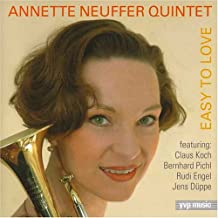
Annette Neuffer was born on January 15, 1966 in Munich, Germany. She didn’t start playing the trumpet until he was 18. Three years later she began studying music at the Graz University of Music , majoring in jazz trumpet . Another two yearsand she moved to the Stuttgart University of Music and Performing Arts, where she completed her diploma under Claus Stötter in 1996.
As a trumpeter she has worked with the Sarah Morrow Allstars in Paris, Benny Golson, Hal Singer, Mike Carr, Benny Waters, Jimmy Woode, and Horst Jankowski. In 1994 Annette was invited by the Sunday Night Orchestra as a singer for a project with Al Porcino. In 1995 she brought Porcino into his own big band, of which she was a singer for eleven years.
Since 2001 she has released four albums with her own quintet. She is an active composer and lyricist. She performed with the Bobby Burgess Big Band Explosion, Alexander’s Swingtime Band and Pete York. Vocalist, trumpeter, composer and lyricist Annette Neuffer continues to compose, perform and record.
More Posts: bandleader,history,instrumental,jazz,music,trumpet,vocal