

Requisites
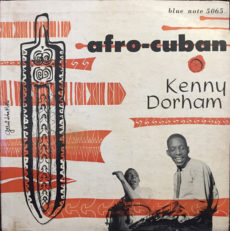
The first release of the album Afro-Cuban dates back to 1955 on 10″ Vinyl, featuring only four tracks by trumpeter Kenny Dorham. However, some time later, Blue Note decided to add three tracks, issuing what they felt was a more complete LP by the end of May 1957.
The original four tracks totalled 18 minutes and 53 seconds, with the first three composed by Dorham, the fourth a Gigi Gryce composition and were ordered as Afrodisia, Lotus Flower, Minor’s Holiday and Basheer’s Dream.
The musicians on the session were Kenny Dorham – trumpet, J. J. Johnson – trombone, Hank Mobley – tenor saxophone, Cecil Payne – baritone saxophone, Horace Silver – piano, Oscar Pettiford – bass, Art Blakey – drums, Carlos “Patato” Valdes – conga and Richie Goldberg – cowbell.
Gil Melle designed the cover and the photo was taken by Francis Wolff.

More Posts: choice,classic,collectible,collector,history,instrumental,jazz,music,trumpet
Requisites
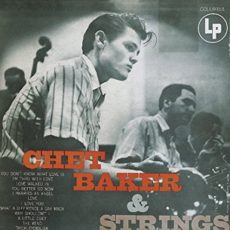
Chet Baker & Strings is an album recorded In Los Angeles, California by trumpeter Chet Baker in late December 30 & 31, 1953 and February 20, 1954 and released on the Columbia label. This quintet setting was augmented with a nine-piece string section and the easygoing strings support the cool bop giving it a light, airy though sometimes a melancholy film noir feel.
The 15 original track listing includes You Don’t Know What Love Is, I’m Thru With Love, Love Walked In, You Better Go Now, I Married An Angel, Love, I Love You, What a Diff’rence a Day Made, Why Shouldn’t I?, A Little Duet for Zoot and Chet, The Wind, Trickleydidlier, You Don’t Know What Love Is, You Better Go Now. A bonus track, an alternate take of A Little Duet for Zoot and Chet was reissued on the compact disc.
Joining the sessions were Bud Shank on alto saxophone and flute, Zoot Sims on tenor saxophone, pianist Russ Freeman, bassist Joe Mondragon, Shelly Manne on drums, Sam Cytron, Jack Gasselin, George Kast, Eudice Shapiro, Paul Shure and Felix Slatkin playing violin, Lou Kievman and Paul Robyn on viola and Victor Gottlieb on cello.
The four arrangers for the sessions were Jack Montrose, Johnny Mandel, Marty Paich and Shorty Rogers.
More Posts: choice,classic,collectible,collector,history,instrumental,jazz,music,trumpet
Three Wishes
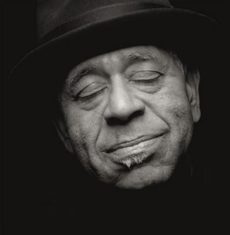
Pannonica asked trumpeter Dizzy Gillespie if he had three wishes what would they be and his reply was…
- “Not to play for money.
- “Permanent peace in the world.”
- “A world where you don’t need a passport.”
*Excerpt from Three Wishes: An Intimate Look at Jazz Greats – Complied and Photographed by Pannonica de Koenigswarter
Daily Dose Of Jazz…
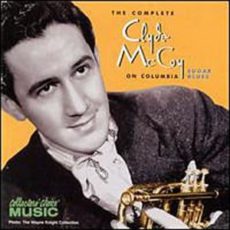
Clyde Lee McCoy was born on December 29, 1903 in Louisville, Kentucky into one of the families in the Hatfield-McCoy feud. He begun mastering the trumpet when he was without formal instruction, after the family moved to Portsmouth, Ohio in 1912. This would lead to performing regularly at church, school affairs and on the Cincinnati riverboats five years later, becoming one of the youngest musicians on the river at age 14.
In 1920 he auditioned with an untried band for a gig at the Whittle Hotel and Spa in Knoxville, Kentucky. Approved by the owner and the patrons the two week job lasted two months and the Clyde McCoy Orchestra was officially launched. In Chicago, Illinois he performed his song Sugar Blues at the Drake Hotel in 1930 and his solo rendition of the song would garner him national radio exposure for the band and a recording contract with Columbia Records, selling in excess of fourteen million copies internationally by the time of Clyde’s retirement in 1985.
The Clyde McCoy Orchestra would have a long and successful run at various hotels, sign a five-year recording contract with Decca Records, recorded frequently for Associated Transcriptions during the Depression and the sessions were used for delayed radio broadcasts. Following the ASCAP recording ban in 1941 that halted recording of all songs composed by its members, Clyde recorded for LangWorth Transcriptions in New York as well as Mercury, Capitol, and Vocalion Records.
Trumpeter Clyde McCoy, who developed the signature “wah-wah” sound in the late 1920s by fluttering a Harmon mute in the bell of his trumpet and has a star on the Hollywood Walk of Fame at 6426 Hollywood Boulevard, passed away from complications of Alzheimer disease on June 11, 1990 at the age of 86 in Memphis, Tennessee.

More Posts: trumpet
Daily Dose Of Jazz…
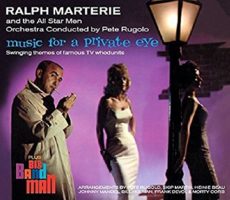
Ralph Marterie was born on December 24, 1914 in Acerra, near Naples, Italy and first played professionally at age 14 in Chicago, Illinois. In the 1940s, he played trumpet for various bands. His first job as a bandleader was courtesy of the US Navy during World War II, after which he was hired by the ABC Radio network. With his reputation built from these broadcasts, he secured a recording contract with Mercury Records.
In 1953 his big band recorded a version of Bill Haley’s Crazy, Man, Crazy, which reached #13 on the Billboard jockey chart and #11 on Cashbox in June, 1953. His recordings of Pretend and Caravan also made the Top 10 with the latter selling over a million copies and was awarded a gold disc. His biggest success on the U.S. charts was a cover of Skokiaan in 1954. In 1957, he had success with Tricky and Shish-Kebab.
Big band leader Ralph Marterie, who composed Dancing Trumpet, Dry Marterie, and Carla, passed away on October 10, 1978, in Dayton, Ohio.

More Posts: trumpet