

Daily Dose Of Jazz…
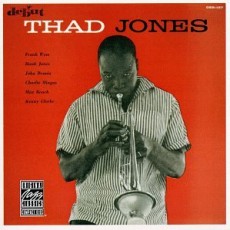
Thaddeus Joseph Jones was born in Pontiac, Michigan on March 28, 1923 into a musical family of ten. His older brother Hank was a pianist and a younger brother Elvin, a drummer. A self-taught musician, Thad was performing professionally by the age of sixteen. Enlisting in the Army from 1943 – 1946, he played in the U.S. Army bands during World War II.
By 1954 Thad joined the Count Basie Orchestra and was a featured soloist on such tunes as April In Paris, Shiny Stockings and Corner Pocket. But his main contribution to the orchestra was his compositions and arrangements of The Deacon, Counter Block and H.R.H. in honor of their command performance in London for the Queen. This was followed by a hymn like ballad by Jones titled “To You” performed by the Basie and Ellington bands in their only performance together, and “Dance Along With Basie” recording with nearly all Jones un-credited arrangements of standards.
1963 saw Jones leaving Basie to become a freelance arranger and studio player in New York. Two years later he and drummer Mel Lewis would form The Thad Jones/Mel Lewis Orchestra that began as an informal jam session amongst New York’s studio elite. They found a home at the Village Vanguard with Thad at the helm for twelve years and in 1978 they won a Grammy for the recording “Live In Munich”.
That same year Jones moved to Copenhagen to the surprise of his New York colleagues. The band continued under Lewis’ direction until his death and is still currently in residence as the Village Vanguard Orchestra. During his life in Copenhagen he composed for the Danish Radio Big Band, taught jazz at the Royal Danish Conservatory, formally studied composition and took up the valve trombone. Ill health began to take its toll on Jones by the mid- eighties and on August 21, 1986 the composer, arranger, trumpeter and flugelhornist passed away in Copenhagen.
Thad Jones’ most notable album was “Suite For Pops” featuring intense bebop improvisations of saxophonist Billy Harper and high note screeching of trumpeter Jon Faddis. His most well known composition is “A Child Is Born”.

More Posts: flugelhorn,trumpet
Daily Dose Of Jazz…
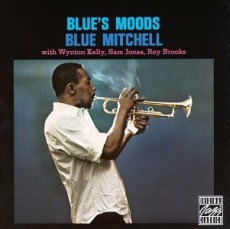
Blue Mitchell was born Richard Allen Mitchell on March 13, 1930 and was raised in Miami, Florida. He didn’t begin playing trumpet until high school, where he received his nickname “Blue”. In the years following he played in the rhythm and blues bands of Paul Williams, Earl Bostic and Chuck Willis but upon returning to Miami caught the ear of Cannonball Adderley, with whom he recorded in 1958 for Riverside.
He joined the Horace Silver Quintet playing alongside Junior Cook, Gene Taylor and Roy Brooks until 1964 and then formed his own band replacing Silver with Chick Corea an ailing Brooks with Al Foster. By 1969 Mitchell disbanded the group and joined Ray Charles, touring till ’71.
This stint was followed by Jazz Blues Fusion with John Mayall and throughout the seventies he recorded and worked as a session player, performed with Louis Bellson, Bill Holman, Lou Donaldson, Grant Green, Philly Joe Jones, Jackie McLean, Dexter Gordon, Hank Mobley and a host of other major players.
On May 21, 1979 the multi-faceted trumpeter Blue Mitchell, who delivered a light and swinging tone and known for his jazz, rhythm and blues, passed away from complications of cancer at age 49 in Los Angeles, California.

More Posts: trumpet
Daily Dose Of Jazz…
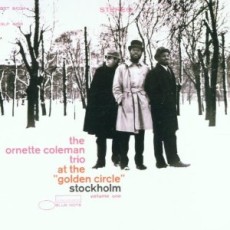
Ornette Coleman was born March 9, 1930 hailing from Fort Worth, Texas where he began performing R&B and bebop on the tenor. He found his way out of Texas taking a job with traveling shows, first Silas Green and then rhythm and blues. After his tenor was destroyed in an attack, Ornette switched to alto that has remained his primary instrument.
From the beginning Coleman was ear was unorthodox, his approach to harmony and chord progression was less rigid than that of bebop musicians who considered him out-of-tune. However there were some who heard the same sound and by the 50s he was making music with Paul Bley, Don Cherry, Billy Higgins, Don Payne, Walter Norris, Shelly Manne and Charlie Haden.
Regarded by some as iconoclastic, others like conductor Leonard Bernstein and composer Virgil Thomson saw his genius and innovation. Ornette became one of the major influences in the free jazz movement and a major player in the genesis of avant-garde jazz. Throughout the sixties and seventies he played with Freddie Hubbard, Eric Dolphy, Scott LaFaro and Ed Blackwell and introduced brief thematic dissonant fanfares, regular but complex pulse and solos where band mates were able to chime in as they wish.
His friendship with Albert Ayler influenced his development of the trumpet and violin. His evolution continued and subsequent quartets included his son Denardo, Sunny Murray, Jimmy Garrison, Elvin Jones, and Dewey Redman. It also forwarded his sojourn into electrified instruments, adopting a jazz-fusion mode fashionable at the time and bringing in such artists as Jerry Garcia of the Grateful Dead. He has brought to his recordings Pat Metheny, Geri Allen, and Joachim Kuhn but seldom appeared as a sideman.
Ornette Coleman is a saxophonist, violinist, trumpeter, and composer whose timbre is easily recognized with his keen, crying sound drawing upon the blues. In 2007 he won a Pulitzer for his album Sound Grammar and honored with a Grammy for lifetime achievement He continued to push the envelope with younger musicians from radically different cultures until his passing on June 11, 2015 in Manhattan, New York.


Daily Dose Of Jazz…
Lew Soloff was born February 20, 1944 in New York City and is a jazz trumpeter, composer and actor. Studying trumpet at the Eastman School of Music, he continued his studies at Julliard. After graduation he freelanced around New York City with Maynard Ferguson, Joe Henderson, Machito, Tito Puente and Clark Terry. From 1968 to 1973 he worked with Blood, Sweat and Tears.
By 1973 he began an association an association with Gil Evans, played with George Gruntz’s Concert Jazz Band, Carla Bley, and is a longtime member of the Manhattan Jazz Quintet. He has also teamed up with the colorful trombonist Ray Anderson on several often-humorous recordings.
In the 1980’s he was part of a jazz ensemble called Members Only, recording for Muse Records. A brilliant high note trumpeter, Lew has long been sought after to play in big bands and session work. He is a distinctive soloist and an expert with the plunger mute. He has over four-dozen albums to his credit as a leader and sideman and currently performs, tours and records.

More Posts: trumpet
Daily Dose Of Jazz…
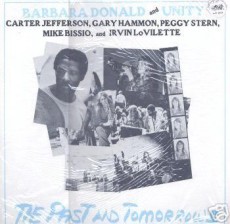
Barbara Donald was born February 9, 1942 in Minneapolis, Minnesota. At 9 she was playing the cornet, listening to Dixieland, Louis Armstrong and Benny Goodman and showed physical abilities unusual for a woman. She soon switched to the trumpet, receiving a good musical education on various reed instruments and vocals.
In 1955 her parents moved to California where she was denied access to the high school big band, so she formed her own groups. By age 19, she was sharing bandstands with Dexter Gordon, Stanley Cowell and Bert Wilson, a daringly unusual position for a white woman. Ironically, she faced the same denial with jazz big bands refusing to audition women. Therefore she paid her dues to rhythm & blues, rock and roll and dance bands.
A brief stay in New York City strengthened her determination and upon her return to Los Angeles, Barbara started hanging out with jazz musicians and studying the art of playing bebop with “Little” Benny Harris, who co-wrote “Ornithology” with Charlie Parker. Settling in San Diego in 1964 she met mentor Sonny Simmons and taught her structure with hard keys and hard chords. Simmons’ own innovation stressed playing the melody and staying on top of the beat.
From 1964 to 1972, Barbara and Sonny lived, performed and struggled together. Their career, if too often chaotic with irregular engagements and recordings, remained underground, producing brilliant and singular music. However, Barbara’s presence balanced her husband’s revolutionary moods at a time when Sonny was prone to radical sojourns between tradition and modernity.
Her voluble and powerful, somehowunadorned playing, indicating a perfect control of the bop idiom, characteristic of the immediate post-Trane free expression, was the perfect supporting structure of Simmons’ angular themes and improvisations.
Barbara Donald parted from Sonny, moved to Washington in the early 80’s, formed Unity and began to expose and refine her own concept. In 1984, Barbara presented Unity at the Kool Jazz Festival with then rising star Charnett Moffett on bass. By 1992, Barbara Donald’s health was failing and one of the top female jazz trumpeters, after experiencing a series of strokes that rendered her unable to actively play live, Donald had been living in an assisted care facility in Olympia, Washington, from 1998 until her death on March 23, 2013.
More Posts: trumpet