

Daily Dose Of Jazz…
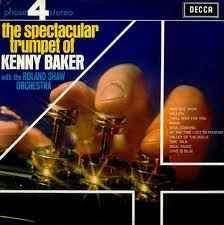
Kenny Baker was born on March 1, 1921 in Withernsea, East Riding of Yorkshire, England. Joining a brass band, by the age of 17 he had already become a professional musician. After leaving his home town for London, he met and began performing with George Chisholm. He was first heard on record in a British public jam session in 1941 and quickly established a strong reputation in London clubs.
After serving in the Royal Air Force during WWII, the young Baker was lead trumpeter with Ted Heath’s post war orchestra, with Bakerloo Non-Stop recorded for the Decca record label in 1946. He played a tenor saxophone solo on Johnny Gray, the piece recorded by both Baker and the drummer Jack Parnell. During the 1950s, he led his own group called Baker’s Dozen and performed on the first regular jazz show, the BBC Light Programme series Let’s Settle For Music.
During this period he regularly recorded as a quartet for Parlophone, and in the Sixties and Seventies, he was on call for film and studio work. He shared top billing with comedy variety acts, continued to appear on BBC shows, and formed the Best of British Jazz show with Don Lusher and Betty Smith. He went on to play with Frank Sinatra, Petula Clark, Sammy Davis, Jr. and Tony Bennett, as well as performing on James Bond soundtracks, with The Beatles and The Muppet Show among numerous other television shows.
Trumpeter, cornetist, flugelhornist and composer Kenny Baker, who was titled three times as best trumpet player and awarded the MBE title, died in Felpham, West Sussex on December 7, 1999 after suffering from a viral infection. He was 78.

More Posts: bandleader,composer,cornet,flugelhorn,history,instrumental,jazz,music,trumpet
Daily Dose Of Jazz…
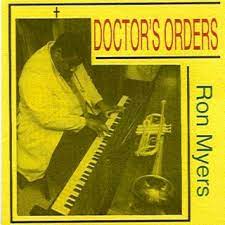
Ronald V. Myers, Sr. was born February 29, 1956 in Chicago, Illinois but moved with the family to Milwaukee, Wisconsin when his parents became employed as teachers in the Milwaukee Public Schools. He attended Rufus King High School in Milwaukee and was a soloist in the high school jazz ensemble on trumpet and piano.
Attending the University of Wisconsin–Madison he majored in Black Studies and was a member of the Experimental Improvisational Black Music Ensemble, under the mentorship of trombonist and professor Jimmy Cheatham. He graduated from the University of Wisconsin Medical School in 1985 and completed his residency in Family Medicine at LSU Medical Center’s Washington St. Tammany Parish Charity Hospital in Bogalusa, Louisiana in 1988.
He took part-time courses at Reformed Theological Seminary at Mississippi Valley State University in 1989 and 1990 and was ordained by Pilgrim Rest Missionary Baptist Church in Milwaukee, and commissioned by the Wisconsin Baptist Pastors Conference as a medical missionary to the Mississippi Delta.
Pianist and trumpeter Ron Myers, who was instrumental in solidifying Juneteenth as a national holiday and chairman of the National Association of Juneteenth Jazz Presenters, died on September 7, 2018.

More Posts: bandleader,history,instrumental,jazz,music,piano,trumpet
Daily Dose Of Jazz…
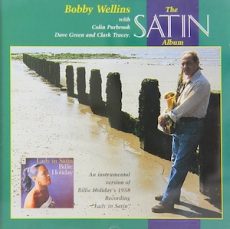
Colin Thomas Purbrook was born February 26, 1936 in Seaford, East Sussex, England and learned piano from the age of six from his father, who was also a professional pianist. As an eleven year old, in 1947 he won three Challenge Cups at the Brighton Music Festival. He went on to study music at the Fitzwilliam College, Cambridge. As well as playing piano, he also played the trombone with the Cambridge University Jazz Band.
Leaving Cambridge in 1957 he joined Sandy Brown’s quintet on double bass for a six-month period at the popular Oxford Street 100 Club. He played piano for three years with Al Fairweather’s All Stars, and also played with Kenny Ball, both as a pianist, trumpeter and double bassist. In the early 1960s he worked with Kenny Baker, Ian Carr, Tony Coe, Bert Courtley, Jimmy Deuchar, Wally Fawkes, Alan Ganley, Derek Hogg, Dudley Moore, John Picard, Don Rendell, Ronnie Ross, and Ronnie Scott.
In 1961 he worked alongside composer and musician Charles Mingus on the music score for the film All Night Long which was eventually released in 1962. Later in the decade he continued working with Brown and Coe, as well as with Brian Lemon, Humphrey Lyttelton, and Phil Seamen on drums. He played piano for the BBC 2’s music programme Jazz 625 with Dakota Staton and the Keith Christie All Stars respectively and was a member of Benny Goodman’s sextet when the clarinetist recorded a special gala performance for BBC2 in 1964.
He often played with drummer Phil Seamen, joining his trio during the late 1960s and early ’70s. Colin was a frequent sideman for Americans touring the UK, and worked over the course of his career with Chet Baker, Ruby Braff, Benny Carter, Doc Cheatham, Eddie Lockjaw Davis, Art Farmer, Dexter Gordon, Barney Kessel, Howard McGhee, James Moody, Annie Ross, Zoot Sims, and Buddy Tate. He was involved with the production of a number of stage plays from the 1970s through the 1990s. He led trios and quartets into the 1990s, took up a couple of residencies as a solo pianist, and continued to tour and appear on radio and television and, despite the fact that he began to suffer from rheumatoid arthritis in 1995.
Pianist, double bassist, trumpeter and songwriter Colin Purbrook, who also led his own smaller and larger ensembles, died in London, England of cancer on February 5, 1999.
More Posts: double bass,history,instrumental,jazz,music,piano,songwriter,trumpet
Requisites
Byrd in Paris, Volume 1 ~ The Donald Byrd Quintet Featuring Bobby Jaspar | By Eddie Carter
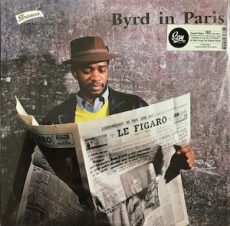
The Donald Byrd Quintet enters this morning’s spotlight with Byrd in Paris, Volume 1 (Brunswick 87 903), the first of two albums taken from the group’s 1958 appearance at The Olympia Theatre. Its companion release is Parisian Thoroughfare, and both were recorded at the conclusion of the quintet’s tour to Europe. Byrd in Paris was initially a French release in 1958 and would make its way to the U.S. two years later. The personnel is Donald Byrd (tracks: A1, A2, B3) on trumpet, Bobby Jaspar on flute (B1) and tenor sax (A1, A2, B3), Walter Davis Jr. on piano, Doug Watkins on double bass, and Art Taylor (A1, A2, B2, B3) on drums. My copy is the 2014 Sam Records French Mono audiophile reissue, sharing the original catalog number.
The set opens with Dear Old Stockholm, and as the song begins, Donald is off in the distance behind the quintet. He brings the horn into the forefront as he walks to the microphone, and the ensemble completes the melody. Bobby opens with a marvelous first solo. Donald is equally loose and free in the following reading. Doug offers one of the song’s best musical moments in the closing statement preceding the theme’s reprise and finale. Donald introduces Paul’s Pal by Sonny Rollins next and all the remaining tunes. The group begins with a mid-tempo melody. Bobby starts the solos with an easygoing statement. Donald follows with a neatly paced reading, and then Walter greets the finale like an old friend before the group takes it out.
Side Two gets underway with Bobby Jaspar on flute for his tune, Flute Blues. Bobby and Doug introduce the song’s first chorus with a two-instrument conversation before Walter joins them. Bobby dives into the opening statement with a consummate feeling. Doug finds a few new things to say in the second solo, and then Bobby and Doug are in complete agreement in the closing interpretation, leading back to the theme. The spotlight is on the rhythm section in Ray’s Idea by Ray Brown. Donald and Bobby sit this one out, and the trio works in perfect balance on the song’s speedy melody. Walter is the first to solo and puts the piano through a vigorous workout, then he and Art share an energetic exchange into the theme’s reprise, climax and audience’s approval.
The Blues Walk by Sonny Stitt is off and running from the ensemble’s theme. Donald opens at a blistering pace; then Bobby continues blowing up a storm. Walter communicates his ideas confidently next, and then Doug makes a few quick remarks. Art generates considerable heat in an aggressive conversation with Donald and Bobby, leading to the song’s climax and a huge ovation from the audience. Bruno Coquatrix produced the original session, and the reissue was remastered from the original tapes. This Sam Records audiophile reissue was also pressed at Pallas in Germany on 180 grams of audiophile vinyl, and the front and rear covers are sturdy. The album possesses an excellent soundstage, placing the listener in the audience. Also included is an additional insert with a photo of Donald Byrd.
I thoroughly enjoyed listening to Byrd in Paris, Volume 1. After hearing this Sam Records reissue, I’m going to revisit a few other titles I have in the library and feature them in future columns. If you’re in the mood for a live hard bop album with great tunes and tight musicianship. I invite you to consider Byrd in Paris, Volume 1 by The Donald Byrd Quintet Featuring Bobby Jaspar, on your next record treasure hunt. It’s a wonderful live album that still sounds great over six decades later and shouldn’t be missed for a spot in any jazz library!
~ Parisian Thoroughfare (Brunswick 87 904) – Source: Discogs.com ~ Dear Old Stockholm – Source: Wikipedia.org © 2024 by Edward Thomas Carter

More Posts: choice,classic,collectible,collector,history,instrumental,jazz,music,trumpet

SOUNDS OF A&R | S.O.A.R
Fronted by vocalist April May Webb and trumpeter Randall Haywood, Sounds of A&R effortlessly weave elements of swing, cool, hard bop, and avant-garde. Paying tribute to the jazz greats while, at once, boldly embracing the future with fresh, innovative arrangements and compositions. Their repertoire often surprises the listener by featuring familiar pieces in unexpected ways, spanning various genres. S.O.A.R. captivates the audience, leaving them on the edge of their seats. The fusion of tradition and innovation defines their sound.
More Posts: adventure,club,genius,jazz,music,preserving,travel,trumpet,vocal