

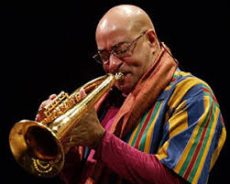
JIMMY OWENS
Trumpeter Jimmy Owens is also a composer, arranger, lecturer, and educator. Over the course of his on-going sixty year career he has played with Sir Roland Hanna, Ron Carter, Billy Cobham, Benny Golson, Hubert Laws, and Tom McIntosh, Frank Wess, Seldon Powell, Barry Galbraith, Bob Cranshaw, Duke Ellington, Lionel Hampton, Charles Mingus, Hank Crawford, Dizzy Gillespie, Count Basie, and Herbie Mann, among many others. Since 1969, he has led his own group, Jimmy Owens Plus.
More Posts: adventure,club,festival,genius,jazz,music,preserving,travel,trumpet
Daily Dose Of Jazz…
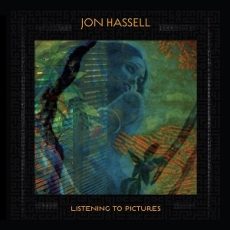
Jon Hassell was born March 22, 1937 in Memphis, Tennessee and received his master’s degree from the Eastman School of Music in Rochester, New York. During this time he became involved in European serial music, especially the work of Karlheinz Stockhausen. After finishing Eastman he enrolled in the Cologne Course for New Music where he met avant-guardists Irmin Schmidt and Holger Czukay.
Returning to the States in 1967 he met Terry Riley in Buffalo, New York, and performed on the first recording of Riley’s seminal work In C in 1968. He pursued his Ph.D. in musicology in Buffalo and performed in La Monte Young’s Theatre of Eternal Music in New York City, contributing to the 1974 LP Dream House 78′ 17″.
Back in Buffalo in the early Seventies, Hassell was introduced to the music of Indian Pandit Pran Nath, His work with Nath awoke his appetite for traditional music of the world. He collaborated with Brian Eno, worked with David Sylvian, Peter Gabriel, contributed to Tears For Fears album The Seeds of Love, and composed for film and television.
Trumpeter Jon Hassell, who coined the term Fourth World, utilized circular breathing and electronic processing, died from natural causes on June 26, 2021, at the age of 84.

More Posts: history,instrumental,jazz,music,trumpet

KEYON HARROLD PRESENTS FOREVERLAND
Known as the “mugician,” trumpeter/vocalist Keyon Harrold is a triple threat: unimpeachable trumpet virtuoso, soul stirring singer, and deep appreciator of many musical genres. This recipe leads to a musical synthesis that only he can concoct and makes him a trailblazer in 21st-century music.
Harrold’s career is a spectrum of greatness, from touring and recording with Jay-z and Cirque Du Soleil to being signed by legendary Rapper Nas (Mass Appeal) and writing the theme song for The Queen Latifah Show. Keyon is a frequent collaborator with YEBBA, Robert Glasper, Maxwell, Common, PJ Morton, and Gregory Porter. Harrold is a first-call artist with feature credits with Keith Richards, Black Pumas, Mac Miller (Stay), and Nas (The Jarreau of Rap) and Harrold’s latest collaboration with UK crooner Samm Henshaw ( Still Broke). He is also the new Artistic Advisor for Jazz St.Louis. Finally, he is an activist for social justice and equality.
One show – No Intermission. Tickets can be reserved up to 2:00 p.m. on the day of the show; remaining tickets available at door at show time. for a rare opportunity to hear these two jazz titans share the stage. After a captivating Jazz Bakery performance in 2018, we knew it would only be a matter of time until these two met again.
More Posts: adventure,concert,genius,jazz,music,preserving,travel,trumpet
Daily Dose Of Jazz…
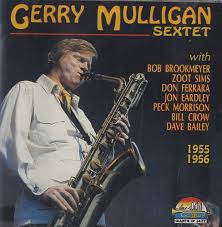
Don Ferrara was born on March 10, 1928 in Brooklyn, New York and began playing trumpet at the age of ten, avidly listening to jazz and swing era giants on both radio and records. Roy Eldridge became and remained his single most important influence on his playing. In 1945 he had a brief stint with Jerry Wald’s band, then moved over to George Auld.
Enlisting in the Army in mid-1946, during this time he played in a band with bassist Red Mitchell, drummer Howie Mann and met Warne Marsh. It was through him that he became interested in the work of Lennie Tristano. After his discharge he began studying with Tristano, something he continued to do until the 1960s. During this same period, Don taught and played in the big band assembled by Gene Roland for a Charlie Parker recording session, though he missed the recording session because of a date clash. He then joined Woody Herman’s Third Herd. After a year he returned to New York where he gigged and taught and continued his own studies with Tristano.
In the mid-1950s New York he played and sometimes recorded with various bands, including those of Lee Konitz and Gerry Mulligan. In the early Sixties Ferrara played a regular engagement with Tristano at New York’s Half Note Club and during the rest of the decade continued with his teaching. The early 70s, had him relocating to the west coast and joining Gary Foster’s teaching studio. He continued to live and teach in California through to the 90s, most of his teaching work being conducted at long range through audio cassettes.
Trumpeter Don Ferrara, who was also a skilled and highly individual soloist, died on January 18, 2011 in San Diego, California.
More Posts: history,instrumental,jazz,music,trumpet
THE DIVA JAZZ ORCHESTRA
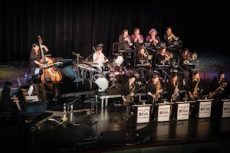
A multigenerational outfit led by drummer, composer, and clinician Sherrie Maricle, DIVA Jazz Orchestra has garnered accolades from across the world. The 15-piece ensemble “exudes the excitement and force found in the tradition of historic big bands, with an eye towards originality.” Their program of stylistically diverse standards and original tunes spotlights a swinging band sound as well as each soloist’s distinct and vibrant personality. Don’t miss this energetic three-night event!
Sherrie Maricle, drums
Jami Dauber, trumpet
More Posts: adventure,club,drums,genius,jazz,music,preserving,travel,trumpet